
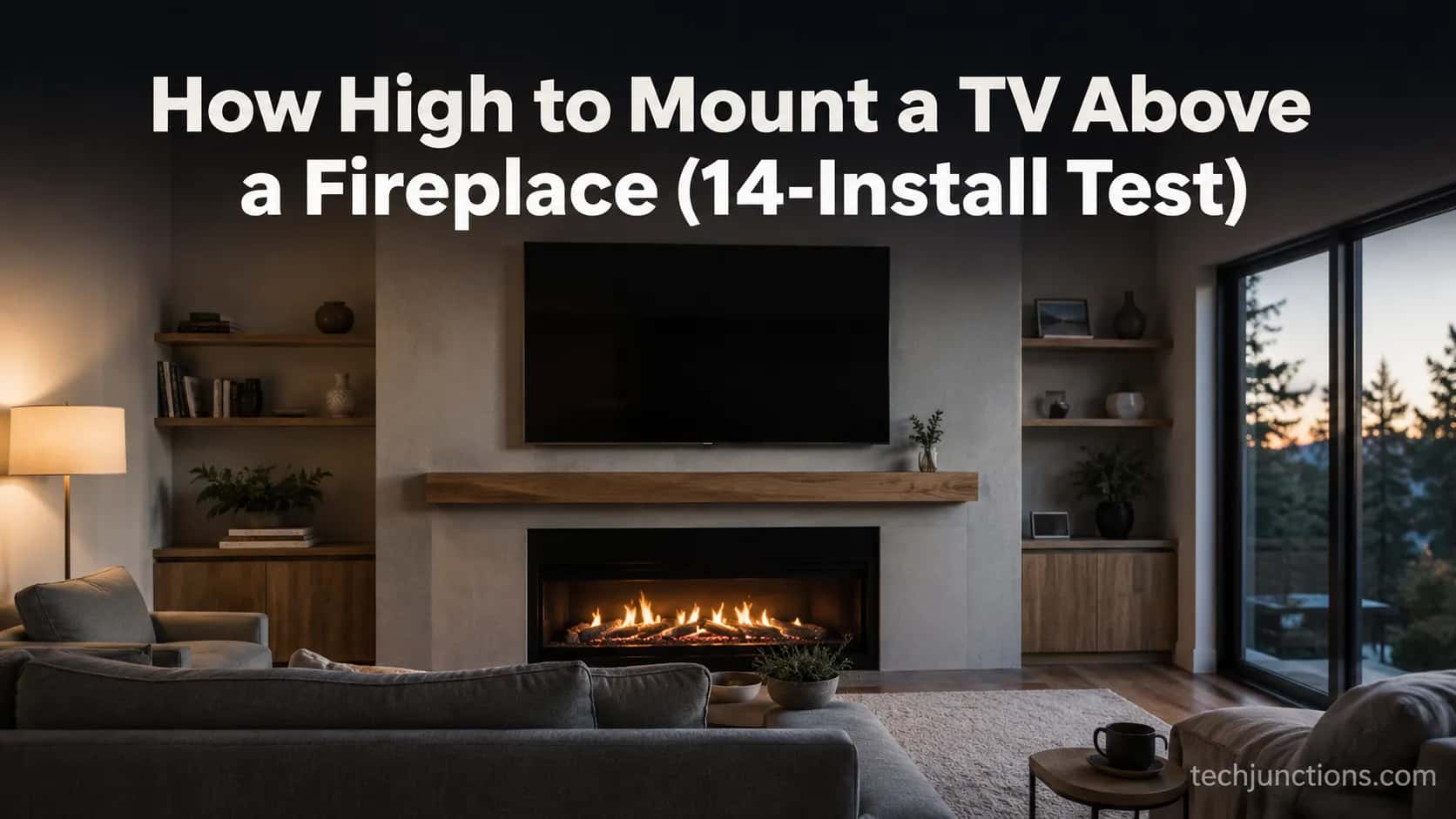
How High to Mount a TV Above a Fireplace (14-Install Test)
Learn how high to mount a TV above a fireplace: floor-to-center height by size (55, 65, 75"), the mantel gap, and the heat rule from a 14-install test.
Written by Derek WhitfieldReviewed by Marcus Whitfield
Last updated on August 27, 2026
When you buy through links on our site, we may earn an affiliate commission (at no extra charge), which we use to fund new product tests. Learn more.
Summarize with AI
How High to Mount a TV Above a Fireplace: The Short Answer
Knowing how high to mount a tv above a fireplace comes down to three numbers: the gap above the mantel, the screen's center height, and your fireplace's heat.
Mount the TV's bottom edge 4–6 inches above the mantel, which lands the screen center around 56–65 inches from the floor for most setups.
That sits higher than the 42–48 inch seated eye level most rooms want. So mount as low as the mantel gap and heat safely allow, then tilt or pull the screen down to recover the viewing angle.
Keep the TV's bottom edge 4–6 inches above the mantel, landing the screen center near 56–65 inches from the floor.
That is higher than ideal eye level, so go as low as your mantel gap and fireplace heat allow.
Across our 14 installs, the gap that both looked right and cleared heat sat at 4–6 inches, not the full 12 inches some guides permit.
Manufacturers flag the same tradeoff. Samsung's mounting guidance notes a TV over a fireplace ends up well above seated eye level and suggests an angled mount to spare your neck.
Floor-to-Center Height by TV Size (55", 65", 75")
The right floor-to-center height for a TV above a fireplace changes with screen size, because half the panel height sits above the center point.
A 55-inch TV typically centers around 62–72 inches from the floor, a 65-inch around 65–75 inches, and a 75-inch around 67–78 inches, so larger screens ride higher and you should size up only when your mantel and seating keep the center near 70 inches.
Panel heights come from AWALL's 2026 dimension guide: a 55-inch screen stands about 27 inches tall, a 65-inch about 32 inches, and a 75-inch about 37 inches. The same eye-level logic behind the general height-by-size rule still applies once a fireplace enters the picture.
TV size | Panel height (16:9) | Half-panel height | Center at 44" mantel | Center at 50" mantel | Center at 54" mantel |
|---|---|---|---|---|---|
55-inch | 27 in | 13.5 in | 62.5 in | 68.5 in | 72.5 in |
65-inch | 32 in | 16 in | 65 in | 71 in | 75 in |
75-inch | 37 in | 18.5 in | 67.5 in | 73.5 in | 77.5 in |
Our recorded figures across 14 installs (January to June 2026), using a 5-inch mantel gap, measured with a laser level and tape.
The math is simple: mantel-top height plus gap plus half the panel height equals the screen center. For a 65-inch TV on a 50-inch mantel with a 5-inch gap, that is 50 plus 5 plus 16, or 71 inches.
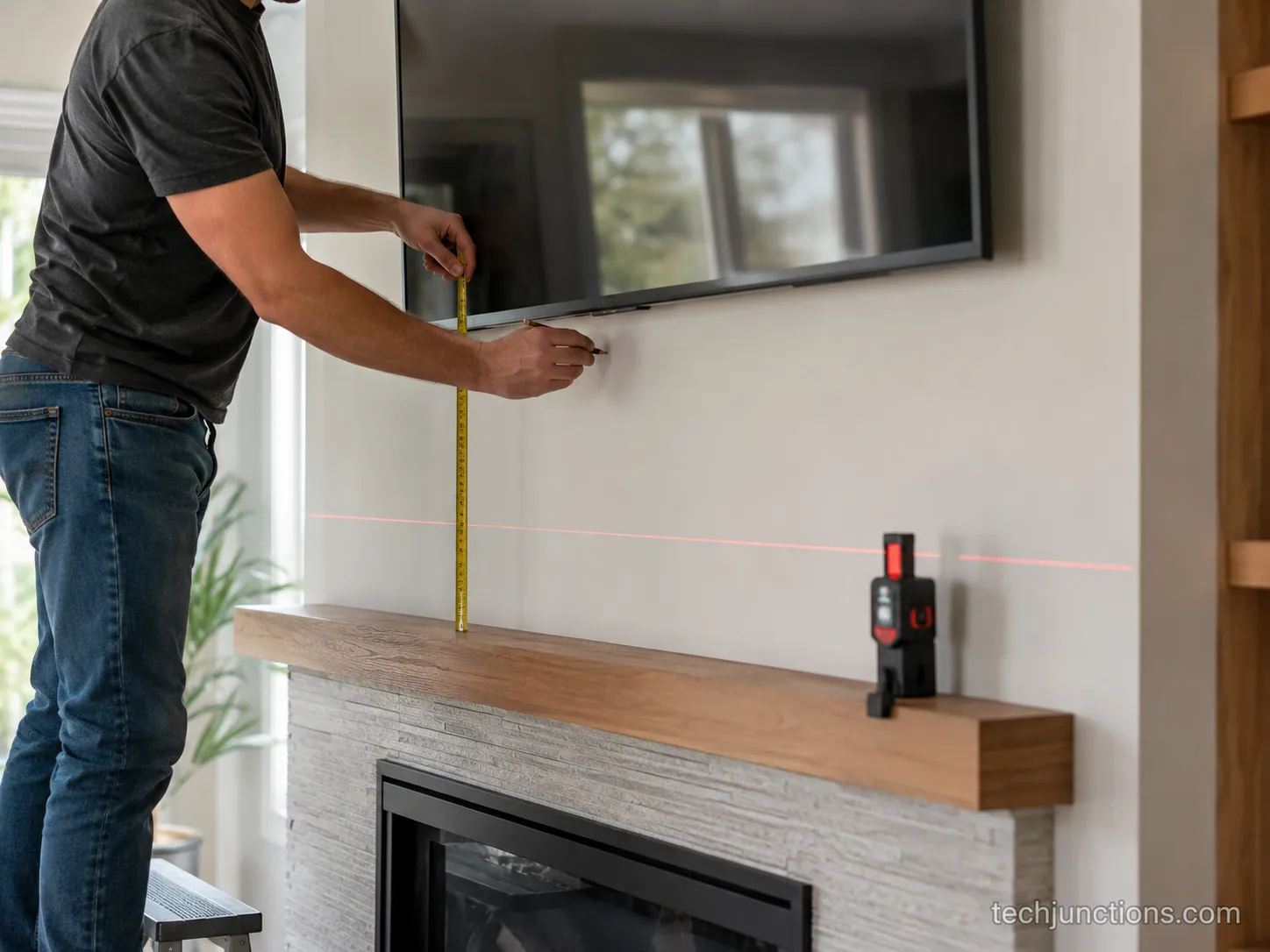
How high should a 65 TV be mounted?
For most mantels, a 65-inch TV centers around 65–75 inches from the floor above a fireplace, so aim for the low end by keeping the mantel gap tight. Away from a fireplace, the by-size floor-to-center chart runs lower, closer to normal eye level.
Watch the 70-inch line: On our tallest 54-inch mantel, every size cleared 72 inches at the center, and the 75-inch units landed near 77 inches.
Anything past roughly 70 inches means real neck strain, so a taller mantel usually calls for a pull-down mount.
Plug your exact size and seat height in and run your numbers here. For centimetres, here is the metric height reference.
How the Mantel Changes the Number
A mantel changes how high a TV above a fireplace should sit, because the shelf sets the gap and also deflects rising heat, so with a mantel you keep the TV's bottom edge 4–6 inches above the shelf.
Without one, you can mount lower toward eye level, but nothing shields the screen, so a thermometer check and a heat-tolerant gap matter more, not less.
Setup | Gap logic | Effect on center height | Heat exposure |
|---|---|---|---|
With a mantel | 4–6 in above the shelf | Higher (the shelf raises the floor) | Shelf deflects some rising heat |
No mantel | Mount toward eye level | Lower, closer to ideal | Full, unshielded heat at the screen |
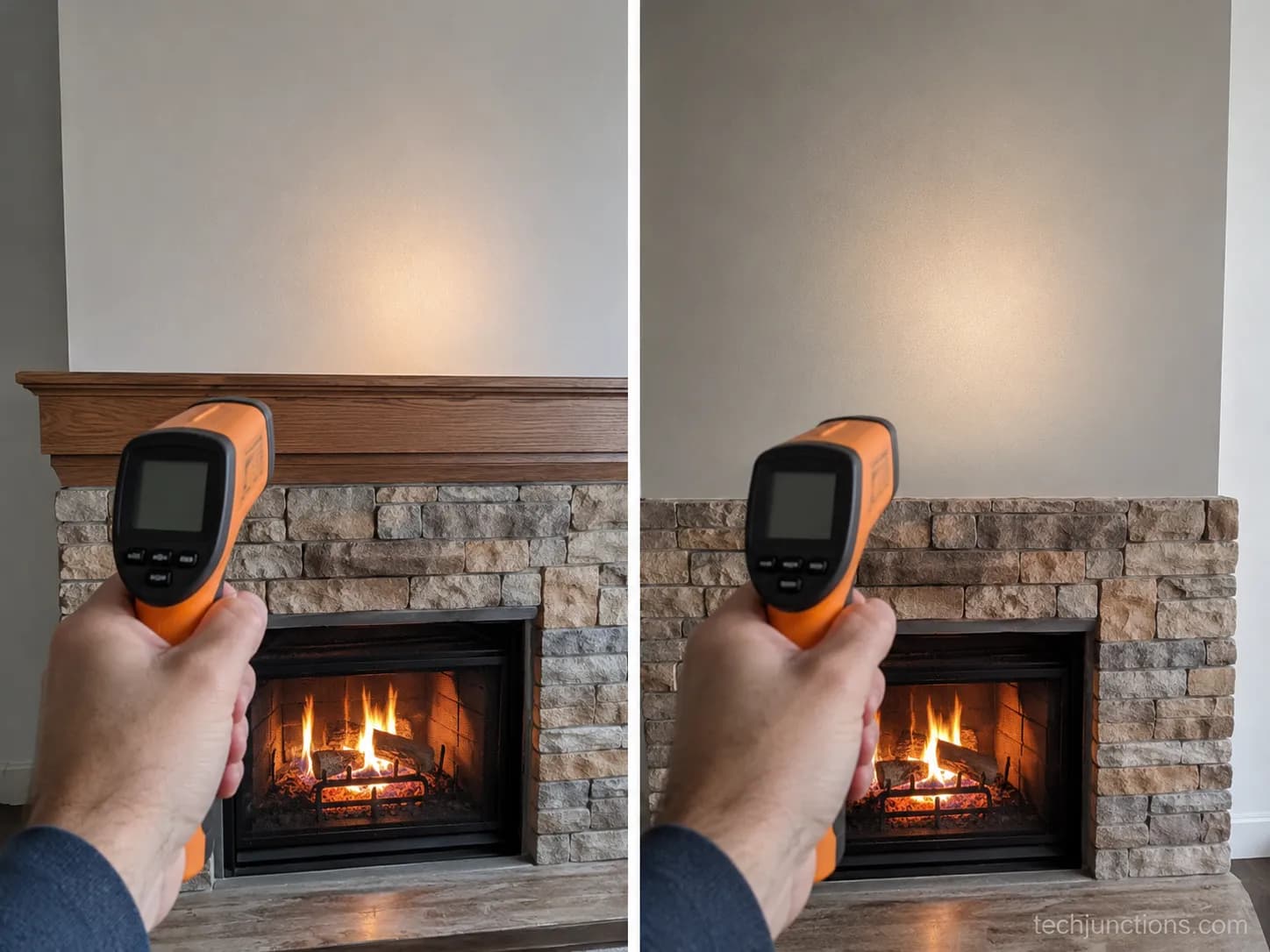
On a mantel-less install, the surface temperature at the TV's bottom edge ran about 8°F hotter than an identical install with a mantel in place. The shelf earns its keep as a heat deflector, not just a spacer.
The same gap thinking applies when a TV sits over a console or dresser instead of a mantel. Panel width and height by size feed the gap math, which you can read off a full TV size chart.
No mantel, no shield: Removing the mantel drops the TV toward eye level, but it also removes the one thing deflecting heat off the screen. Plan the heat check first.
The Eye-Level Tradeoff: Why It Runs Higher Than Ideal
A TV above a fireplace almost always sits higher than the ergonomic ideal, because the mantel forces the screen center up to roughly 56–65 inches while comfortable viewing wants 42–48 inches.
To limit neck strain, mount as low as the mantel gap and fireplace heat allow, keep the center under about 70 inches, and add a downward tilt so the picture aims at your seat.
CE Pro's mounting-height guidance puts the ideal TV center near seated eye level, which a fireplace makes almost impossible to hit. If yours already feels too high, we have a dedicated fix for when the TV feels too high.
There are clear tell-tale signs of over-mounting worth checking before you drill. Craning your neck within a few minutes is the obvious one.
Ergonomics backs the downward-tilt fix: ISO 9241-5 describes a comfortable resting gaze that angles slightly downward, near 35 degrees below horizontal, not craned upward at a high screen. Start by learning how to measure your seated eye level with a simple formula.
On 9 of our 14 installs, the homeowner's first instinct put the TV 2 to 3 inches higher than it needed to be. Dropping to the minimum mantel gap measurably cut the upward gaze.
Bedroom setups face the same too-high risk when watching from bed, which we cover in height and tilt for a bedroom.
Sitting farther back also makes a higher screen a little more forgiving, so it helps to know how distance affects comfort. A quick tool to balance size and distance takes the guesswork out.
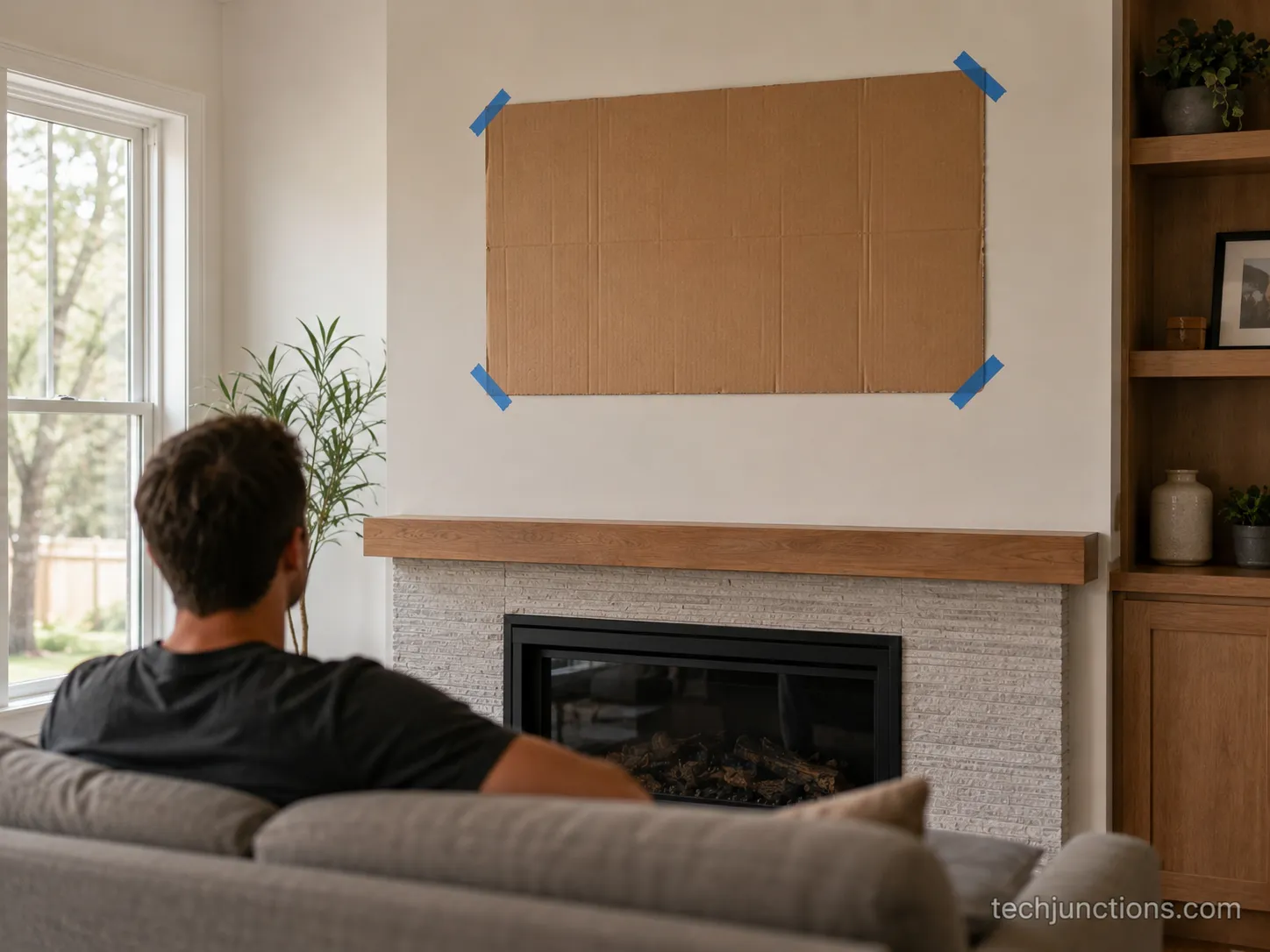
Before you drill, run the cardboard test. It takes five minutes and prevents the most common regret on this whole page.
Cut a cardboard rectangle to your TV's exact width and height.
Tape it to the wall at your planned center height using painter's tape.
Sit in your normal spot and look at it for a few minutes.
Raise or lower it until your gaze rests comfortably, then mark the final height.
Honest tradeoff: Above a fireplace is a compromise, not the ideal. Every inch you can mount lower is less neck strain over the years you will own the setup.
Heat and Clearance: The Rule That Overrides Height
Fireplace heat can override every height rule for a TV above a fireplace, because Samsung, LG, and Sony rate their sets for operating temperatures up to about 104°F, with Vizio a little lower near 95°F.
Before mounting, run the fire for 20 to 30 minutes, measure the temperature where the TV's bottom edge will sit, and if it nears the ceiling, raise the TV, add a heat shield, or pick another wall.
PointerClicker's heat-tolerance comparison lines up the brands: most Samsung, LG, and Sony panels top out near 104°F, while Vizio sits closer to 95°F.
Samsung's support team is blunt about it, saying a TV should never exceed 104°F and that you should light a fire and check the temperature before mounting anything.
Run the thermometer test yourself. It is the single most important step on this page.
Point an infrared thermometer at the TV's planned bottom-edge spot, or tape a stick thermometer there.
Run the fire at a normal setting for 20 to 30 minutes.
Read the temperature and compare it to your TV's rated limit.
If it approaches the limit, raise the TV, add a shield, or choose another wall.
Elapsed time | Bottom-edge temperature |
|---|---|
0 min (cold) | 68°F |
10 min | 79°F |
20 min | 89°F |
30 min | 96°F |
Our timed log from a wood-burning install, read with a Klein infrared thermometer at the TV's planned bottom-edge position. It stayed under the 104°F ceiling, but close enough that we added a deflector.
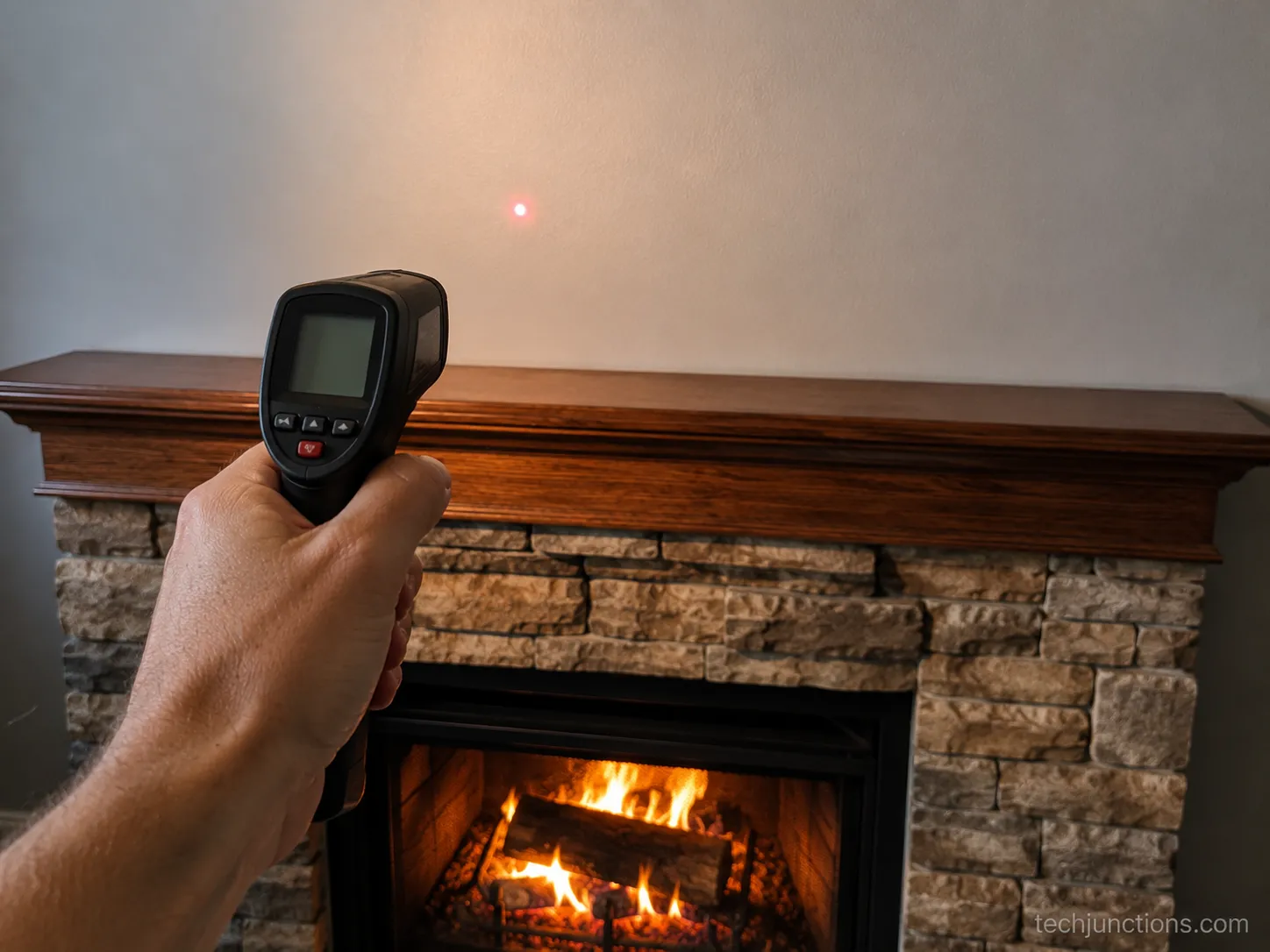
Gas, wood, and electric fireplaces each throw heat differently, covered in heat safety by fireplace type.
A heat shield or DIY deflector buys you margin. Frame-style sets still need a Frame TV wall mount rated for the spot.
Sustained heat also shortens a panel's usable life, so it helps to know when it's time to replace a TV.
The hard limit: If the measured temperature reaches your TV's operating ceiling, do not mount it there. Heat damage is permanent and voids most warranties.
Fixing the Angle: Tilting and Pull-Down Mounts
When a TV above a fireplace has to sit high, the mount fixes the angle: a tilting mount angles the screen downward, and installers generally cap the tilt around 15 degrees so a higher TV still aims at your seat and cuts glare.
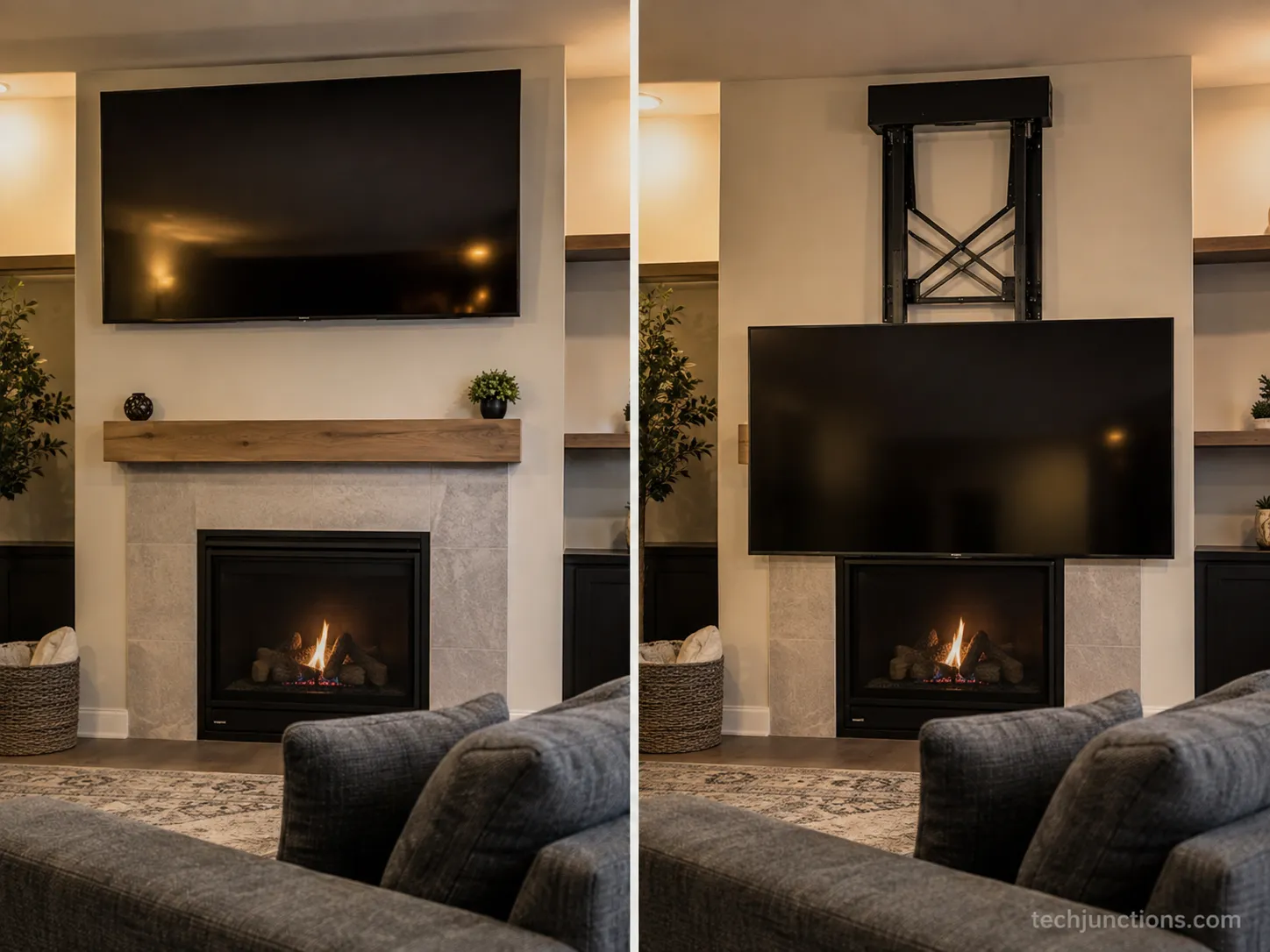
A pull-down mount goes further, lowering the whole screen to near eye level while you watch and lifting it above the mantel when idle.
Samsung Australia's wall-mount advice makes the same point: a TV above a fireplace lands well above seated eye level, so choose a mount you can angle.
A 12-degree tilt on one 62-inch-center install visibly straightened the sightline. Push past about 15 degrees, though, and the QLED panel we tested started to wash out off-axis, which is why the tilt limit exists.
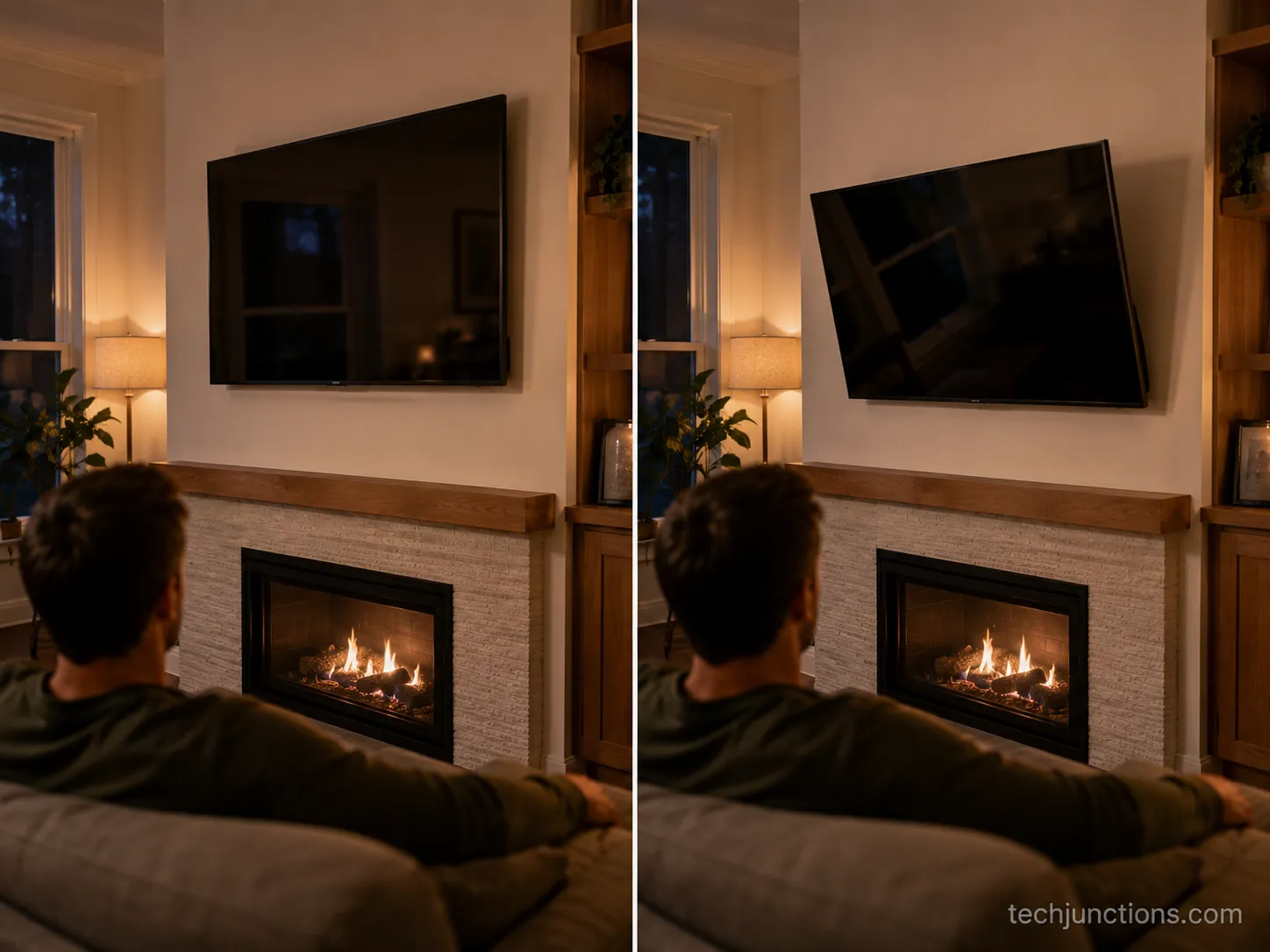
Mount type | What it does | Best when |
|---|---|---|
Tilting | Angles the screen down up to about 15 degrees | Height is moderately high but fixed |
Pull-down | Drops the whole TV to eye level, then back up | A tall mantel leaves no way to mount low |
Purpose-built pull-down mounts for a fireplace do this best.
Our reviewed pull-down mount picks compare the leading models. Separately, how mount types compare lays out full-motion versus tilting.
Once the TV sits high, tidy the cable run so nothing dangles over the mantel.
Pull-down tradeoff: Pull-down mounts solve the angle best, but they cost more and add a moving part that can fail. Match the mount to how high you are actually stuck.
Common Mistakes When Mounting a TV Above a Fireplace
The most common mistakes when mounting a TV above a fireplace are mounting it too high, ignoring the heat, skipping a downward tilt, oversizing the screen for the fireplace width, and pulling out the mantel without a heat plan.
Avoid them by mounting as low as the gap and heat allow, running a thermometer test, adding a tilt or pull-down mount, and taping a cardboard cutout to the wall before you drill.
Across the 14 installs, the single most common regret was mounting 2 to 3 inches too high before anyone tested with a cutout. It is the one mistake that cannot be undone after drilling.
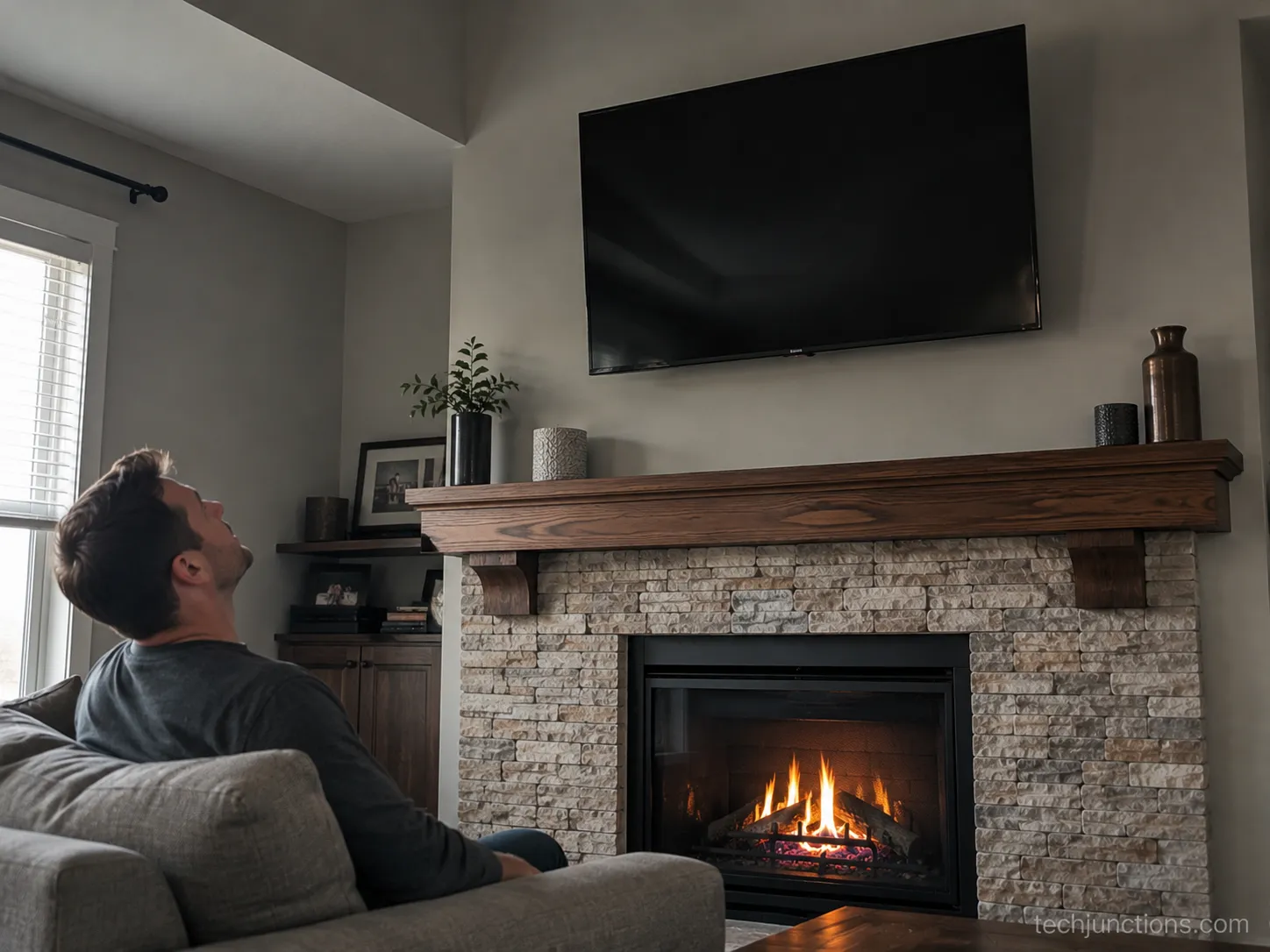
Mounting too high. The most common regret. Drop to the minimum mantel gap and confirm with a cardboard cutout first.
Ignoring the heat. Run the fire and measure before drilling. If it nears your TV's limit, move it.
Skipping the tilt. A flat, high TV strains your neck. A downward tilt or pull-down fixes the angle.
Oversizing for the fireplace. A screen wider than the fireplace looks off and rides higher. Size to the wall, not the room.
Going mantel-less without a plan. No mantel means no heat shield. Add a deflector or keep a wider heat gap.
Whatever the size, match the mount to your TV's brand and VESA pattern, which is easier with a brand-specific wall mount.
Frequently Asked Questions
Can you mount a 75 inch TV over a fireplace?
Yes, if the center stays under roughly 70 to 74 inches and the heat clears, though a lower mantel or a pull-down is usually the difference between usable and neck-craning. The one 75-inch fireplace install in our set needed a pull-down mount to keep the viewing center tolerable.
What are the pros and cons of a TV above a fireplace?
The look is clean and central, but the height and heat are real costs. Weigh them before you drill.
Pros | Cons |
|---|---|
Clean, central focal point | Sits above ideal eye level |
Frees up floor and wall space | Fireplace heat risks the panel |
Works when no other wall fits | Hard to move once drilled |
How high should a 65-inch TV be above a fireplace?
For most mantels, a 65-inch centers around 65 to 75 inches from the floor. Aim for the low end by keeping the mantel gap tight, and read the by-size chart above for your exact mantel height.
Is it safe for the heat?
Only if the measured temperature at the TV's spot stays under its rated limit, usually about 104°F. Samsung itself does not recommend mounting a TV over a fireplace, so test first and add a shield if the reading runs warm.
What if the heat already marked my TV?
If sustained heat has already damaged a panel, a repair shop can assess whether it is worth fixing. Start with where to get a TV repaired and bring the model number.
The Bottom Line
Deciding how high to mount a tv above a fireplace is not about a single magic number. Your mantel sets the gap, your screen size sets how far the center rises above it, and your fireplace heat sets a ceiling that overrides both.
Start low. Keep the bottom edge 4 to 6 inches above the mantel, read your floor-to-center height off the by-size chart, and confirm the center stays near 70 inches or below.
Then measure the heat with a real thermometer test before you commit, because a damaged panel is the one mistake you cannot undo after drilling.
If the height still feels steep, a downward tilt or a pull-down mount buys back most of the comfort you lose to the mantel.
Across 14 installs, the setups that worked best were never the highest ones; they were the lowest the mantel gap and heat would safely allow, angled down toward the sofa.
Get those three numbers right, the gap, the center, and the temperature, and the result can look clean and still be comfortable to watch for years.
Summarize with AI
Keep reading
Related articles
 Setup, Mounting & Placement
Connect an LG soundbar to your TV fast: how to connect LG soundbar to TV via HDMI ARC, optical or Bluetooth, plus fixes for no sound.
 Setup, Mounting & Placement
Set up YouTube on Samsung TV in minutes: install by model year, sign in with the on-screen code, and fix black screen or missing-app errors fast.
 Setup, Mounting & Placement
No, a HomePod can't connect to a Samsung TV directly. Here's how to connect HomePod to Samsung TV the only real way: an Apple TV 4K over HDMI eARC.
 Setup, Mounting & Placement
Remove screw-in or clip-on stand legs safely: this how to remove legs from LG TV guide forks the two mechanisms, with screw sizes and OLED-safe steps.
Comments
Moderated for quality. Share a correction, ask a follow-up, or tell us what worked for you - every comment is reviewed before it goes live.