
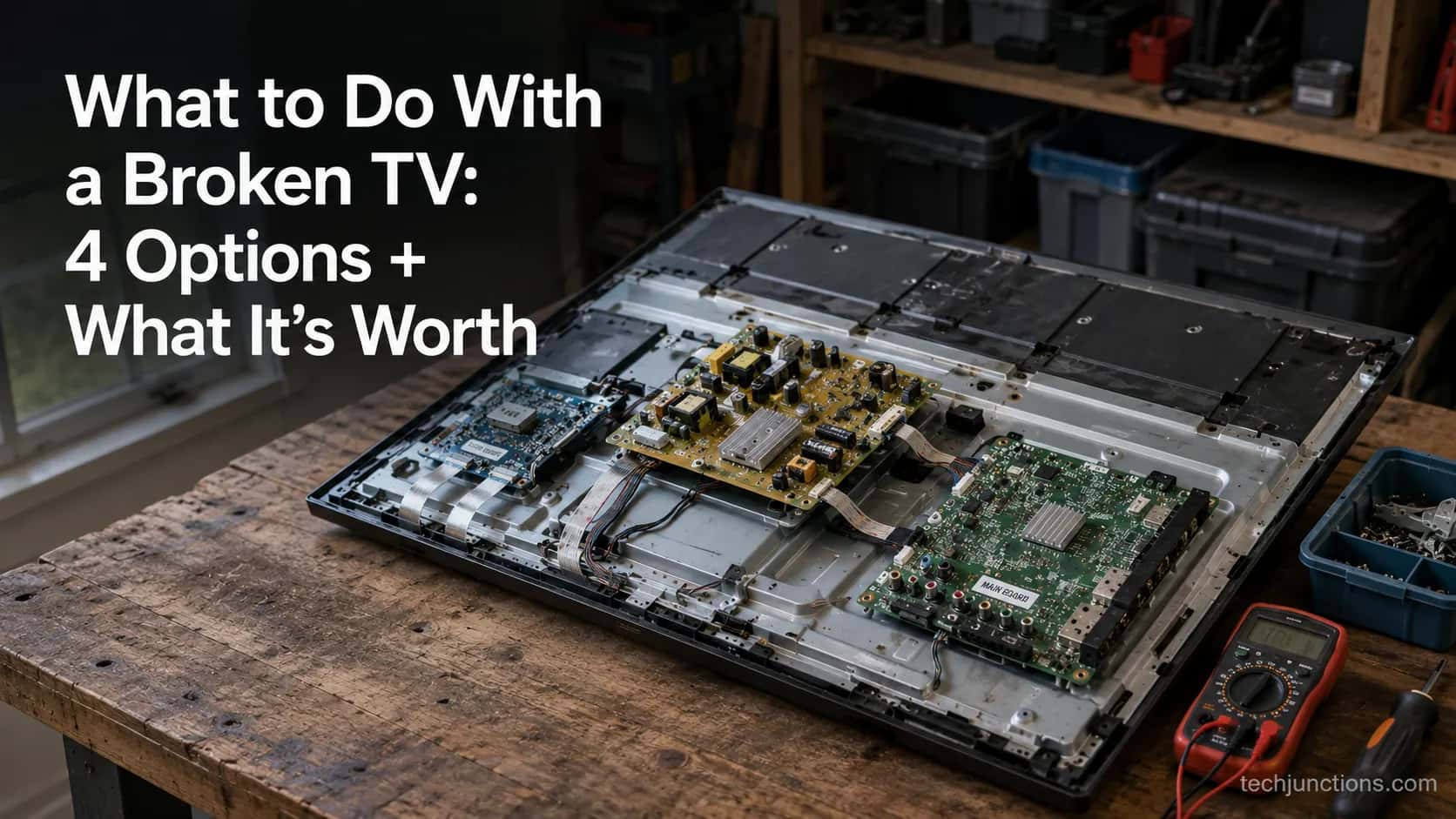
What to Do With a Broken TV: 4 Options + What It's Worth
Sell it for parts, part it out, repurpose it, or recycle it free, that's what to do with a broken TV, plus what a broken set is really worth.
Written by Derek WhitfieldReviewed by Marcus Whitfield
Last updated on September 3, 2026
When you buy through links on our site, we may earn an affiliate commission (at no extra charge), which we use to fund new product tests. Learn more.
Summarize with AI
A dead television feels like a $600 mistake sitting in your living room, and the internet does not help: one page says sell it for cash, another says just recycle it, a Facebook thread says a guy three towns over might want it.
The honest truth is simpler and a little deflating. A broken TV is worth almost nothing as a whole unit, because the panel is most of what you paid for, and a broken panel is the one part nobody can cheaply fix.
What still has value is the handful of boards behind that panel. So the smart move is to match your set to one of four honest options rather than chasing a payday that is not there.
This guide walks all four, tells you what each actually returns, and keeps you from paying to dump something you could have sold.
What to Do With a Broken TV: Your Options at a Glance
What to do with a broken TV comes down to four routes, ranked by realistic value. A broken set is worth little whole, because the panel represents the bulk of its cost, and the value that remains lives in a few salvageable boards.
Your options are to sell the whole set as parts, part it out yourself and sell the boards individually, repurpose the backlight or the working panel, or recycle it responsibly for free. Expect to recover tens of dollars, not hundreds.
Here is the quick menu:
Sell it whole for parts: lowest effort. List it as-is; a flipper, scrapper, or repair shop takes it off your hands for a small sum.
Part it out yourself: most money and most work. Pull the power, main, and T-Con boards and sell each one.
Repurpose it: keep it out of the waste stream. Turn the backlight into a light panel, or run a still-good panel as a plain second screen.
Recycle it responsibly: the free, legal exit when there is nothing left to sell. Never the curb.
Across three dead sets I parted out and rehomed in February 2026, not one sold whole for more than its boards were worth on their own.
That single finding shapes everything below. Still not sure the set is actually dead? Start with the triage in the next section.
Is Your TV Really Broken? A 60-Second Triage
Before you dispose of anything, spend a minute confirming the set is truly dead, because some faults that look fatal are a cheap board or a loose ribbon.
A dead TV usually splits into four fault classes, and three of them can be genuinely cheap fixes: a no-power or clicking set often means the power board, lines or a half-lit screen often mean the T-Con board or a loose ribbon, and a dark screen showing a faint image under a flashlight almost always means a dead backlight.
Only a cracked or spider-webbed panel is a true write-off.
Run this quick check before you decide.
Symptom | Likely cause | Fixable or fatal | Where to go next |
|---|---|---|---|
No power, no standby light, faint clicking | Power supply board | Often a cheap fix | Test or sell the board |
Vertical or horizontal lines, half the screen out | T-Con board or loose ribbon | Often a cheap fix | Reseat or swap the board |
Dark screen, faint image under a flashlight | LED backlight | Sometimes a moderate fix | Backlight repair or salvage |
Cracked, shattered, or spider-web glass | The panel itself | Fatal, not worth fixing | Move to sell, salvage, or recycle |
Some of these are the early warning signs a set is failing rather than dead. If the fault is cheap, it may be worth repairing instead of scrapping.
A few faults even have fixes that actually work at home. Thin horizontal lines on an LG panel, for instance, often trace to a board, not a dead screen.
On the 2020 50-inch Vizio in my February test batch, the screen looked stone dead until I held a flashlight at an angle and saw a faint, ghostly image still there.
That is a dead backlight, not a dead TV, and it changed the set from scrap to salvage.
One hard line: a spider-web crack is fatal. No epoxy, tape, or online hack brings a fractured panel back, so do not spend a dollar trying.
What a Broken TV Is Actually Worth
A broken TV is worth very little as a whole unit and a fair amount as individual boards, and knowing the gap saves you from both false hope and needless dumping fees.
The panel is the single most expensive part of any television, so once it fails, the resale value of the set collapses.
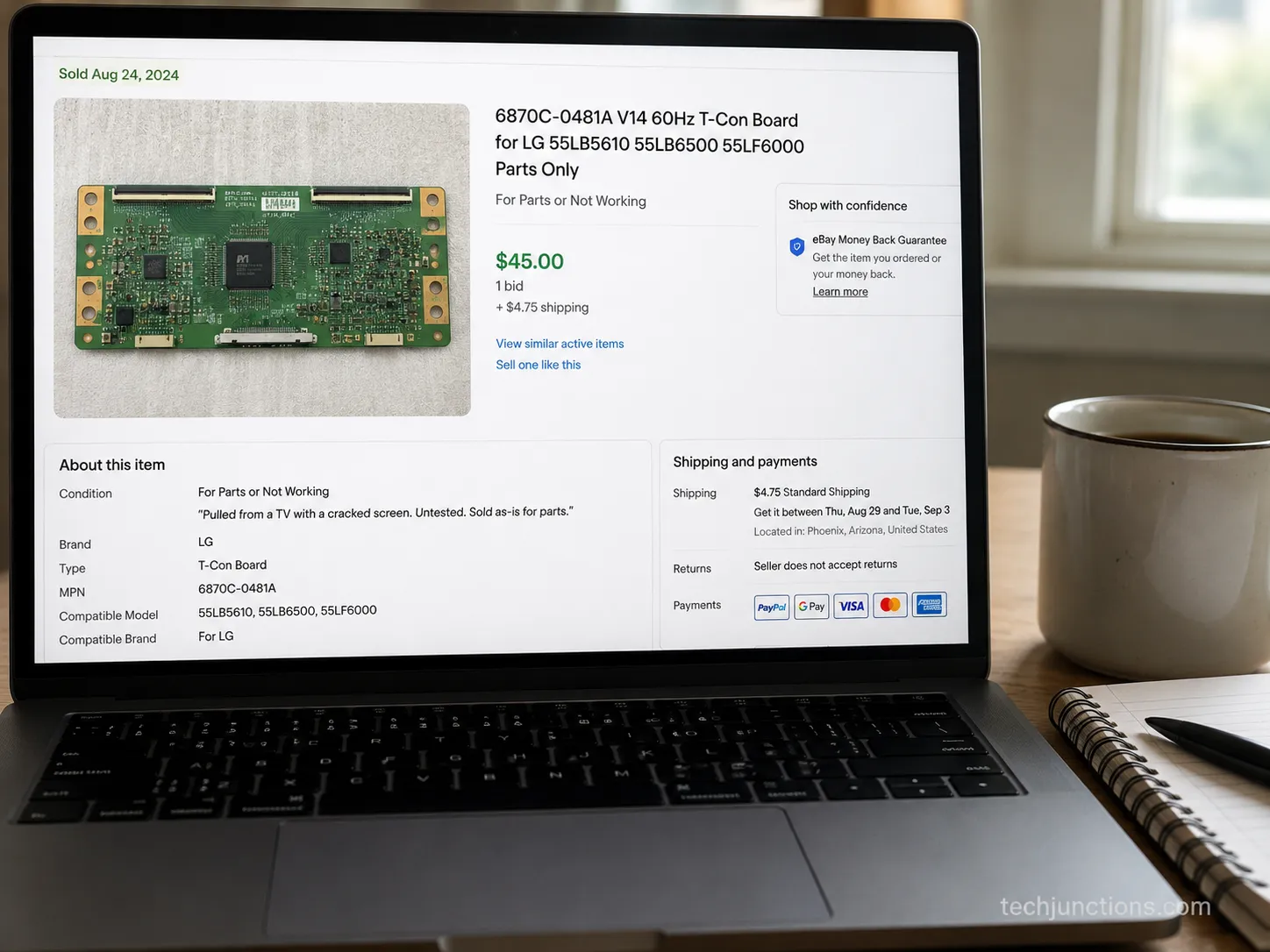
What holds value is the electronics behind it: a working power supply, main, or T-Con board pulled from a screen-broken set commonly sells in the low tens of dollars, and specialty sellers list these in the marketplace's Parts Only category precisely because demand is steady.
The scrap metal itself, by contrast, is worth only a few dollars.
Here is the honest range, based on my own February 2026 sales and current Parts Only listings.
What you are selling | Realistic return | Notes |
|---|---|---|
Whole set, listed as parts only | $30 to $70 local pickup | Depends on brand, size, which boards still work |
T-Con board | $28 to $55 | The most in-demand piece to harvest |
Power supply board | $20 to $45 | Common failure part, steady buyers |
Main board | $18 to $40 | Model-specific, sells slower |
Scrap material (copper, aluminium) | $2 to $8 | Why recyclers take it, not why you should |
The forum skeptics who say "no one is going to buy it" are half right: nobody wants your dead set as a television.
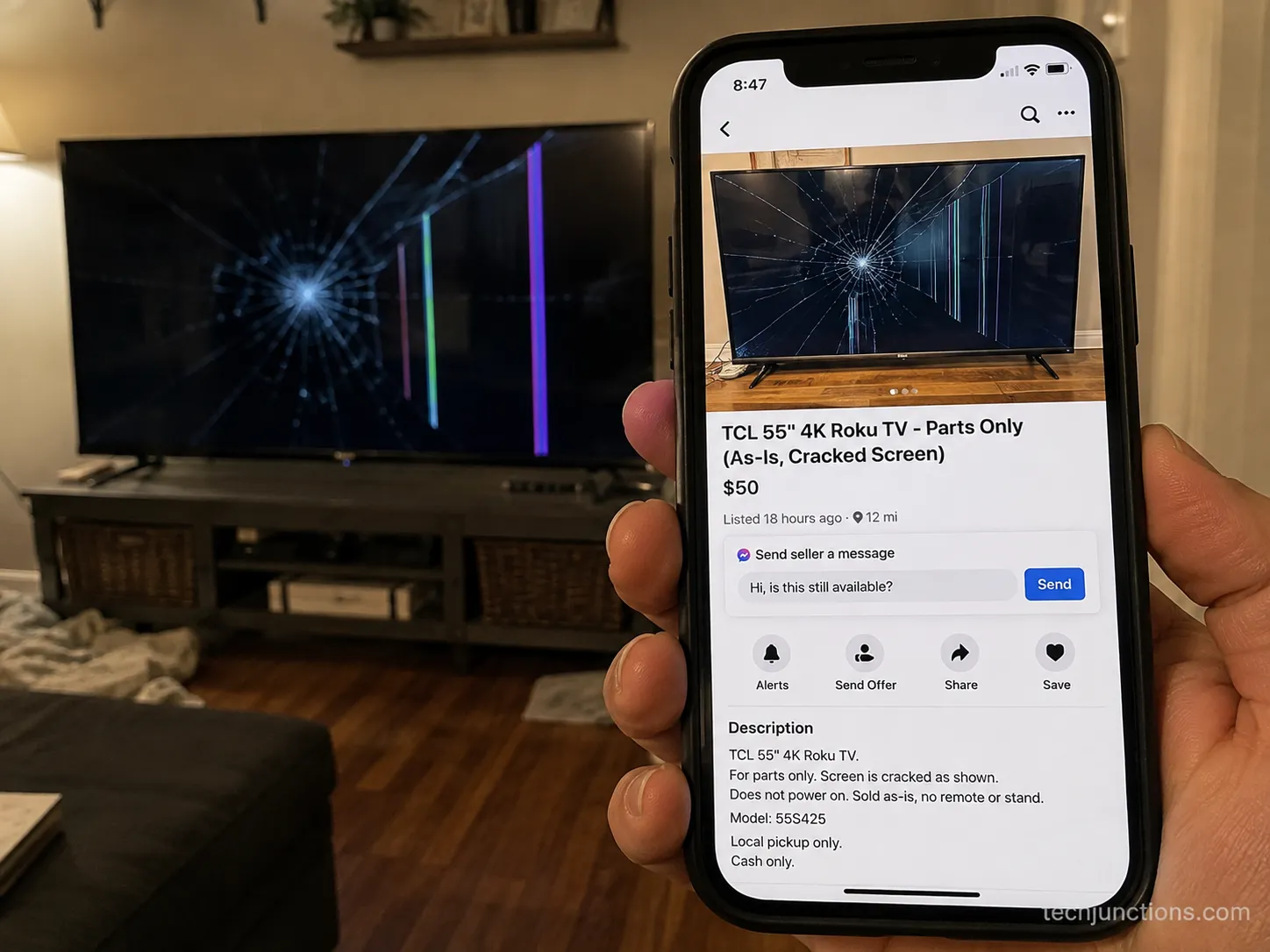
Plenty of people want its boards. My cracked 2019 55-inch TCL is the proof point: the T-Con board sold for $45 and the power board for $32, while the whole carcass went for $60 to a local flipper.
For context on the other side of the math, a replacement panel costs almost as much as a new set, and it helps to compare that against what a repair would run before you decide anything is worth fixing.
Sell the Whole TV for Parts
Selling the whole set as parts is the lowest-effort option and closes the "who buys broken TVs" question with one answer: flippers, scrappers, board harvesters, and repair shops all buy dead sets, as long as you list them honestly.
Can you sell a broken TV? Yes, and often faster than you would guess, because these buyers are gambling that the fault is a cheap board-level fix they can flip.
The key is to list it as parts only, sold as-is with no returns, and to name the exact fault and model so the buyer knows what they are getting.
Here is how to list it so it actually moves.
Photograph the whole set, the screen damage, and the connector panel clearly.
Read the board part numbers off the stickers inside the back and add them to the listing.
Title it with the brand, model, size, and the words parts only.
State the fault plainly and mark it sold as-is, no returns.
Price it to move: a fast $40 beats a listing that sits for a month.
Where to sell, roughly in order of who pays and who is easiest: the marketplace Parts Only category for national reach, Facebook Marketplace or Craigslist for local pickup with no shipping, scrappers and e-waste flippers for bulk, and repair shops that harvest boards.
A cracked or broken screen is the classic parts-only candidate, and if it still turns on but the glass is cracked, weigh the risks before you keep using it.
A local repair shop may buy it for parts too, the same shops that book service work.
I listed the cracked 55-inch TCL as parts only, as-is, with photos of every board sticker, and it sold to a local flipper in four days for $60.
The one thing that made it painless was disclosure.
Disclose every fault in writing, or expect a return dispute. Parts buyers accept broken; they do not accept surprises.
Part It Out Yourself
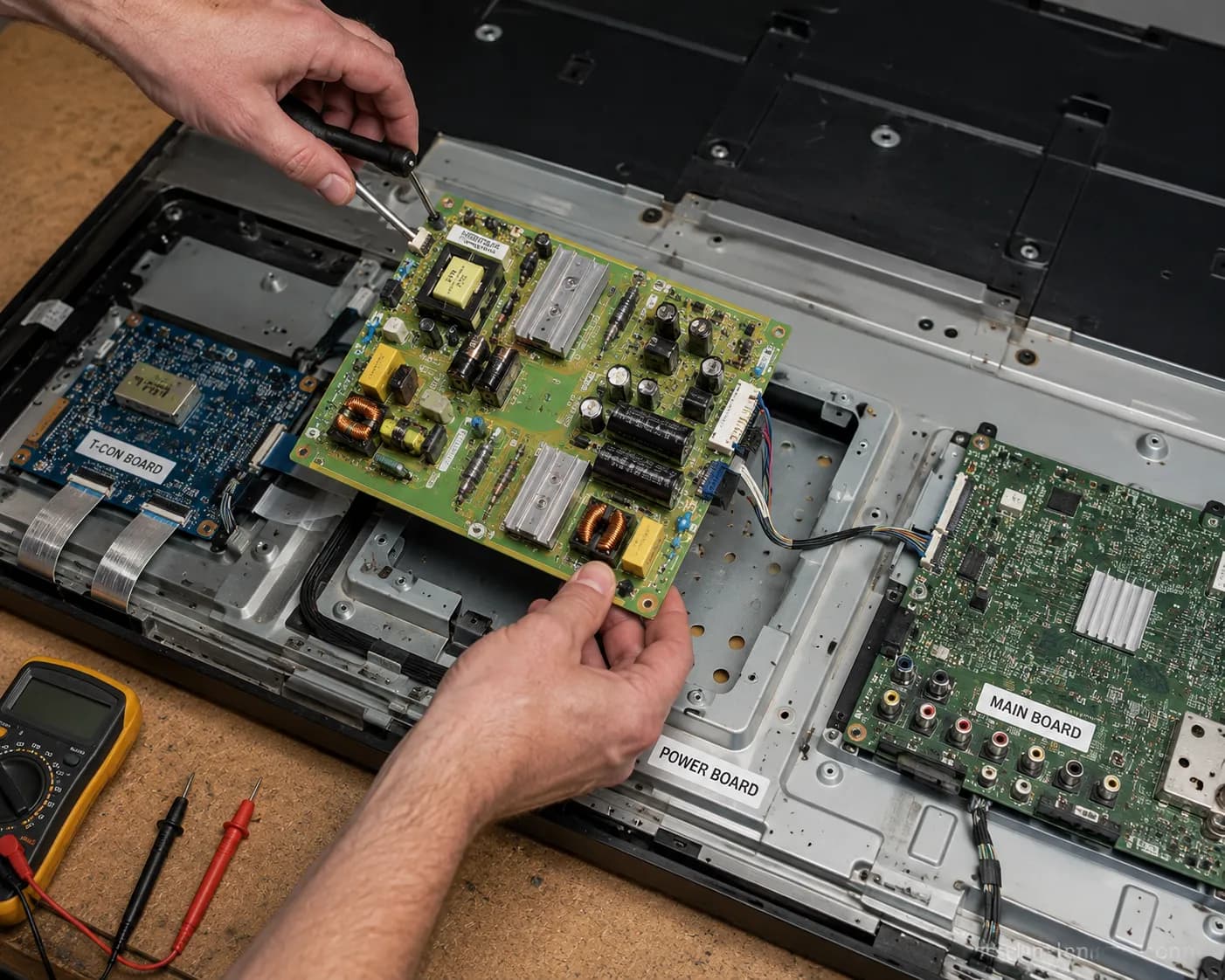
Parting it out means opening the set, harvesting the good boards, and selling each one separately, which returns the most money for the most effort.
The three pieces worth pulling are the power supply board, the main board, and the T-Con board, and a healthy board from a screen-broken set sells on its own more reliably than the whole carcass.
Before any board that stored your accounts leaves the house, wipe the smart-TV data, because certified recycling standards exist partly to guarantee destruction of all data on used electronics, and a signed-in board is a small privacy leak.
The boards, and why buyers want them:
Power supply board: the most common failure part, so replacement demand is steady.
Main board: model-specific and slower to sell, but valuable to someone with your exact set.
T-Con board: frequently the highest-value harvest, especially on larger panels.
How to harvest them safely:
Unplug the set and leave it 24 hours before opening, so any stored charge dissipates.
Remove the back panel and photograph every connector before you unclip anything.
Unclip each board, read and record its part number, and bag it with that number.
Bench-test each board with a multimeter so you can list it as tested and working.
Factory-reset the smart platform first, then list each board individually.
Set aside anything reusable before it goes: a decent pair of TV headphones outlasts the set it came with. The single most in-demand harvest is usually the T-Con board, so start there.
On the 43-inch Samsung, I pulled all three boards, tested each with my multimeter, and the good power board sold for $32 within a week. The teardown took about forty minutes once the back was off.
Never open a CRT tube TV. Those hold a lethal stored voltage even when unplugged, so a tube set goes straight to a certified recycler, never to your workbench.
Repurpose It: From Backlight Skylight to Second Screen
Repurposing keeps the set out of the waste stream, and the best idea depends on what still works inside it.
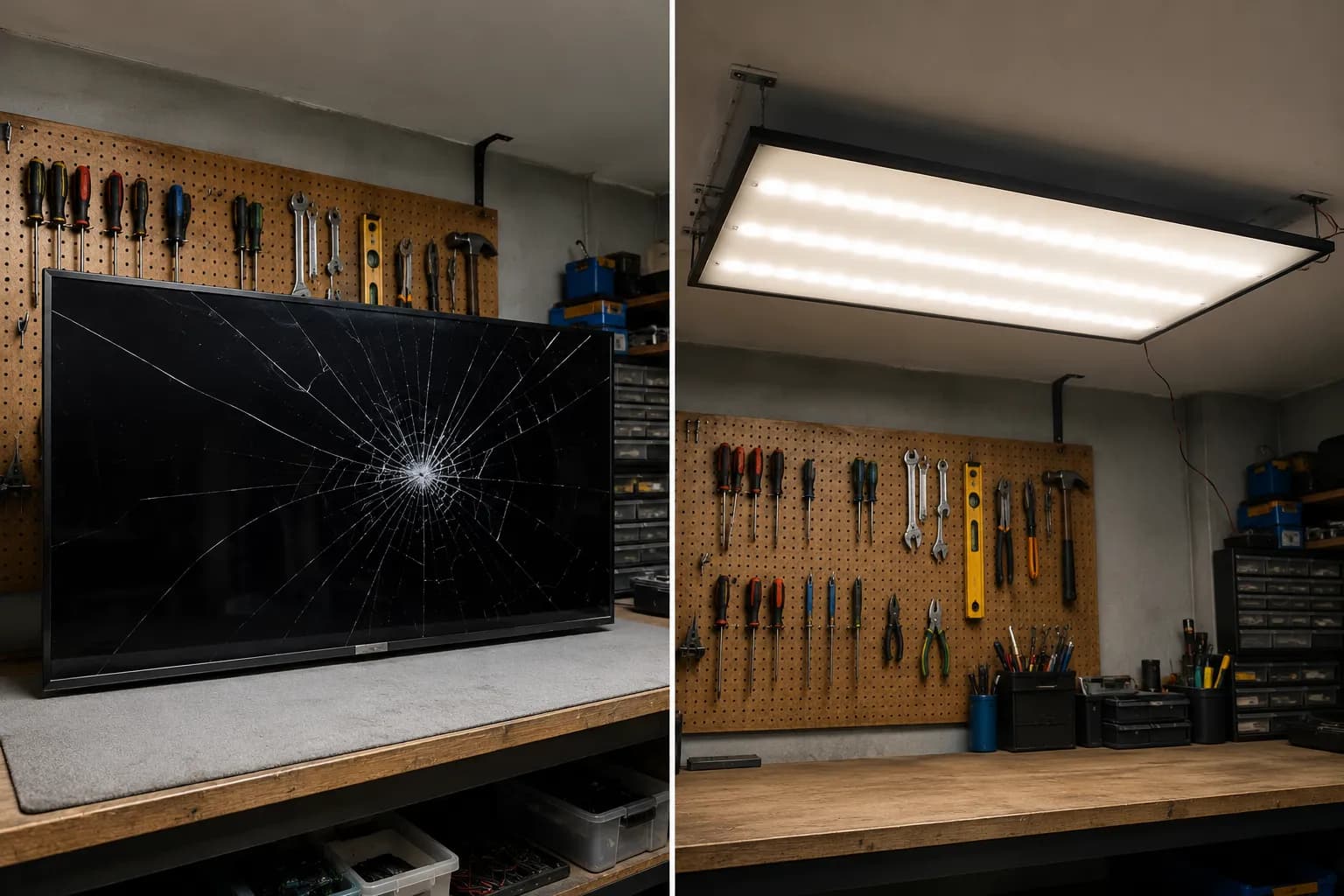
If the panel is cracked but the backlight still lights, the diffuser sheets and LED strips make a genuinely useful flat light: hobbyists have turned them into workshop lights and faux skylights for years.
If the panel is fine but the smart platform died, you do not have a dead TV at all; you have a plain display that an external device or laptop can still drive.
Most other "turn your TV into art" ideas quietly assume an intact panel, so be realistic about which camp your set is in.
A few reuse paths that actually work:
Backlight to light panel: pull the diffuser and LED strips from a cracked set for an even workshop or photography light.
Smart platform dead, panel alive: run it as a dumb second screen from an external box.
Last resort with a smile: a rage room will happily take a truly dead set, which beats the landfill.
If the panel still works, you can drive it from a laptop as a plain monitor.
Once it is set up, you can still use display features like a mode such as Filmmaker Mode, or dial in the picture settings the way you would on any working screen.
From the cracked 55-inch TCL, I pulled the diffuser and LED strips and built a flat workshop light that has run over my bench for six weeks without a flicker. It cost nothing beyond an hour and a spare power lead.
Be honest about the panel. If the glass is fractured, most reuse ideas are off the table, and salvaging the backlight is usually the only real option.
Recycle or Dispose of It Responsibly (Free Options)
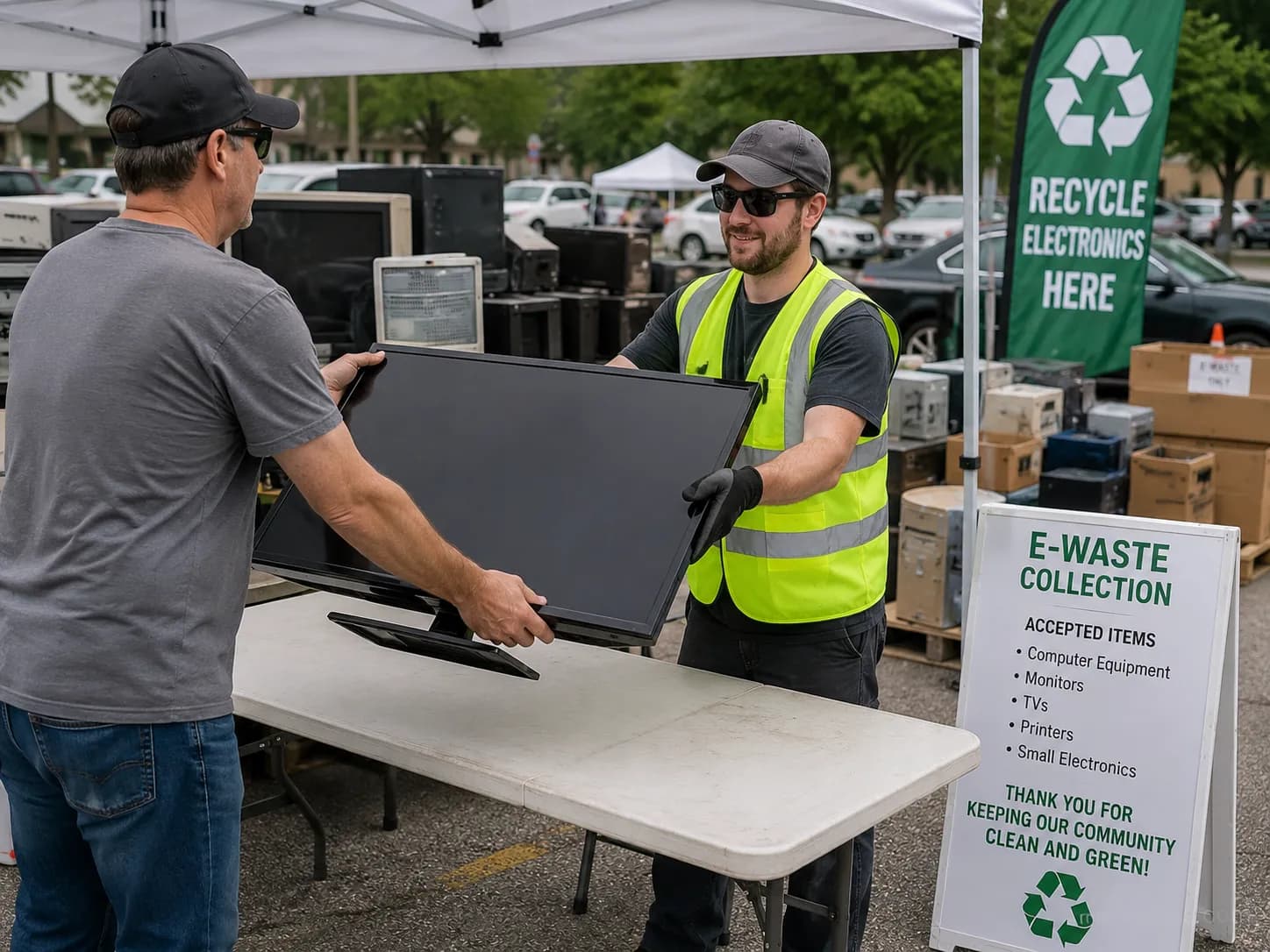
If there is nothing left to sell, recycling is the responsible exit, and in most of the country it is free, but a TV can never go in the regular trash.
Flat-screen sets contain mercury in older backlights and tube sets hold several pounds of leaded glass, which is why the US Environmental Protection Agency urges donation or certified recycling over disposal, and why televisions are banned from landfills in roughly 25 states plus Washington, DC.
Illegal curbside dumping can draw real fines. The good news is that free routes are everywhere once you know to look.
Your free and low-cost options, cheapest first:
Municipal e-waste events: most counties run free collection days; check your city or county waste page.
State recycling programs: the 25-plus states with e-waste laws take TVs free at designated sites.
Manufacturer mail-back: LG, Samsung, and Sony run free take-back for their own brands.
Certified recyclers: R2 or e-Stewards facilities, which the Pennsylvania DEP and other state portals point to, plus the Earth911 locator for a drop-off near you.
Best Buy is the common fallback, and its 2026 terms are worth knowing exactly. Per Best Buy's recycling program, most states get free in-store drop-off for flat-panel TVs 50 inches and under, Pennsylvania, Wisconsin, and Michigan charge a $29.99 fee offset by a $30 gift card, and California, Connecticut, and Hawaii have no fee at all.
Home haul-away runs $49.99 with a delivery or $199.99 as a standalone service, and the program is for residents only.
Route | Typical cost | Best for |
|---|---|---|
Municipal e-waste event | Free | Anyone who can wait for the next event |
State program drop-off | Free | Residents of the 25-plus e-waste-law states |
Manufacturer mail-back | Free | LG, Samsung, Sony sets |
Best Buy in-store, under 50 inches | Free in most states | Convenience, no waiting |
Best Buy haul-away | $49.99 with delivery, $199.99 standalone | Large sets you cannot transport |
I took the dead Vizio to a county e-waste Saturday and dropped it for free, after Best Buy quoted a fee for hauling the larger 55-incher.
For the full local playbook, see how to recycle a set the free way, and if a covered defect killed it while still under warranty, a claim may beat recycling entirely.
Never put a TV at the curb. Beyond the fines, the lead and mercury are exactly what the recycling system exists to keep out of the ground.
Before You Sell or Scrap It: Safety + Wiping Your Data
Whichever route you pick, three quick steps protect your data, your wallet, and your hands before the set leaves.
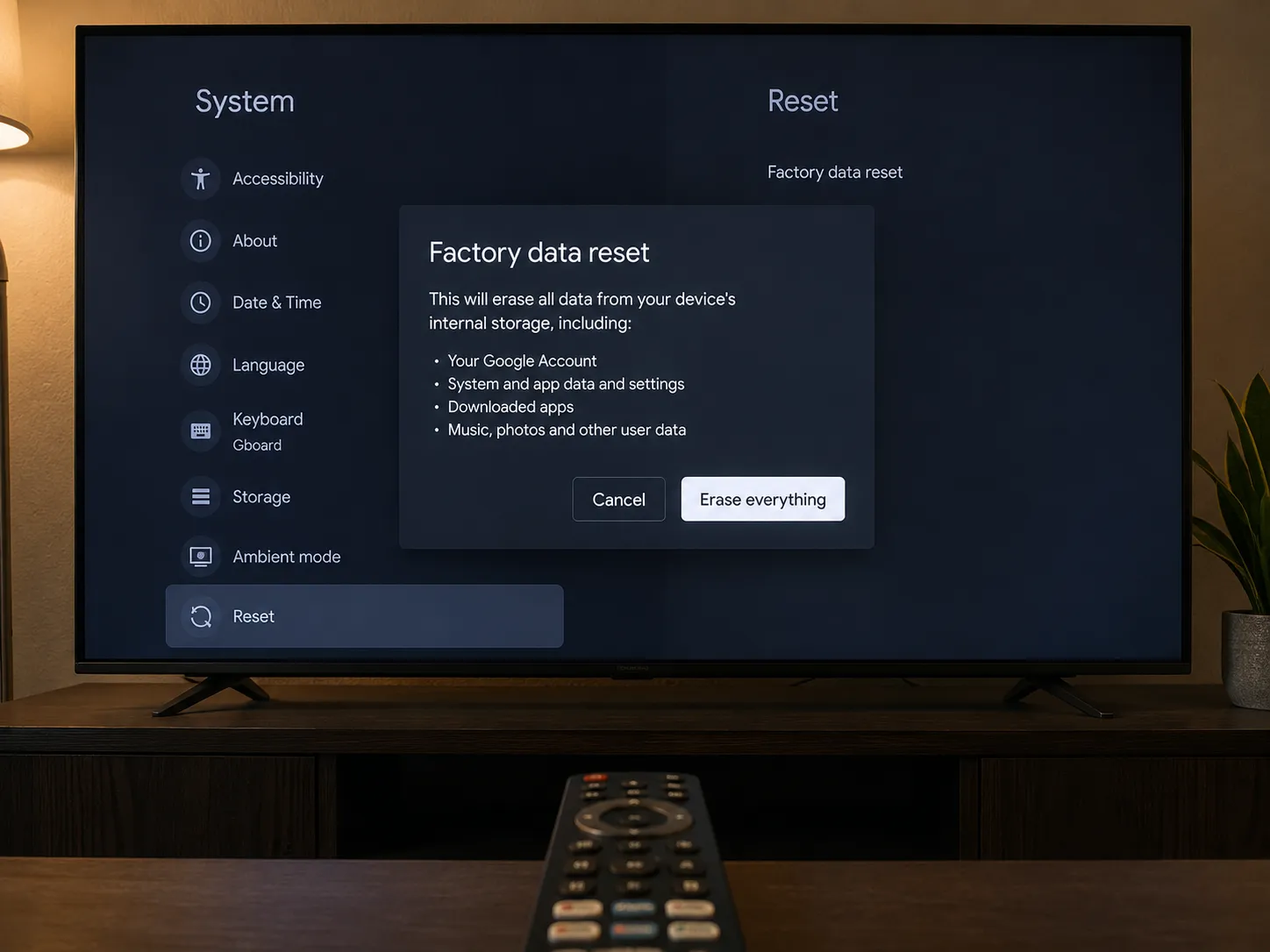
First, wipe it: a signed-in smart TV holds your streaming accounts and Wi-Fi credentials, so factory-reset the platform before you sell, part out, or recycle it.
Second, salvage what still has value, because remotes, headphones, wall mounts, and stands often outlive the panel.
Third, handle it safely, since large panels are a two-person lift and tube sets carry stored voltage.
Run this short pre-flight checklist.
Factory-reset the smart platform and sign out of every account.
Set aside the remote, headphones, wall mount, and stand to keep or sell.
Unplug and wait 24 hours before opening any set, and never open a CRT.
If you are keeping the panel as a display, reconnect it and confirm it works.
Hold on to the good accessories: a voice remote is worth keeping or reselling on its own. And a universal remote you can re-code will outlive the set it came with.
If you keep the panel as a second display, rescan the channels once it is set up.
On the 43-inch Samsung, I factory-reset the Tizen platform from the settings menu, watched the confirmation screen clear my accounts, and kept the voice remote, which still pairs with our replacement set today.
A signed-in TV is a privacy loophole. Wiping it takes two minutes and closes the account access a buyer or recycler would otherwise inherit.
Frequently Asked Questions
What am I supposed to do with a broken TV?
Match it to one of four routes by realistic value: sell the whole set as parts, part it out and sell the boards, repurpose the backlight or a working panel, or recycle it responsibly for free. A cracked panel means the set is worth little whole, so its value lives in the salvageable boards, not the screen.
Are broken TVs worth anything?
Yes, but as parts, not as a television. A working power, main, or T-Con board pulled from a screen-broken set commonly sells in the low tens of dollars, while the whole carcass fetches roughly $30 to $70 for local pickup. The raw scrap metal is worth only a few dollars.
Will Best Buy take a broken TV?
Usually yes. Best Buy accepts flat-panel TVs 50 inches and under for free in-store recycling in most states, charges a $29.99 fee in Pennsylvania, Wisconsin, and Michigan offset by a gift card, and has no fee in California, Connecticut, and Hawaii. Larger sets need the $49.99 or $199.99 haul-away service.
Who buys broken TVs near me?
Local flippers, scrappers, board harvesters, and repair shops all buy dead sets, most easily through Facebook Marketplace, Craigslist, or a repair shop for local pickup. List the set as parts only, sold as-is, with the model number and clear damage photos so the buyer knows exactly what they are getting.
How do I dispose of a broken TV for free?
Use a municipal e-waste collection event, a state recycling program in the 25-plus states with e-waste laws, a manufacturer mail-back program for your brand, or free in-store drop-off at Best Buy for sets under 50 inches in most states. A TV can never go in the regular trash.
What should I do with a broken TV screen?
If the glass is cracked, the panel is a write-off, but the backlight, boards, and accessories still have value, so salvage those and recycle the rest. Even a working remote counts: a cable-box remote can be reprogrammed to a new set rather than tossed.
The Bottom Line on a Broken TV
Knowing what to do with a broken TV starts with letting go of the payday.
The set as a whole is worth almost nothing once the panel fails, and the value that remains is spread across a few boards, a salvageable backlight, and the accessories most people throw away.
Line your set up against the four options and the decision makes itself: sell it whole if you want it gone with minimal effort, part it out if you want the most money, repurpose it if you would rather keep it useful, or recycle it free if there is nothing left to save.
The one move that never pays is the curb, both for the fines and for the lead and mercury the recycling system is built to contain.
Wipe your data, keep the good accessories, and pick the route that fits your patience.
Do that, and a dead television stops being a $600 mistake and becomes a small, honest bit of recovered value instead.
Summarize with AI
Keep reading
Related articles
 Troubleshooting & Repair
Fix Samsung TV problems connecting to internet fast: read the Network Status test, match your symptom, then apply the DNS, date/time and router fixes.
 Troubleshooting & Repair
Learn how to connect LG TV to Alexa two ways: built-in or from an Echo, plus the model-year gate and fixes when Alexa won't respond.
 Troubleshooting & Repair
Fix Insignia TV horizontal lines on screen in minutes: a hard reset and one built-in menu test show instantly if it's a cheap cable or a dead panel.
 Troubleshooting & Repair
Compare TV repair cost by problem, type, and size in 2026: typical fixes run $100-$300, cracked screens $400+. See what's fair and when to replace.
Comments
Moderated for quality. Share a correction, ask a follow-up, or tell us what worked for you - every comment is reviewed before it goes live.