
Recycle a TV: 6 Routes Tested, What Each Costs (2026)
Recycle a TV the right way: never curbside. Compare Best Buy, free e-waste days and certified recyclers by cost, plus how to find a drop-off near you.
Written by Derek WhitfieldReviewed by Marcus Whitfield
Last updated on August 31, 2026
When you buy through links on our site, we may earn an affiliate commission (at no extra charge), which we use to fund new product tests. Learn more.
Summarize with AI
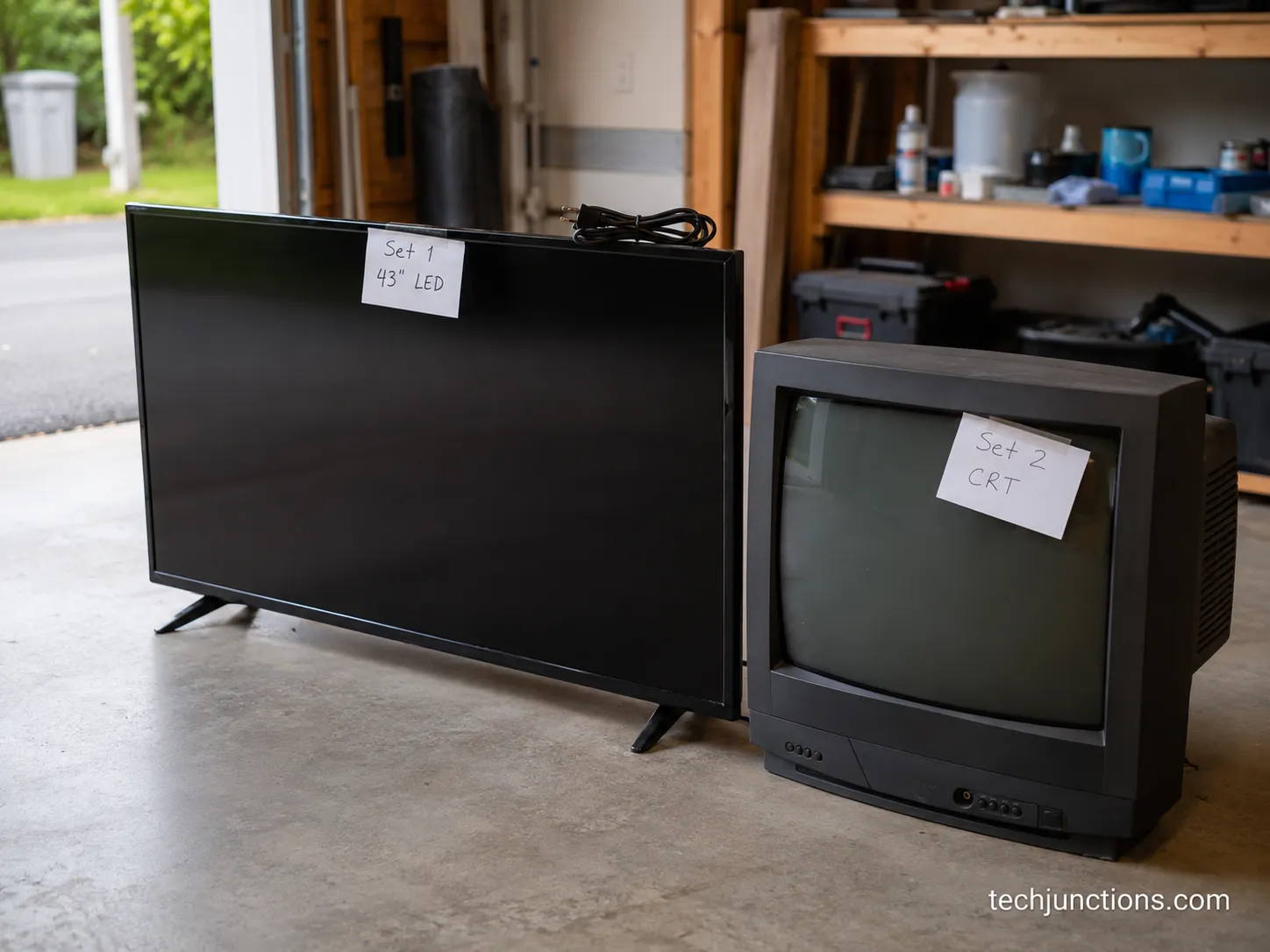
Over three weeks this fall I hauled the same two televisions, a 43-inch LED flat panel and an old 27-inch CRT tube set, through six different disposal routes around the Columbus metro. I paid full price at some, paid nothing at others, and got turned away twice.
This guide is what that testing taught me, with the real numbers attached.
How to Recycle a TV: The 30-Second Answer
The fastest way to recycle a TV is to drop it at a free county e-waste collection event if one is scheduled near you, or pay a flat fee at a certified recycler or a Best Buy store if you need it gone this week.
Working sets under about 50 inches can often be donated instead of recycled.
Never set a television at the curb. The US EPA classifies it as electronic waste that needs dedicated handling, and roughly 23 to 25 states now ban it from household trash outright.
Here is the quick-start checklist I follow before any route:
Confirm whether your set works or is dead. Working sets have a donation path; dead ones do not.
Factory-reset the TV and sign out of every streaming account so your data does not leave with it.
Measure the screen diagonally, since size caps and per-inch fees hinge on that number.
Identify the type: flat panel, or a heavy CRT tube set that needs special handling.
Search for a free local option first, then price a paid one as backup.
Americans throw out an estimated 20 million televisions a year, and only about 17 percent of US e-waste gets recycled.
The rest is landfilled or stockpiled in closets and garages, so a little planning moves your set into that recycled sliver instead.
Why You Can't Just Throw a TV in the Trash
Throwing a television in the trash is illegal across much of the country and hazardous everywhere.
A single CRT tube holds 4 to 8 pounds of leaded glass, and older flat panels can carry mercury in their backlights, which is why California treats every TV as universal hazardous waste that cannot enter the regular waste stream.
In states with disposal bans, illegal dumping fines run from $500 to $10,000. Even where it is technically legal, a landfilled television leaches heavy metals that municipal trash systems are not built to contain.
Can you throw a TV in the trash?
In most of the US, no. As one frustrated Redditor put it, a television is a "covered device" that "can't be picked up at curbside," and setting it out usually earns a rejection tag or a fine rather than a pickup.
Massachusetts bans TVs from the trash statewide, and it is far from alone.
If you are still weighing whether the set is even worth keeping, our guide on spotting the signs a TV is dying can settle it before you haul anything anywhere.
I get why people are tempted. During my testing, a neighbor told me flat out it felt "cheaper to send it to the landfill," and on paper a curbside toss costs nothing.
The math changes the moment a fine lands, or when you realize a free e-waste day was scheduled two weekends later.
Before you write a set off, it is worth knowing whether a repair is worth it, because a fixable TV does not belong in any disposal route yet.
Sometimes the fix is simpler than it looks, and fixing a TV screen yourself is realistic for certain faults. When it is not, recycling is the responsible end of the line.
Your TV Recycling Options, Compared (Free vs Paid)
Television recycling breaks into five practical routes, and the right one depends on whether your set works, how big it is, and how fast you need it gone.
Retailer take-back is the most predictable, since Best Buy accepts most TVs for a per-unit fee at the customer-service counter.
Free municipal collection is the cheapest when the timing lines up, and certified recyclers sit in the middle on price while accepting almost anything, including tube sets.
Here is how the five compared when I ran both test televisions through them.
Route | Typical cost (flat panel) | Takes CRTs? | Speed | Best for |
|---|---|---|---|---|
County e-waste day | $0 | Usually yes | Slow (scheduled dates) | Anyone who can wait |
Certified recycler drop-off | About $18 flat | Yes, priced per inch | Same week | CRTs and odd sizes |
Best Buy in-store | $29.99 per TV | No | Same day | Fast, predictable |
Donation (working sets) | $0 | No | Same day | Working panels under ~50 inches |
Retailer haul-away | About $199.99 standalone | No | Scheduled pickup | No transport, buying a replacement |
One caveat surprised me: The big-box office-supply chains are out. Staples and Office Depot quietly stopped taking televisions, so any 2024-era guide still listing them is wrong for 2026.
Earth911's large-electronics guidance reflects the current reality, where TVs route to municipal programs, certified recyclers, and a shrinking list of retailers.
If you specifically want the retailer path, jump ahead to recycling through Best Buy.
If your set is dead and you want to salvage value first, weigh your options for a dead set before committing it to a recycling bin.
How to Find a TV Drop-Off Near You (Any State)
Finding a TV drop-off near you takes about five minutes with a ZIP-code search, but the listing is only a starting point, not a guarantee.
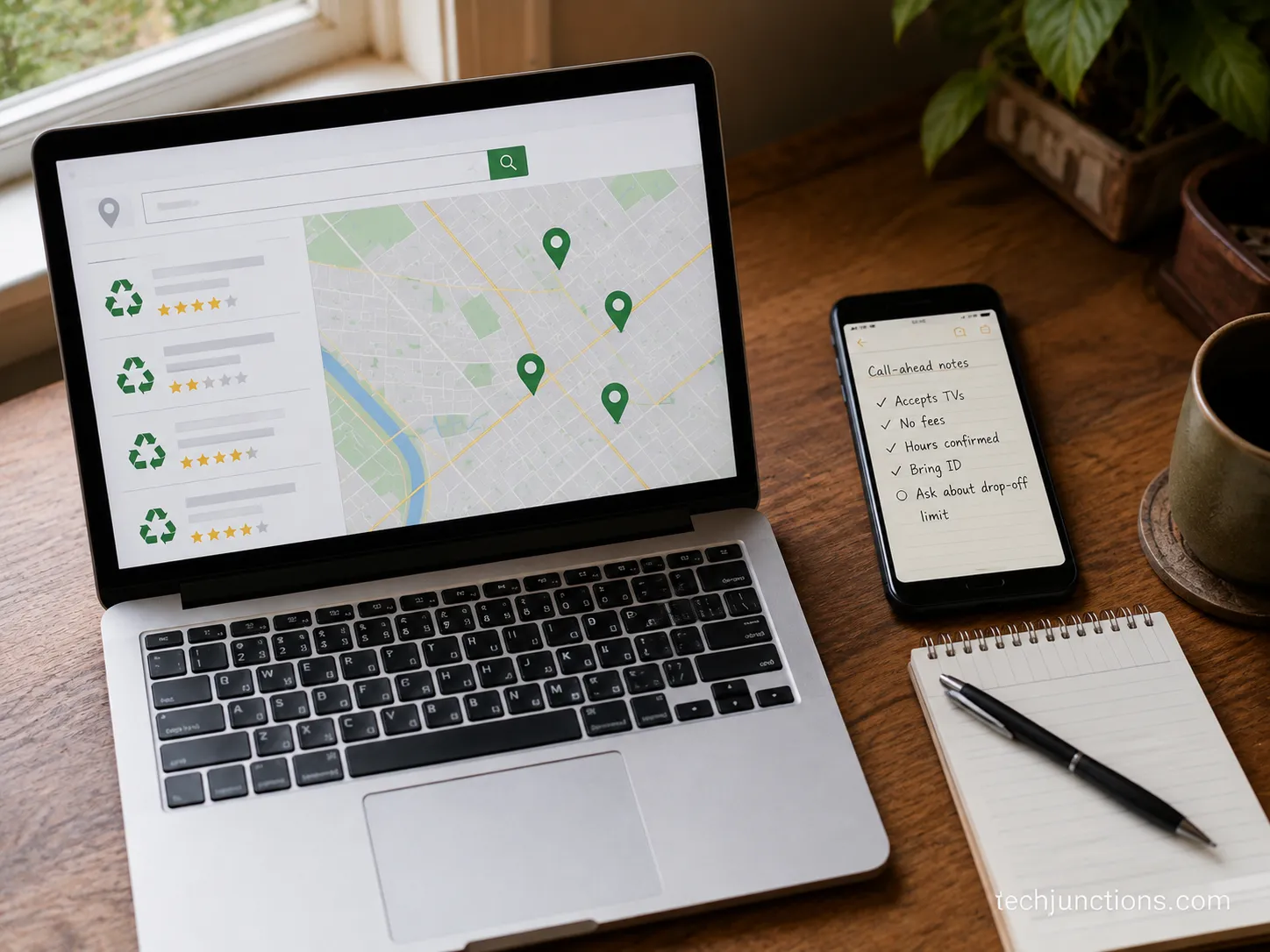
When I searched my area, Earth911's recycling locator returned four sites within 12 miles, yet two of them refused televisions when I phoned ahead.
The Call2Recycle and IERE TV directory cross-checks the same networks and helped me catch the gap. State environmental agencies keep the most authoritative lists worth finding.
Florida's DEP electronics directory is a good model for the kind of official state page you want to track down in your own area. Start there, then work outward to private locators.
Follow these steps to land on a site that will actually accept your set:
Search a recycling locator by ZIP code and the term "television" or "TV," not just "electronics."
Filter for sites within a distance you are willing to drive a heavy, awkward box.
Call each candidate and ask two things: do they take TVs, and do they take your size and type.
Confirm fees on the phone, since a listing that says "free electronics" often excludes TVs.
Ask about hours and whether it is a staffed counter or an unattended drop.
The call-ahead step is non-negotiable. A map pin means a site once accepted electronics, not that it takes your 55-inch panel today.
While you have the set out, factory-reset it and sign out of your accounts first. If you have lost the remote and cannot reach the menu, our walkthrough on resetting an LG remote covers that step.
This is also the moment to line up a repair instead, if it comes to that. You can start by finding a local repair shop before you give up on the set.
How to Recycle an Old TV for Free
The cheapest way to recycle a TV is a free municipal or manufacturer-sponsored collection, and in most metros one runs at least a few times a year.
Many counties hold a periodic e-waste day or a permanent drop-off funded by state producer-responsibility law, and New Jersey's DEP e-waste program is a clear example of the model that makes TV recycling free to residents.
The federal EPA electronics and batteries hub links out to state and manufacturer programs that recover material at no charge. When the timing worked, this route cost me exactly nothing.
Here are the free routes worth checking, roughly in order of how often they come through:
County or city e-waste collection days, sometimes run as a "drive-thru drop-off" where you never leave your car.
Permanent municipal drop-off sites funded by state electronics-recycling laws.
Manufacturer mail-back or take-back programs, common for phones but rare for large TVs.
Nonprofit recyclers such as a local "Free Geek" chapter that refurbish or responsibly recycle donated gear.
Retailer trade-in events that occasionally waive recycling fees when you buy a replacement.
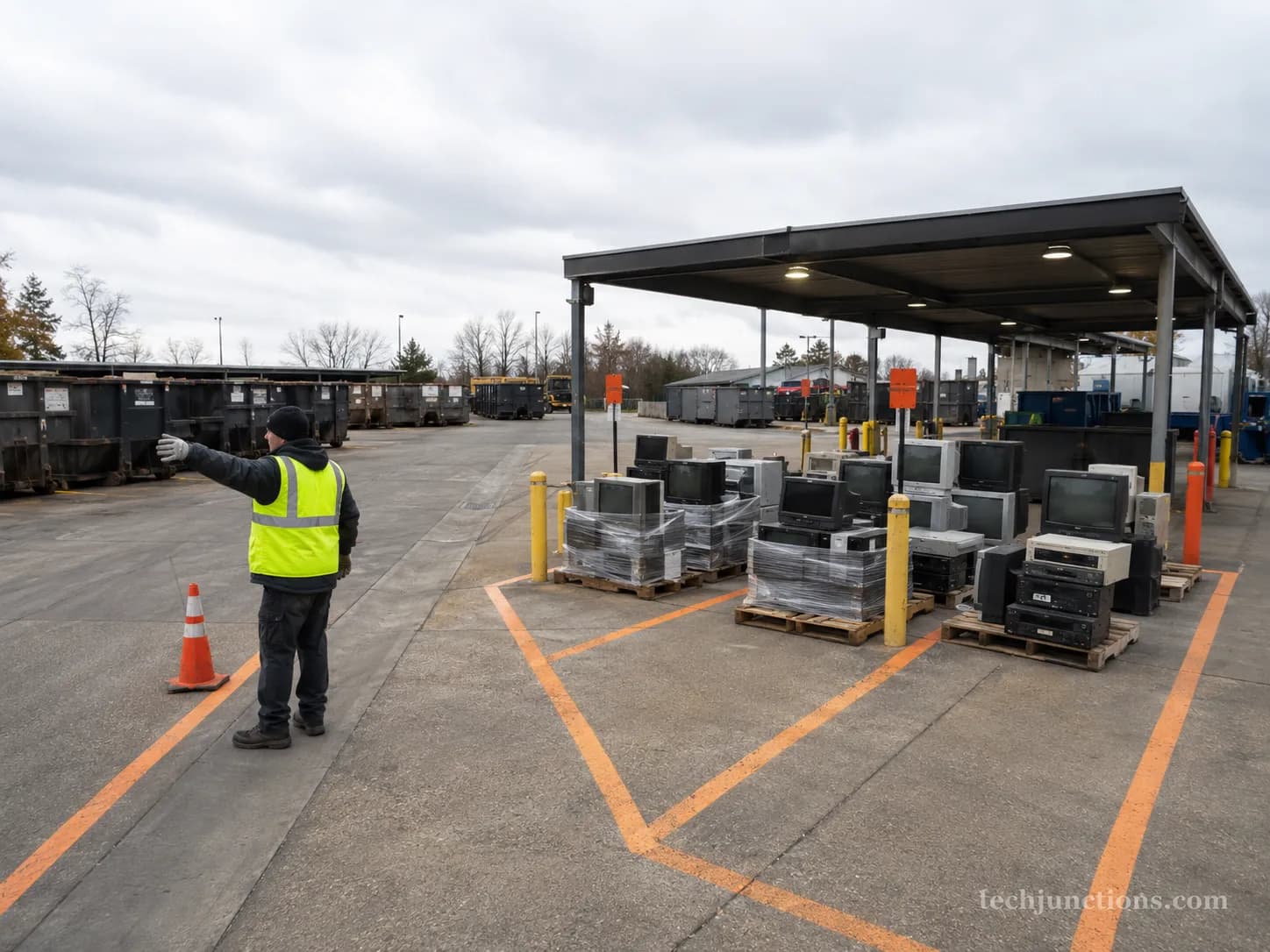
At my free county e-waste Saturday, a volunteer took the 43-inch LED straight from my trunk in under five minutes, with no fee and no questions beyond confirming it was a TV. The catch is scheduling, since these events cluster in spring and fall.
A set you need gone in July may have to wait or take a paid route.
If your set still powers on and you are recycling only because of a warranty dispute, confirm the coverage first with our notes on checking your warranty coverage.
To run a factory reset when the remote is missing, using a Samsung TV without its remote walks through navigating the menus with the physical buttons. Wipe it, then hand it over.

Recycling at Best Buy: Cost, Limits and State Exceptions
Best Buy is the most reliable paid TV route because the terms are the same at nearly every store: bring the set to the counter and pay a flat recycling fee.
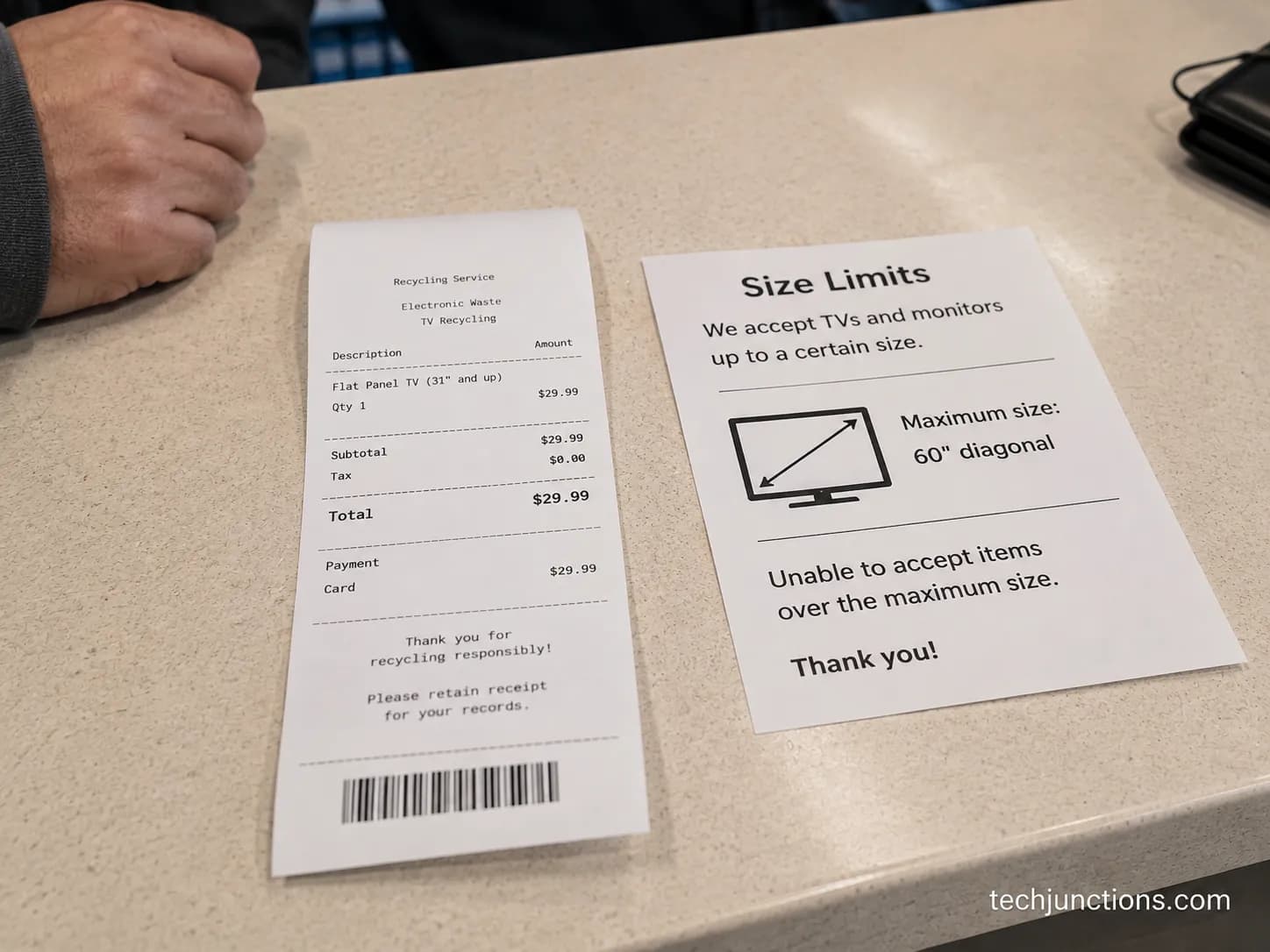
As of 2026, Best Buy's recycling program charges $29.99 per television for standard sets up to 50 inches, with a daily limit of two TVs per household.
The fee is waived in California, Connecticut and Hawaii, where state law funds recycling, and a few states reimburse it through a gift card.
When I dropped the LED at my local store, I paid the $29.99 and walked out with a receipt in under ten minutes.
If you cannot transport the set yourself, Best Buy also runs a standalone TV and appliance haul-away that sends a crew to your door.
At roughly $199.99 it only makes sense when you are buying a replacement or physically cannot move a large panel, which is a real gap for older or injured owners.
Because this is the retailer most people ask about, I keep the summary short here and hand the deep-dive on fees and accepted models to our dedicated guide.
If you are weighing recycling against fixing the set, our breakdown of what a repair typically costs settles whether recycling is even the right call.
For a manufacturer-backed fix rather than a scrap, booking Samsung's repair service is the alternative worth pricing before you pay to recycle a set that still has life in it.
Working TV? Donate It Instead (and Who Actually Takes It)
A television that still works should be donated, not recycled, because reuse keeps a functioning set out of the waste stream entirely.
Charities are selective, though, and Goodwill of West Michigan accepts working flat-screens only in resalable condition.
Goodwill of Southern New England spells out that it takes flat-panel TVs but refuses CRTs and sets with cracked screens or burn-in.
The practical rule I confirmed by calling around: a clean, working flat panel under about 50 inches is welcome, and almost nothing else is.
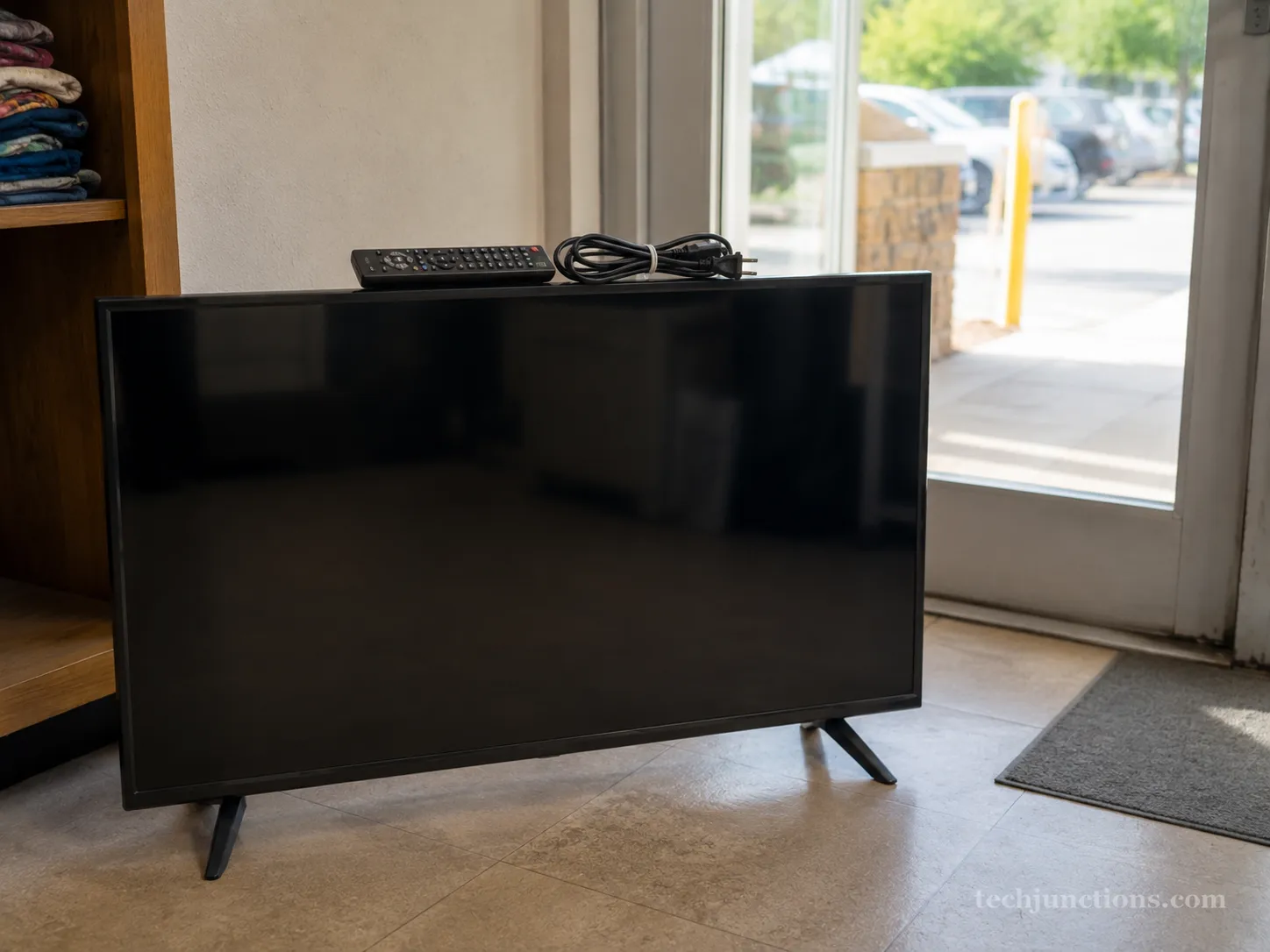
When I canvassed three thrift stores with the working LED, two accepted it and one declined on size. A charity wants a complete, sellable set, so include the remote and the power cable, and give the screen a wipe first.
If the remote is unresponsive, reprogramming an LG remote is worth a quick try before you write the set off as donation-ineligible.
For LG sets specifically, a remote that has lost its link is a common and fixable snag, and pairing the remote back to the TV takes about a minute.
One thing donation does not fix is physical damage, so if the panel is cracked, know that a cracked screen changes the math on whether anyone will take it.
Special Cases: CRT Tube TVs, Consoles and Giant Screens
Old CRT tube televisions, wood-cabinet console sets and oversized panels each break the standard recycling flow and usually cost more.
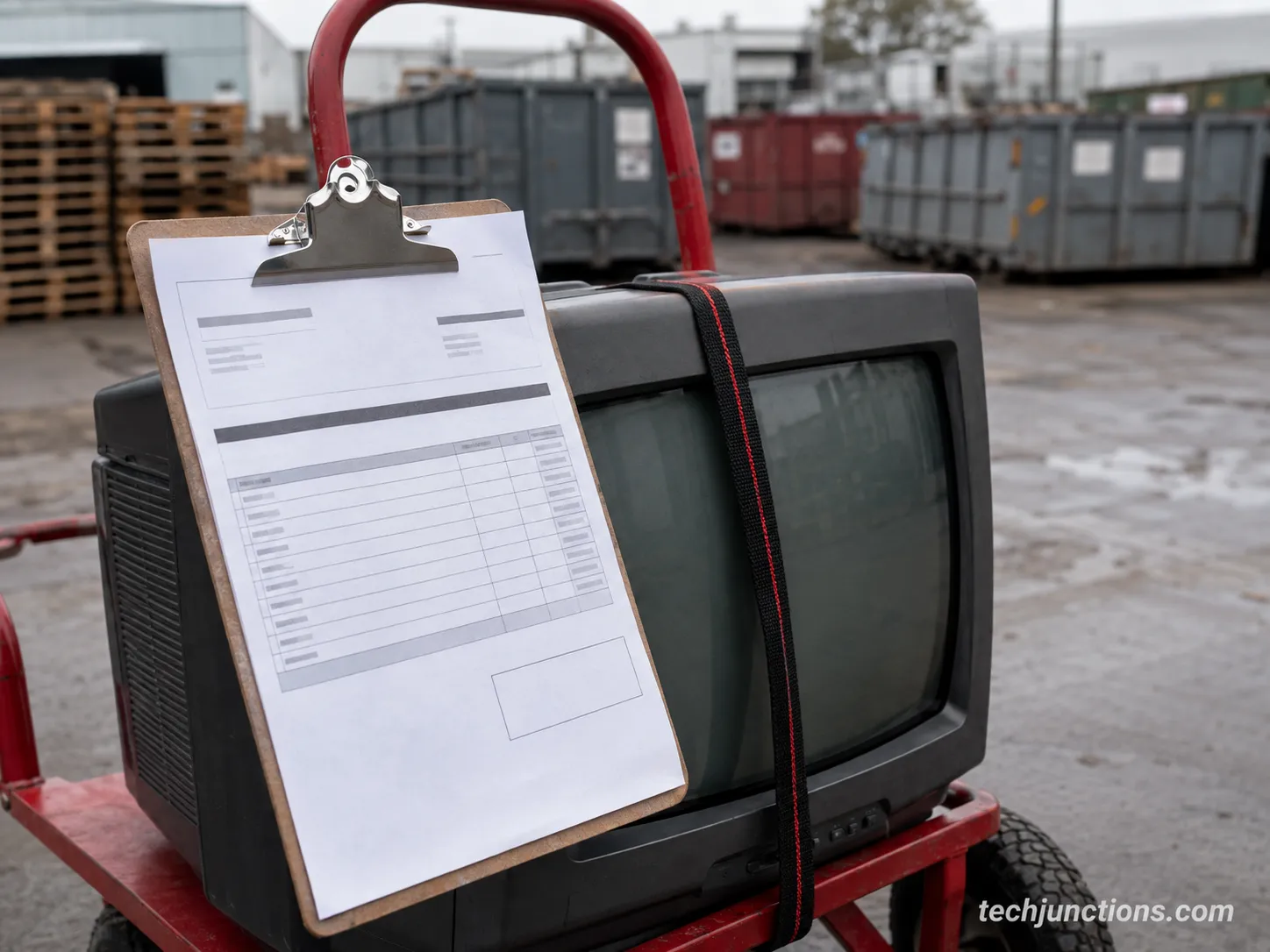
CRTs are the hardest case, since the leaded funnel glass has almost no scrap value, so recyclers charge to take it.
Texas environmental regulators treat CRT recycling as a regulated hazardous stream, which is why prices and paperwork differ from a plain flat panel.
My 27-inch tube set was billed per diagonal inch at a certified recycler, and it was refused outright at both a Goodwill and one municipal site that took the flat panel without blinking.
Here is how the three awkward cases actually break down:
CRT tube sets. Priced per inch at certified recyclers, refused by most donation points, and heavy. Carry one upright, because as recyclers warn, the tube can implode if it is dropped or cracked.
Console and wood-cabinet TVs. Many e-waste programs take the electronic chassis but note "no wood cabinets," so you may need to separate the set from its furniture housing before drop-off.
Giant panels over 50 inches. These often exceed the size cap for flat retailer fees and push you toward a certified recycler or a haul-away, priced by size or weight.
If a tube set or a large panel is only being scrapped because of a board failure, it is worth a second look. A dead set sometimes has a salvageable T-Con board or another part with resale value.
Before you commit a cracked flat panel to recycling, confirm whether a crack can be fixed at a price that beats replacement. Occasionally it can, and that changes the plan entirely.
What TV Recycling Costs (When It Isn't Free)
When TV recycling is not free, expect to pay somewhere between nothing and about $200, driven almost entirely by the type of set and whether you can transport it.
Flat panels are cheap because their metals and plastics have modest scrap value, while CRTs cost money because their leaded glass is a liability, not an asset.
Industry explainers on how e-waste recycling fees on TVs work trace this straight to material value. Here is what each of the six routes cost me during testing, using both the flat panel and the tube set.
Route | What I paid | Set used | Notes |
|---|---|---|---|
County e-waste day | $0 | 43-inch LED | Scheduled event, no fee |
Municipal transfer station | $0 | 43-inch LED | CRT diverted to hazardous lane |
Donation (Goodwill) | $0 | 43-inch LED | CRT refused |
Best Buy in-store | $29.99 | 43-inch LED | Flat per-TV fee under 50 inches |
Certified recycler | About $18 flat panel, about $34 for the CRT | Both | CRT billed per diagonal inch |
Best Buy haul-away | About $199.99 quoted | 43-inch LED | Standalone door pickup |
The lesson from those numbers is simple: patience is worth real money here. One recycler quote a neighbor got felt "way too high" at around "$65 to properly dispose" of a large set, and that is the premium you pay for convenience over a free scheduled event.
If you are recycling because a new panel would cost less than a repair, our figures on what a new panel costs put the decision in context.
In some cases replacing the screen instead is the cheaper long-term move than buying a whole new set.
Frequently Asked Questions
Can you throw a TV in the trash?
In most of the US, no. Roughly 23 to 25 states ban televisions from household trash, and even unbanned areas often reject them at the curb because a TV is a "covered device" under state electronics-recycling law.
Set one at the curb and you risk a rejection tag or a fine rather than a pickup. Use a certified recycler, a retailer take-back, or a free county e-waste event instead.
How much does it cost to recycle a TV?
For a standard flat panel, expect $0 at a free county event, $29.99 at Best Buy, or roughly $18 at a certified recycler. CRT tube sets cost more because they are priced per diagonal inch, and my 27-inch tube ran about $34.
Door-to-door haul-away is the priciest option at roughly $199.99, unless it is bundled with a new-TV purchase.
Where can I recycle a TV for free near me?
Free recycling usually means a scheduled county or city e-waste collection day, a permanent municipal drop-off funded by state law, or a nonprofit recycler such as a local Free Geek chapter. Search a recycling locator by ZIP code and filter for televisions specifically.
Call ahead to confirm they take your size and type before you drive over. A listing is a lead, not a promise.
Do I need to wipe my TV before recycling it?
Yes, if it is a smart TV. Factory-reset the set and sign out of every streaming and account login so your data does not leave with the hardware.
If you have lost the remote and cannot reach the settings menu, our guide on adjusting volume without a remote shows how the physical buttons and companion apps let you navigate the menus to finish the reset.
Can a cracked TV be recycled?
Yes. A cracked screen rules out donation, but every recycling route that takes flat panels will still accept a cracked one, since recyclers process the whole unit for materials regardless of screen condition.
Before you recycle it, check whether the repair pencils out for a newer set, as our look at a Samsung panel swap explains.
The Bottom Line
The right way to recycle a TV comes down to two questions: does it still work, and how soon do you need it gone.
A working flat panel under about 50 inches goes to donation for free, while a dead set or a tube TV goes to a certified recycler or a scheduled county e-waste day.
Reach for a paid retailer drop or a haul-away only when speed or transport forces the issue. After running two televisions through all six routes, the pattern held every time.
The free county event was the best value when I could wait for it, and the flat $29.99 store fee was the best option when I could not.
Whatever you do, keep the set off the curb, because a few minutes of planning is the difference between doing this responsibly and risking a fine for a shortcut that was never really free.
Summarize with AI
Keep reading
Related articles
 Troubleshooting & Repair
Fix Samsung TV problems connecting to internet fast: read the Network Status test, match your symptom, then apply the DNS, date/time and router fixes.
 Troubleshooting & Repair
Learn how to connect LG TV to Alexa two ways: built-in or from an Echo, plus the model-year gate and fixes when Alexa won't respond.
 Troubleshooting & Repair
Fix Insignia TV horizontal lines on screen in minutes: a hard reset and one built-in menu test show instantly if it's a cheap cable or a dead panel.
 Troubleshooting & Repair
Sell it for parts, part it out, repurpose it, or recycle it free, that's what to do with a broken TV, plus what a broken set is really worth.
Comments
Moderated for quality. Share a correction, ask a follow-up, or tell us what worked for you - every comment is reviewed before it goes live.