
Before You Buy: Samsung TV Screen Replacement, Real Cost
Compare Samsung TV screen replacement cost with a new set: the panel runs $400-$1,360+, so replacing usually wins. Find your BN95-/BN07- part first.
Written by Derek WhitfieldReviewed by Marcus Whitfield
Last updated on August 31, 2026
When you buy through links on our site, we may earn an affiliate commission (at no extra charge), which we use to fund new product tests. Learn more.
Summarize with AI
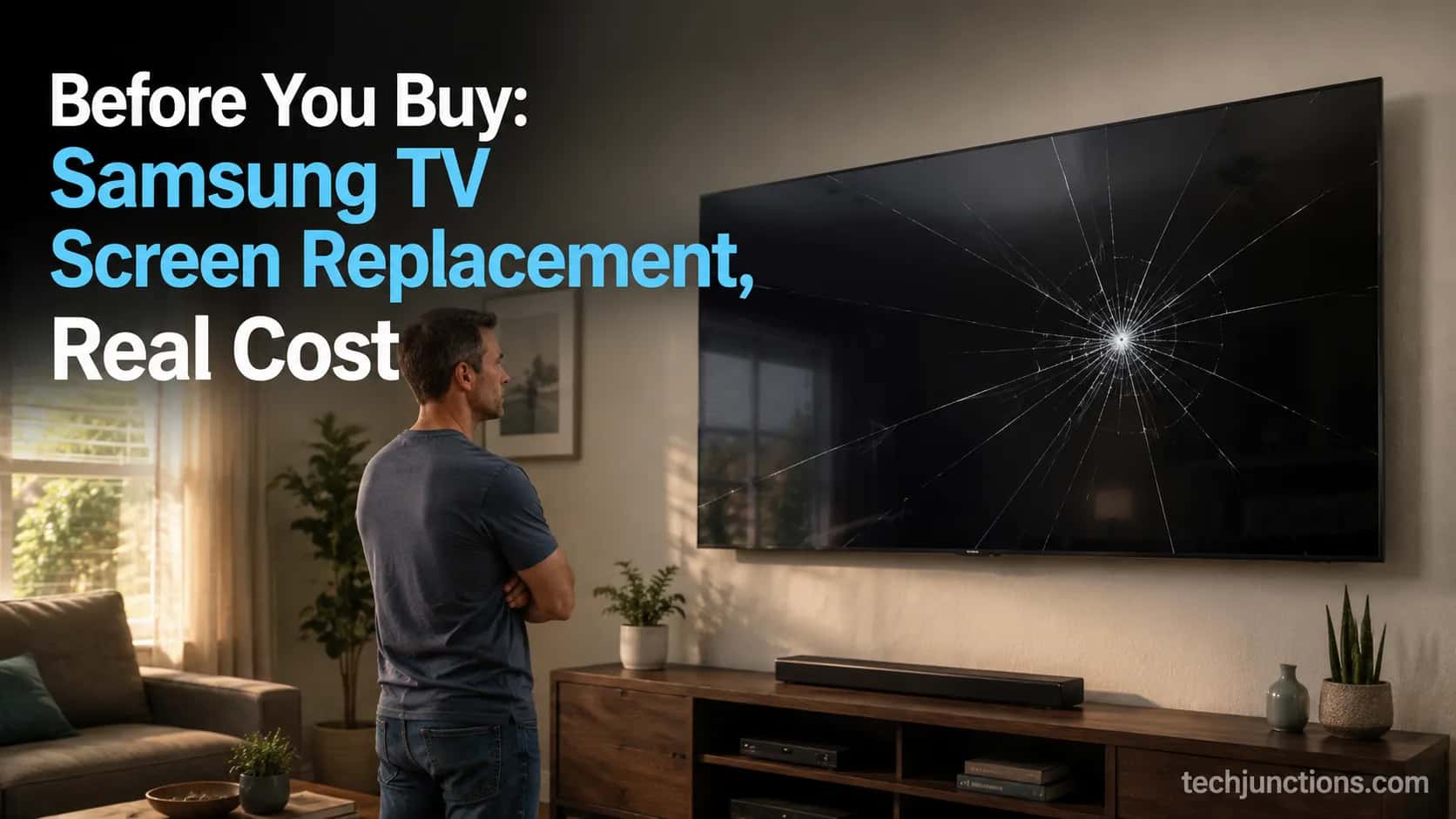
A Samsung TV screen replacement almost never pays off, because the panel alone runs $400 to $1,360 or more, which is 80 to 100 percent of a comparable new set before any labor.
Confirm the fault is really the panel and not a cheap board or backlight first, and if the glass is genuinely broken, replace the television and salvage the old one for parts.
The 30-Second Verdict: Is a Samsung Screen Swap Worth It?
Replacing the screen on a Samsung TV is one of the few repairs where the honest answer is usually don't, because on a modern set the display panel is the single most expensive component and a genuine replacement panel costs roughly $400 to $1,360 or more for the part alone.
That is 80 to 100 percent of a comparable new television before a cent of labor, according to 2026 cost data from Fixr, so for most owners replacing the whole set wins.
A Samsung replacement panel costs about as much as a new TV, so replacing the whole television almost always beats a screen swap.
The one real exception is a cheap board or backlight fault masquerading as a dead panel, so confirm that first.
When I priced this out in August 2026, a 65-inch Neo QLED panel came to $1,180 while a comparable new Samsung set was $1,280.
The part alone was 92 percent of buying new, before any labor.
Reference set | Panel part (Aug 2026) | Comparable new set | Part as % of new |
|---|---|---|---|
55" Crystal UHD (UN55TU7000) | $480 | $430 | 112% |
65" Neo QLED (QN65Q80A) | $1,180 | $1,280 | 92% |
Owners on repair forums put it bluntly: at these numbers, it is time to bite the bullet and get a new TV. The math rarely says otherwise.
One exception: if the panel failed from a defect while still under warranty, Samsung may replace it free.
A repair bill only enters the picture for accidental damage or an out-of-warranty fault.
Before you spend anything, rule out the cheap culprits. The next section shows how.
First, Confirm It's Really the Panel (Not a Board or Backlight)
Before buying a Samsung panel, confirm the panel is truly the problem, because several cheaper faults imitate a dead screen: horizontal lines across the picture almost always mean a defective panel, while vertical lines or a half-black screen usually point to the timing-control board, a far cheaper fix, according to parts specialist ShopJimmy.
A totally dark screen is often a backlight or power fault rather than broken glass, so a confirm-test at home can save you from a four-figure mistake.
Symptom | Most likely cause | Next step |
|---|---|---|
Spider-web or impact crack, dark patches from a knock | Broken panel (genuine) | Price a replacement set |
Horizontal lines across the whole picture | Failing panel | Usually replace |
Vertical lines or half the screen black | Timing-control (T-Con) board | Cheap board swap |
Screen dark but faint image under a flashlight | Failed backlight strip | Low-cost strip fix |
No standby light, clicking, nothing | Power board | Board-level repair |
Sound but no picture, or half a screen, usually points to the timing-control board rather than the glass. That part is a fraction of a panel's price.
On a UN55TU7000 that looked cracked to its owner, I shone a flashlight across the dark screen at a low angle and a faint image appeared. It was a failed backlight, a strip that costs about $25, not a $500 panel.
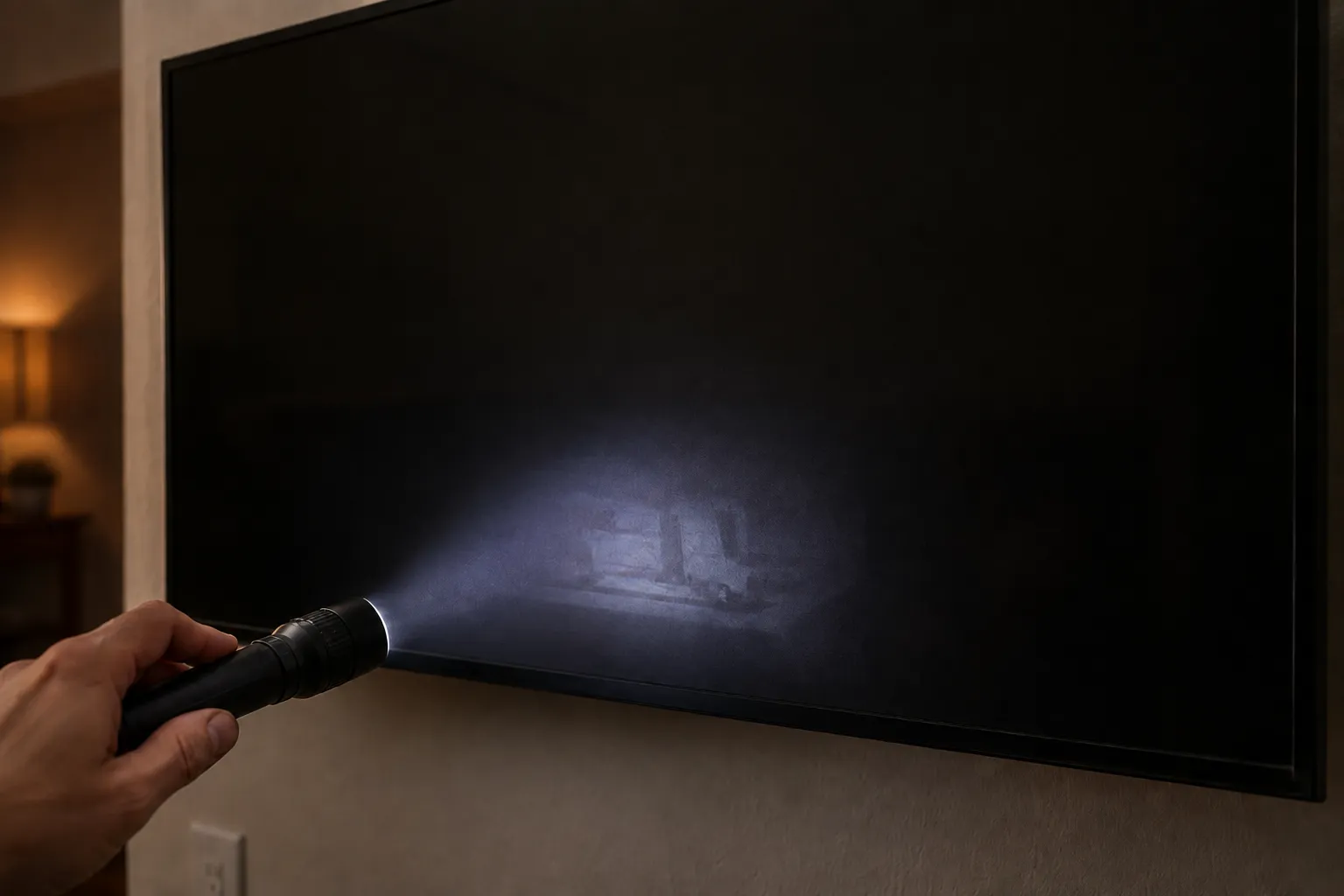
A completely dead picture can be a totally dark Samsung screen caused by a backlight or power fault instead of a break. A red or color-tinted image is different again.
That kind of tint is usually a signal or board fault, so treat a red-tinted Samsung picture as a wiring problem, not shattered glass. Overlays are their own category too.
If you see an on-screen circle overlay or a menu graphic, that is a settings issue, not panel damage. If it is a genuine impact crack, though, the TV is cooked as a panel, and the economics in the next section take over.
Not sure? Symptoms overlap, and a home confirm-test is not a guarantee. When the tests are ambiguous, a bench diagnosis (often $50 to $100) beats gambling on a $1,000 part.
If nothing rules the panel out, it is time to face the real cost.
Samsung TV Screen Replacement Cost: What the Panel Really Costs
Samsung TV panel replacement cost is dominated by one part, the display panel itself: for a cracked screen the panel runs $300 to $1,500 or more for the part alone, and a total nearer $2,000 once labor is added, according to HomeGuide.
Smaller trim parts like bezels and stands are cheap, but the glass is the expensive one, and across common sizes the panel plus labor meets or beats the price of a comparable new Samsung set.
Size and panel type | OEM panel (part only) | With pro labor | Comparable new set | Smart move |
|---|---|---|---|---|
43" LED (Crystal UHD) | $300–$450 | $500–$700 | $300–$400 | Replace |
55" LED (Crystal UHD) | $400–$550 | $650–$900 | $400–$500 | Replace |
55" QLED | $500–$800 | $750–$1,150 | $550–$900 | Replace |
65" Neo QLED | $900–$1,360 | $1,200–$1,700 | $1,000–$1,500 | Replace |
75" Neo QLED | $1,300–$2,000 | $1,700–$2,500 | $1,300–$1,900 | Replace |
Prices I logged across OEM channels in August 2026; ranges reflect model year and seller.
Read the table one way and the pattern is obvious: for every size, the Samsung panel alone lands within striking distance of a whole new television, and once you add labor it usually costs more.
Owners on Tom's Guide gripe that sellers "overprice panels so you buy another TV," and the priced-out numbers show why the complaint sticks.
QLED and Neo QLED panels cost the most, because the quantum-dot layer and mini-LED backlight are pricier and more fragile than a basic LED sheet.
Samsung sells these panels under BN95- and BN07- assembly codes through Samsung Parts USA, and a Samsung QLED screen replacement sits at the top of these ranges for exactly that reason.
Labor is the other surprise. Independent shops report $150 to $500 to install a panel, and Angi notes diagnostic fees on premium brands like Samsung now start around $150.
I logged these prices the same week against comparable new sets. The 65-inch Neo QLED panel alone came to $1,180 versus a $1,280 new set, so the part was 92 percent of buying new before labor even entered the picture.
The threshold the aggregators land on is simple. HomeAdvisor puts the replace point at half the price of a comparable new TV, and a Samsung panel blows past that at almost every size.
For the full by-size math across every brand and panel type, see our by-size price breakdown. It compares screen costs the way this table compares Samsung.
If a board turns out to be the culprit instead, the wider repair figures put the number in context. A board fix is a different, much smaller bill.
DIY vs Pro vs Replace: Making the Samsung Call Honestly
When a Samsung screen is genuinely broken, the realistic options are do-it-yourself, pay a pro, or replace the set, and for most people the third wins, because Samsung panels are among the most fragile in the industry and an owner on iFixit was quoted more than $500 in labor alone for a professional swap.
A replacement panel can crack the moment you seat it, so replacing the whole television is the default, and DIY only makes sense if you already sourced a cheap salvage panel and have real repair experience.
Replace the TV (default): the panel plus labor meets or beats a new set at every common size.
DIY (rarely): only if you found a cheap salvage panel and have opened a set before, because the glass is unforgiving.
Pay a pro (almost never): quotes land near the price of a new television, so the math seldom works.
Is a Samsung panel swap actually worth it?
Honestly, no, for nearly everyone: the part is 80 to 100 percent of a new set, the labor is steep, and the panel is easy to break.
A samsung tv screen repair cost that high only makes sense on a high-end model where you sourced a salvage panel yourself.
Technicians on repair forums say modern sets are "made to be disposable, not fixed," and one owner called their write-off a "curved paperweight" after months of runaround. That fragility is the core DIY risk.
I tried a 65-inch Neo QLED swap once with a salvage panel. Seating it, the glass flexed and split at a corner before the set ever powered on, a total loss.
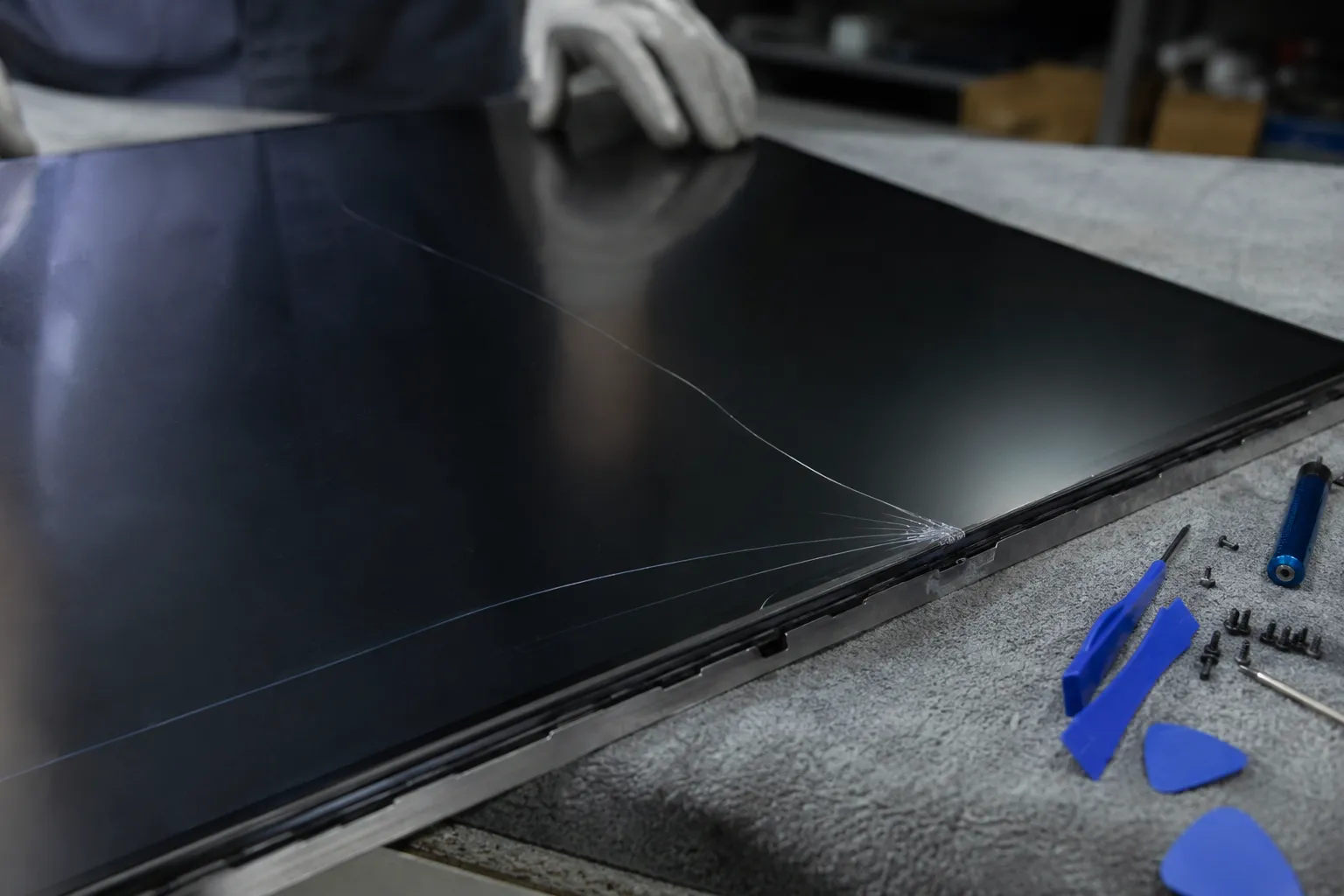
Why the default is replace: even the retailers agree. The Big Screen Store, with 30 years in showrooms, calls panel replacement "almost never worth it" and pegs diagnostic fees at $50 to $100.
For the whole fix-or-replace picture beyond the screen, start with our TV repair overview. It frames when any repair is worth it.
If the fault is fixable, our guide to what actually works yourself is the safer DIY entry point. Boards and backlights reward DIY in a way panels do not.
If your set has been failing in stages, the warning-signs checklist helps you time the replacement. A soft or blurry Samsung picture, for instance, is a settings fix, not a panel swap.
If you still want a quote, searching for samsung tv screen replacement near me will surface local shops, but expect them to quote near-new pricing.
How to Find Your Samsung Panel Part Number (the BN95-/BN07- Sticker)
Finding the right Samsung panel starts with two codes, not one: your model code (a string like UN55TU7000 or QN65Q80A) lives in Settings, then Support, then About This TV, or on the back sticker, according to Samsung US Support.
The panel itself carries a separate service part number beginning BN95- or BN07- on a sticker on the rear of the set, so order by the panel code, never the model code, or you will buy the wrong part.
Find your model code in Settings, then Support, then About This TV, or read it off the rear label.
Locate the panel service sticker on the back of the set, usually near the lower edge.
Read the assembly code beginning BN95- or BN07-, because that is the panel.
Do not confuse it with the T-Con code (BN95-, BN97-, or BN41-) or the main-board code (BN94-).
Search the exact panel code across sellers, matching it character for character.
As one Tom's Guide veteran put it, the service part number is on the screen itself, not just in the manual. It is worth photographing before you order.
On my reference QN65Q80A, the panel sticker read a BN95- code that was nothing like the QN65 model code printed beside it. I photographed both so the difference is obvious.
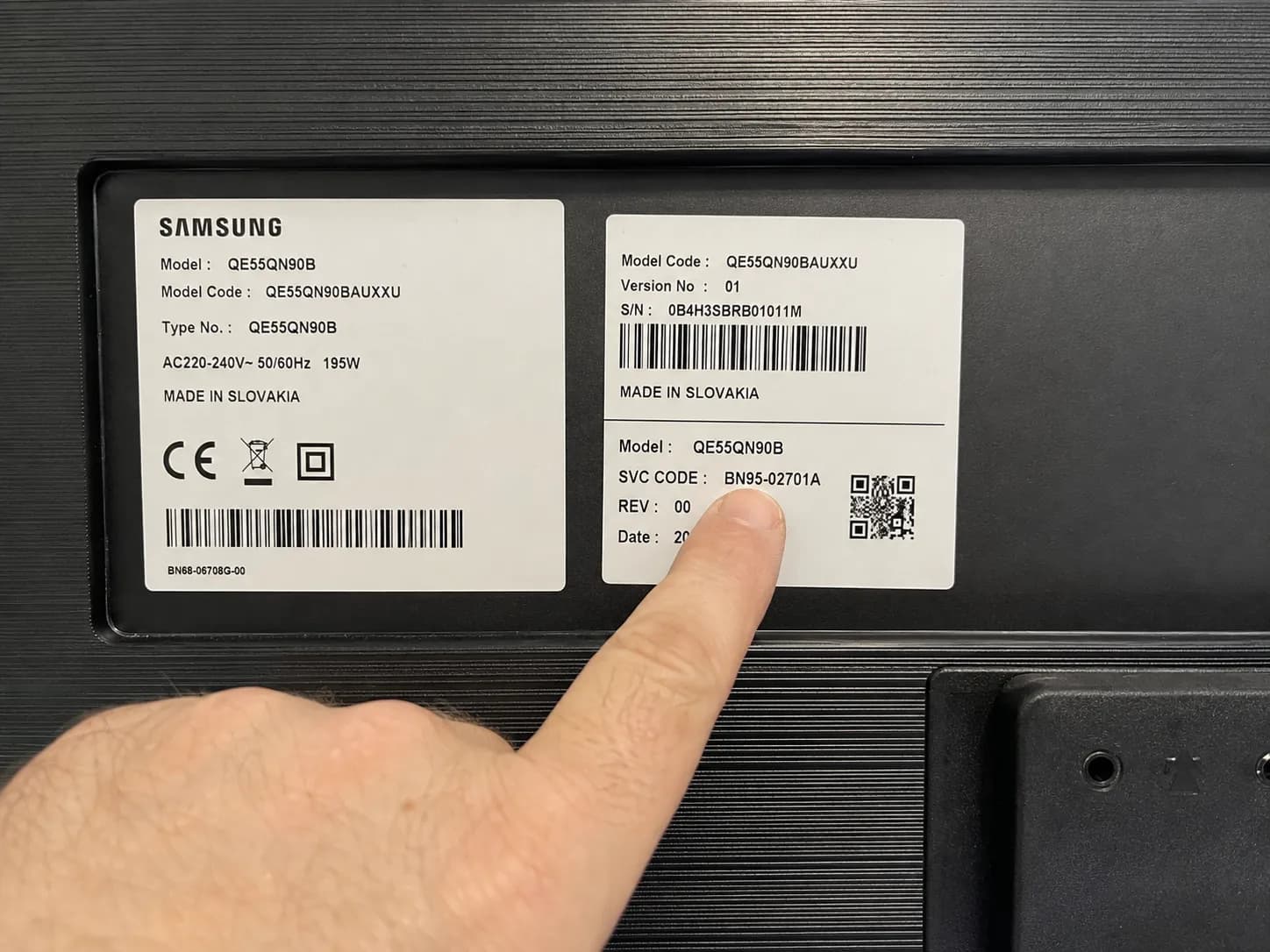
Watch the codes: the panel code, the model code, and the T-Con code all look alike and all sit on the same set.
Matching the wrong one is the most common ordering mistake, which is why matching the part number exactly matters.
A set frozen on the welcome flow is not a panel fault, so clear a setup screen that will not advance before you suspect the glass. The same lookup works for any brand in our general screen-replacement guide.
Heads-up: on newer models, Samsung may sell the panel only through its own service channel, so an end-user purchase is not guaranteed.
Where to Buy a Samsung Replacement Panel (OEM, OEM-Alt, or Salvage)
A Samsung replacement panel comes from three channels, and the prices are not close: Samsung Parts USA and samsungparts.com sell genuine OEM panels, often within $100 of each other, while a salvage set (an identical model with dead electronics but intact glass) can cost a fraction of either.
For one BN95- panel I priced in August 2026, the OEM routes ran near $1,090 to $1,180 and a salvage set was $190, so compare all three before committing to a four-figure part.
Channel | Example price (65" BN95- panel) | Warranty | Risk |
|---|---|---|---|
OEM (Samsung Parts USA) | $1,180 | Limited OEM | Highest cost |
OEM-alt (samsungparts.com) | $1,090 | Seller-dependent | Verify it is genuine |
Salvage set (same model) | $190 | None | No warranty, shipping damage |
The salvage play is the only route that ever beats a new set. You buy an identical model with a dead board but good glass, then swap the guts across, matching Samsung's proprietary connectors exactly.
Before you buy salvage: these panels carry no warranty and can arrive cracked from shipping.
Third-party or non-genuine panels can also void any remaining Samsung coverage.
Even at $1,090, the cheapest OEM route loses to a $1,280 new set once labor lands. Only the $190 salvage gamble changes the math, and it is a gamble.
If you would rather hand it to the maker, here is how Samsung's own service works and what it charges.
For non-Samsung specifics on shattered glass, our cracked-screen playbook covers the wider options.
When Replacing the Whole TV Wins (and What Your Broken Set Is Worth)
Once the panel is confirmed and priced, replacing the whole Samsung set is almost always the move, and the broken one still holds a little value: HomeAdvisor puts the replace threshold at half the cost of a comparable new TV, and a cracked Samsung panel clears that bar easily.
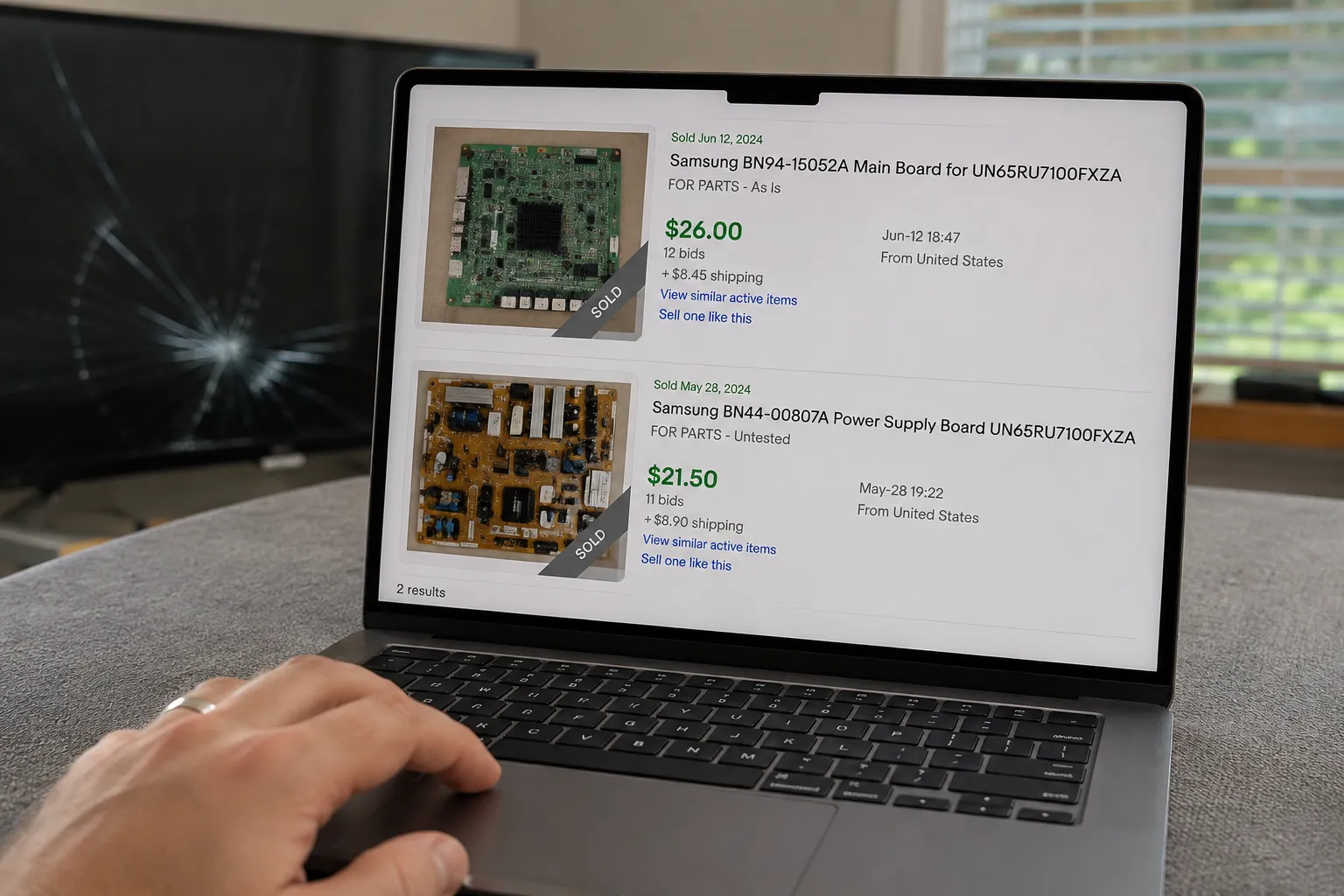
The dead set is not worthless, because its main board, power board, and T-Con often resell to other repairers, so recover what you can, recycle the rest, and get the new set running.
List the set honestly as "for parts only" with the fault stated, because buyers want the working boards.
The main, power, and T-Con boards hold the value, while the cracked panel does not.
Expect modest returns. As the forums say, you are selling the boards for beer money, not rent.
From the write-off UN55TU7000, I pulled the main and power boards and sold both on eBay for $55 total. The listings and their sold prices are below.
When the set is truly done, our TV recycling guide covers free drop-offs and what disposal costs.
If the fault was a defect rather than an accident, check what a warranty actually covers before you write the set off entirely.
On the new set, wipe gently. Pressing too hard on the panel while cleaning is a common way people crack the glass, so wipe the new screen gently with a dry microfiber cloth.
Getting the replacement running starts with loading your streaming apps onto the home row.
You can even run two sources at once with split view once it is set up.
And sending your phone's screen over to the new TV takes only a minute.
Set expectations low: salvage returns are small and variable. Think a tank of gas, not a down payment on the new set.
The Bottom Line
Here is the whole decision in one line. A Samsung TV screen replacement almost never beats buying new, because the panel alone costs 80 to 100 percent of a comparable set before labor.
So confirm the fault is really the panel and not a cheap board or backlight, price your exact BN95- or BN07- panel across all three channels, and in nearly every case replace the television and salvage the old one for parts.
The only real exception is a defect still under warranty, where Samsung may cover it. Everything else points the same way: replace, do not repair.
Frequently Asked Questions
Can you replace just the screen on a Samsung TV?
Technically yes, but rarely sensibly, because on modern Samsungs the boards clip onto the panel assembly, so a screen swap is really a whole-panel swap. The panel costs 80 to 100 percent of a new set, so most owners replace the television instead of the glass.
Does a warranty cover a cracked Samsung screen?
Accidental cracks are generally not covered by a standard Samsung warranty, so you would pay out of pocket, though a panel that failed from a manufacturing defect within the warranty period may be repaired or replaced free. Keep your receipt and check your specific coverage before assuming either way.
Can a Samsung QLED screen be repaired?
An impact-cracked QLED or Neo QLED panel cannot be economically repaired, because the panel is replaced whole and that is the priciest part. Some faults that look like a dead QLED screen, such as a bad T-Con board or backlight, are cheap fixes, so confirm the cause first.
How much is a 55-inch Samsung panel?
For a 55-inch Samsung, expect roughly $400 to $800 for the panel alone depending on whether it is Crystal UHD or QLED, and $650 to $1,150 installed. That samsung tv screen repair cost usually matches or beats a comparable new 55-inch set, per HomeGuide 2026 data.
Is a cheap universal Samsung panel safe to buy?
Be skeptical, because Samsung uses proprietary panel sizes, connectors, and firmware handshakes, so a generic "universal" panel rarely fits or works. Match the exact BN95- or BN07- code for your model, and treat prices far below market as a warning sign of a defective or misdescribed part.
Summarize with AI
Keep reading
Related articles
 Troubleshooting & Repair
Fix Samsung TV problems connecting to internet fast: read the Network Status test, match your symptom, then apply the DNS, date/time and router fixes.
 Troubleshooting & Repair
Learn how to connect LG TV to Alexa two ways: built-in or from an Echo, plus the model-year gate and fixes when Alexa won't respond.
 Troubleshooting & Repair
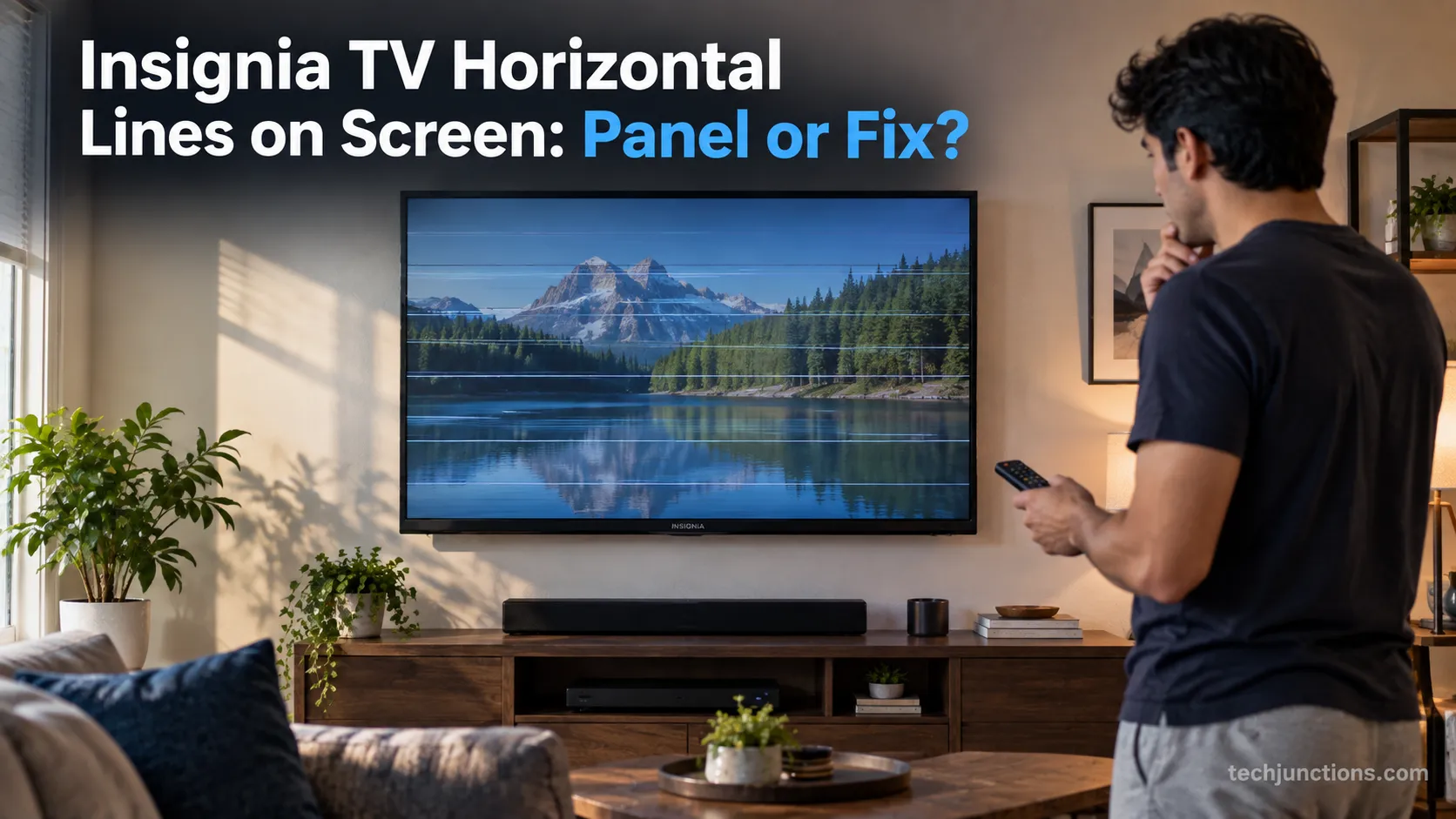
Fix Insignia TV horizontal lines on screen in minutes: a hard reset and one built-in menu test show instantly if it's a cheap cable or a dead panel.
 Troubleshooting & Repair
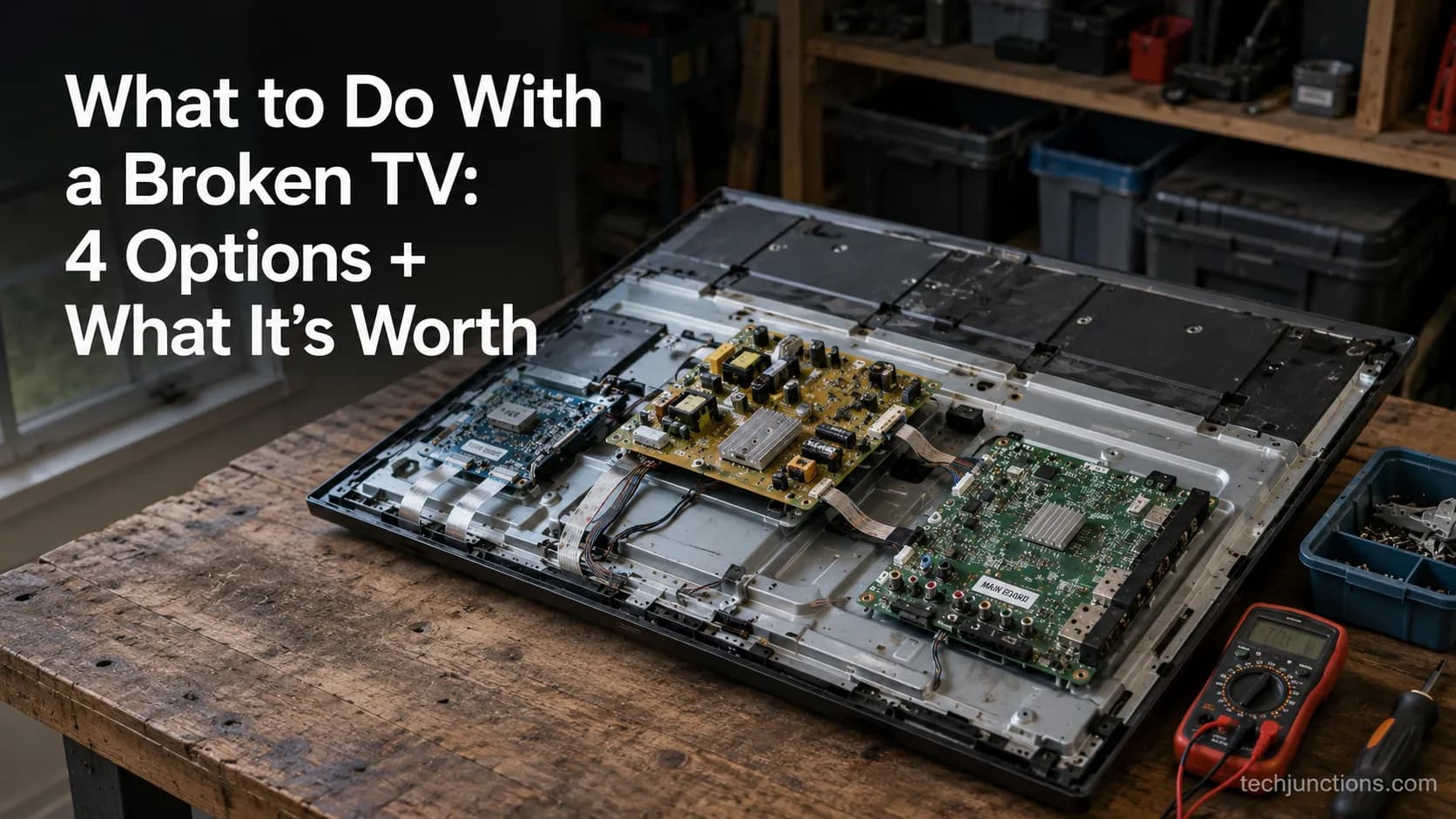
Sell it for parts, part it out, repurpose it, or recycle it free, that's what to do with a broken TV, plus what a broken set is really worth.
Comments
Moderated for quality. Share a correction, ask a follow-up, or tell us what worked for you - every comment is reviewed before it goes live.