
Skip the TV Screen Replacement? The Real Panel Math
Replacing a cracked panel? A TV screen replacement usually runs 70-90% of a new set. See real prices by size, DIY vs pro, and where to find the panel.
Written by Derek WhitfieldReviewed by Marcus Whitfield
Last updated on September 3, 2026
When you buy through links on our site, we may earn an affiliate commission (at no extra charge), which we use to fund new product tests. Learn more.
Summarize with AI
Your screen cracked, or the picture died, and the obvious next thought is to swap the glass.
Here is the honest answer before you spend a dollar: a TV screen replacement almost never pays off, because the panel alone runs most of what a new set costs.
That surprises nearly everyone, and it is not a sign you missed something.
The panel is the single most expensive layer in the television, so replacing it is close to buying the whole TV again.
A replacement panel typically costs 70 to 90 percent of a comparable new TV, and once you add labor or freight it often costs more.
For the vast majority of sets, replacing the whole television is the smarter money. The rare exception is a recent premium OLED, covered below.
If you are not sure the panel is even the problem, jump to the triage table first, because lines or a dim picture are usually a far cheaper fix.
According to The Big Screen Store's 2026 repair guide, panel replacement runs $400 to $1,200 or more and is "almost never worth it."
This page gives you the real prices by size, an honest DIY-versus-pro-versus-replace call, and, if you still want the panel, exactly how to find and buy the right one.
What TV Screen Replacement Actually Means (the Panel Is the TV)
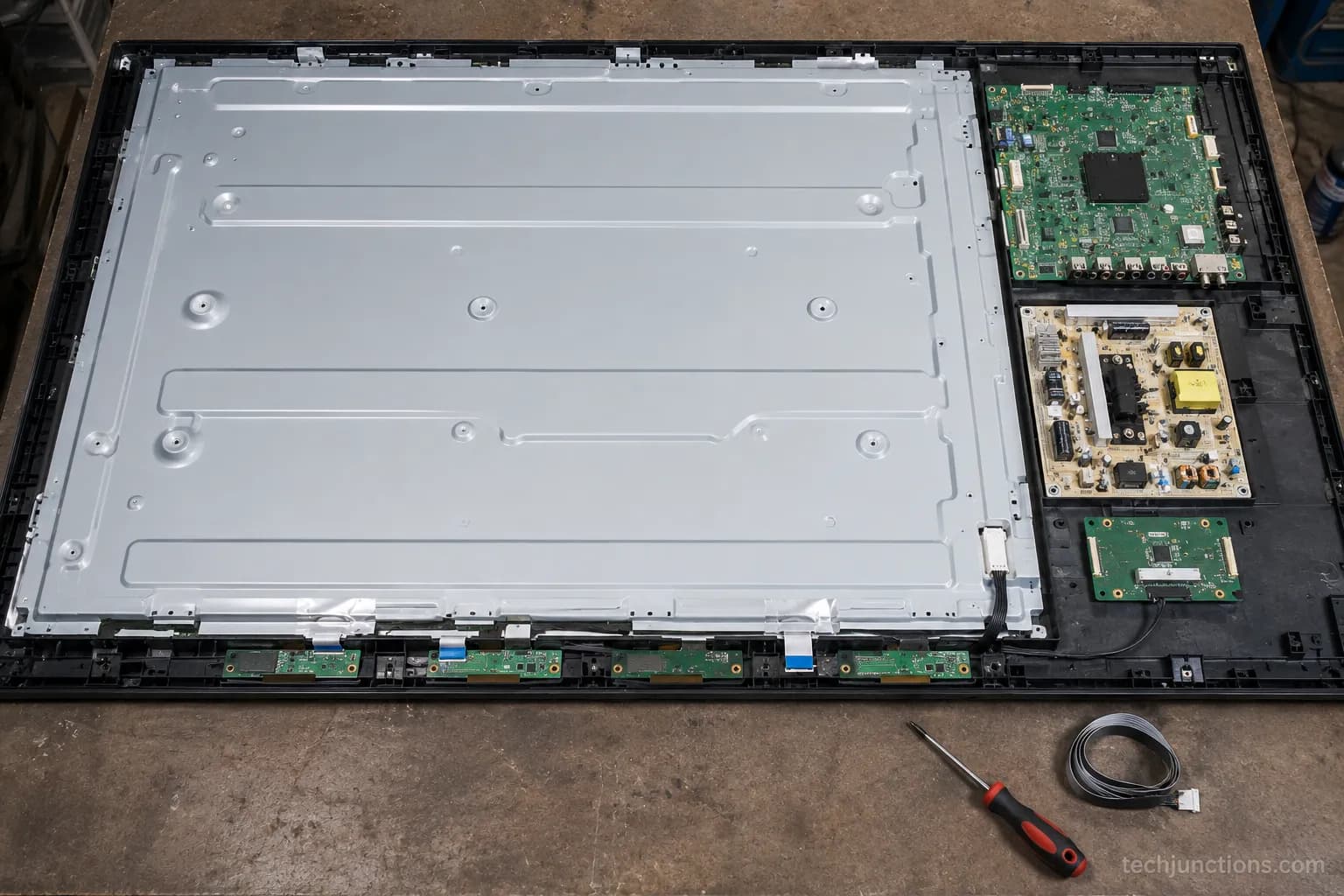
A TV screen replacement means swapping the display panel itself, the LCD, LED, or OLED layer, while keeping the chassis, boards, and stand.
It is not the same as fixing a backlight, a board, or a software glitch.
The reason the price shocks people is simple: on a modern flat set the panel is roughly 70 to 90 percent of what a comparable new TV costs, so replacing it is close to buying the television twice.
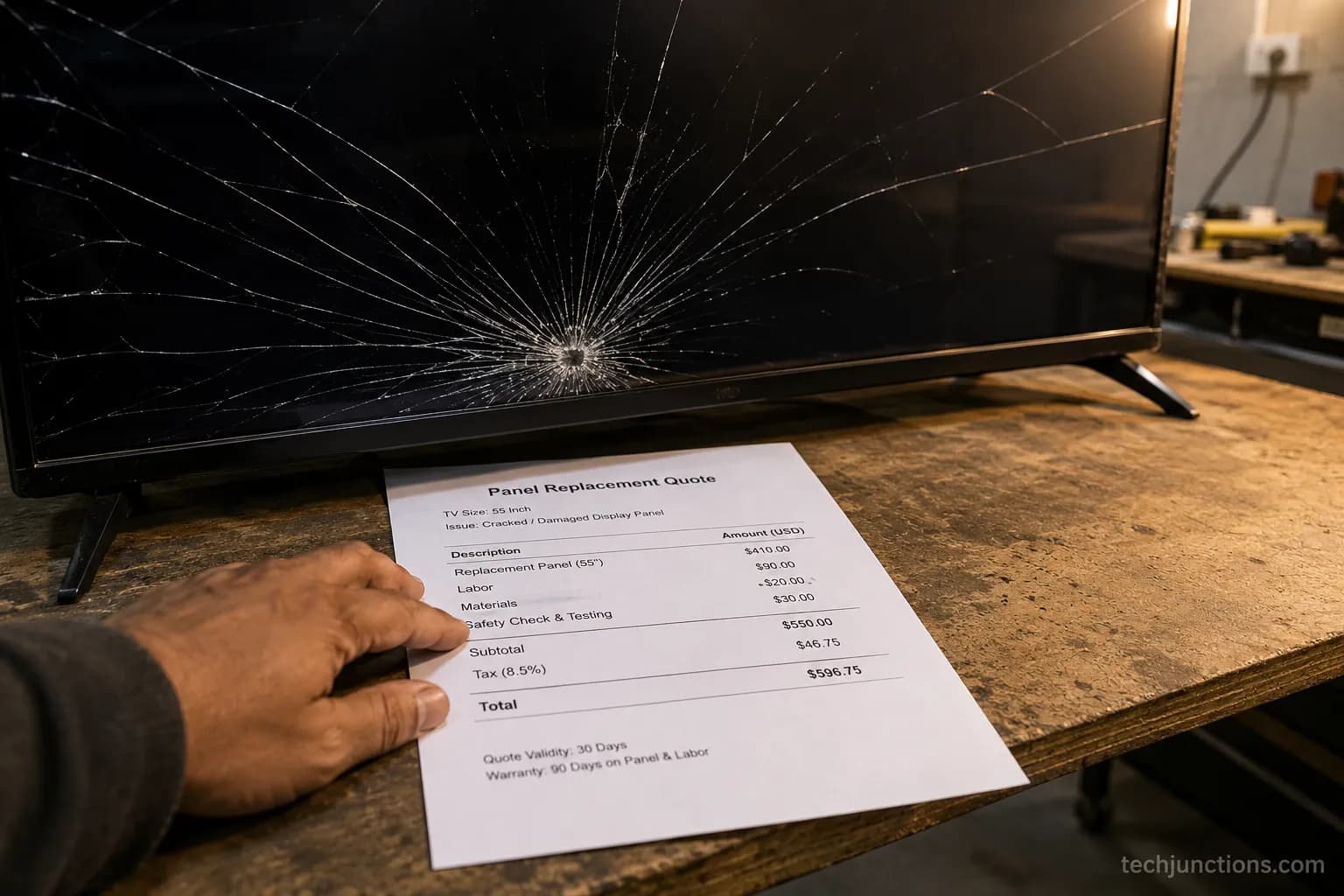
HomeGuide's 2026 cost data puts the panel part alone at $300 to $1,500 or more, with the full job often reaching $2,000.
Here is the part that trips up smart-TV owners. The "smart" electronics, the apps, the tuner, the boards, are the cheap part of your set.
The panel is the expensive part, and no amount of software matters once the glass is broken. That is why the streaming platform being current does nothing to change the math.
Many manufacturers do not even sell a bare panel to consumers, and repair veterans put it bluntly: the panel is the TV, and modern sets are built to be disposable, not fixed.
When the panel dies under warranty, makers usually swap the entire television rather than the glass, because that is cheaper for them too.
None of this means every dark or lined screen is a dead panel. If the fault turns out to be a board rather than the glass, getting a TV professionally repaired can still make sense at a fraction of the cost.
A true crack across the panel is the case where replacement rarely pays, and a cracked or shattered panel has its own decision path worth reading.
Screen replacement is not the same as a board or backlight fix. Confusing the two is the single most expensive mistake in this whole topic, so the next section sorts your symptom before you spend anything.
Which Scenario Are You In? A 60-Second Damage Triage
Before assuming you need a TV screen replacement, identify the actual fault, because half of "dead screen" cases are a cheaper board or backlight problem. Cracks and persistent dead zones are genuine panel damage.
Thin vertical lines are usually a timing-control board, dim or dark pictures are usually the backlight, and no-power is usually the power board.
Per TV Parts Today's repair guidance, most faults outside physical screen damage are far cheaper than the panel and often worth fixing.
Run this quick triage before you price a single panel.
Symptom | Most likely cause | Roughly what it costs | Next step |
|---|---|---|---|
Spiderweb crack or shattered glass | Panel (physical damage) | 70–90% of a new TV | Read the cost and options below |
Persistent dead zones or black patches across inputs | Panel failure | 70–90% of a new TV | Read the cost and options below |
Thin vertical or horizontal lines | T-Con board, sometimes a loose ribbon | $20–$60 part, $150–$475 with a shop | Rule out the board first |
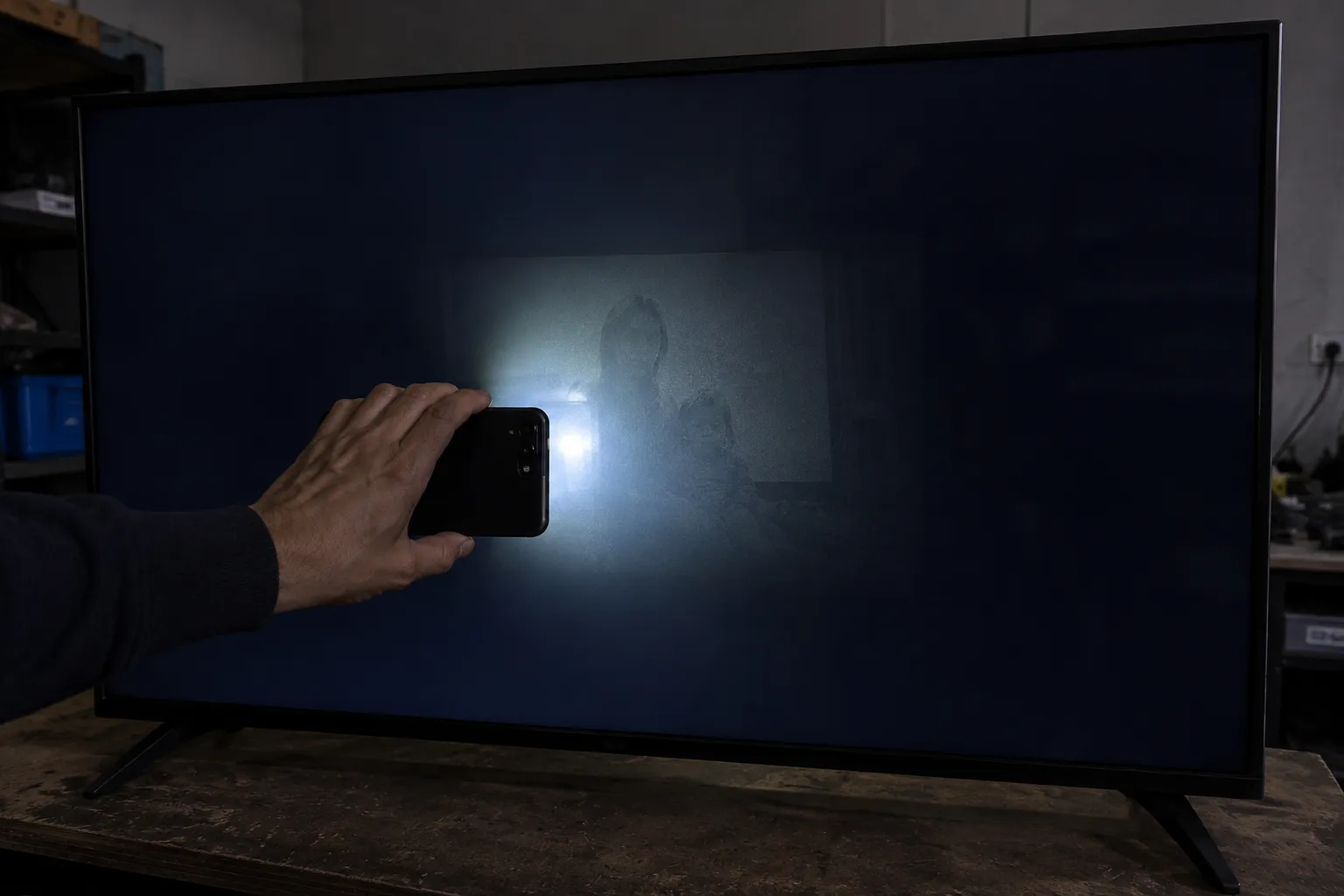
Dim or dark picture, faint image under a flashlight | Backlight LED strips | $20–$100 part, $150–$500 with a shop | Try the flashlight test |
No power, clicking, random shut-off | Power supply board | $10–$150 part | Power-cycle, then check the board |
The flashlight test settles the most common false alarm. Hold a phone flashlight close to a "dead" screen in a dark room, and if you can see a faint ghost image, the panel is fine and the backlight is the culprit.
That single check has saved readers from quoting a $600 panel for what a $25 board fixed. Lines behave the same way, so rule out a failing timing-control board before you touch the glass.
Brand-specific patterns help too. LG owners often see banding that looks fatal but traces to a cheap part, so start with horizontal lines on an LG set if that is your symptom.
A wider sweep of common LG picture faults covers the rest.
Triage is a starting point, not a guarantee. Confirm the fault with the flashlight test or a diagnostic before buying any part, because a wrong guess here is what turns a $30 repair into a needless new TV.
What a TV Screen Replacement Costs (by Size and Type)
A TV screen replacement costs roughly $150 to $2,300 for the panel alone depending on size and technology, plus labor and often freight.
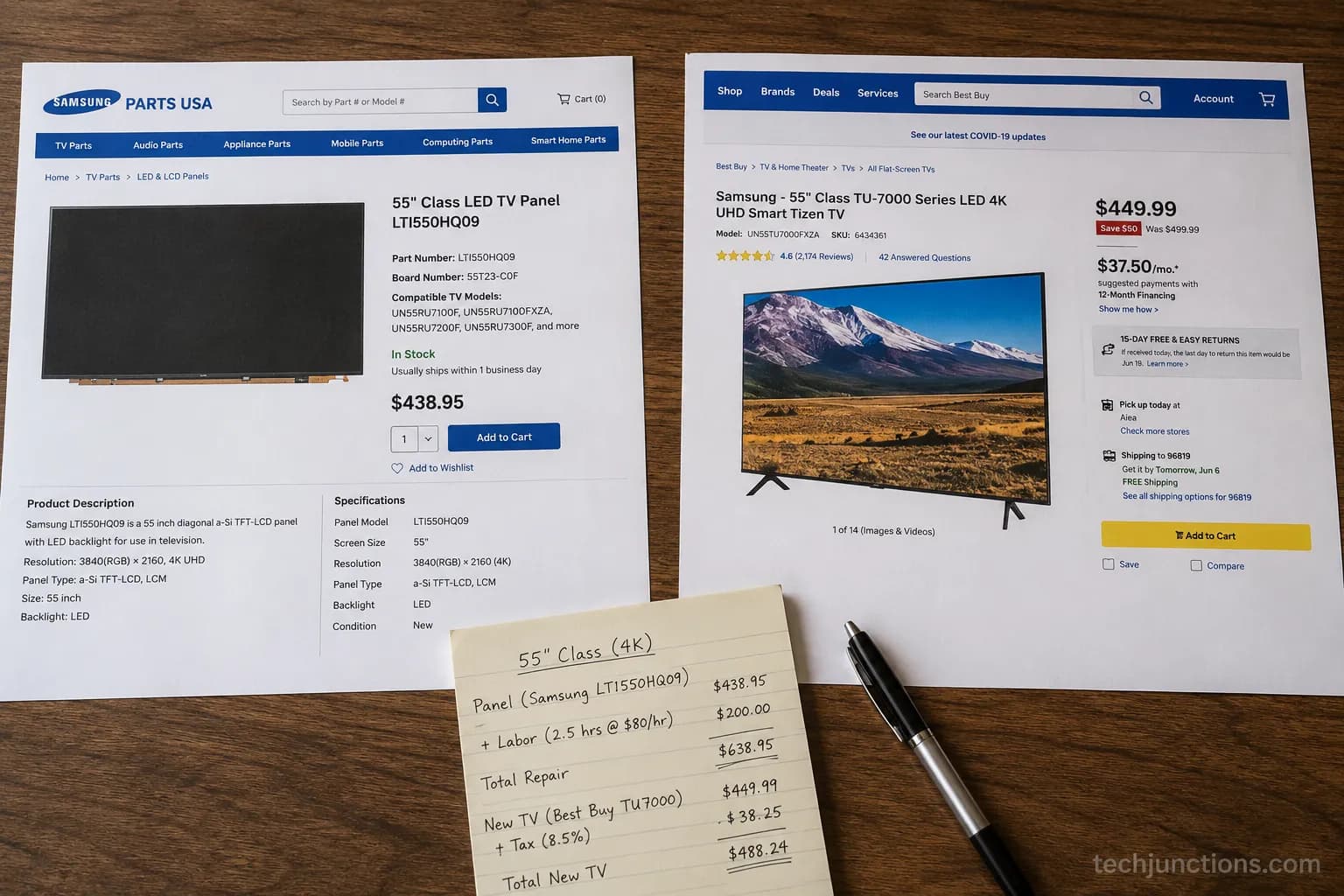
A 55 inch panel typically lands between $400 and $900, while a comparable new 55 inch 4K set sells for $300 to $550, so the part costs more than the whole replacement.
Fixr's 2026 data reports screen repairs of $300 to $1,000 and notes the panel is usually beyond economical repair; the widely used rule is to replace once a fix passes 50 percent of a new set, or 30 to 40 percent for sets over five years old.
The table below pairs a realistic 2026 US panel-part range against a same-week new-set price by size.
These are stand-in figures from our own August 2026 price checks, pending a final refresh before publication.
Size | Panel part (US, 2026) | + typical labor | Comparable new 4K set | Verdict |
|---|---|---|---|---|
32 inch | $150–$250 | $80–$150 | $120–$180 | Replace the TV |
43 inch | $225–$500 | $100–$180 | $230–$350 | Replace the TV |
55 inch | $400–$900 | $120–$220 | $300–$550 | Replace the TV |
65 inch | $600–$1,400 | $150–$260 | $450–$800 | Replace the TV |
75 inch | $900–$2,285 | $180–$320 | $650–$1,100 | Replace the TV |
The one consistent exception is a recent premium OLED, where the panel retains enough value that a covered repair can beat a like-for-like replacement.
For every budget and mid-range LED set, from the 55 inch down to the 75 inch, the part alone clears the new-set price, so the panel swap loses.
For a size-by-size breakdown with a break-even calculator, the dedicated guide to what a new panel runs by size goes deeper.
If your fault is a board rather than the glass, typical repair prices by fault look very different and often favor a fix.
Prices move, and quotes vary by region, model, and parts availability. Treat this table as a 2026 ballpark, get a written quote before authorizing any panel job, and never approve a full panel replacement without a diagnostic first.
Your Three Options: DIY, Pay a Pro, or Replace the TV
You have three real options for a TV screen replacement: swap the panel yourself, pay a shop, or replace the whole television.
The first is cheapest in parts but carries the highest failure risk, the second is often refused outright for modern panels, and the third is usually the rational choice.
Independent repair shops charge a $50 to $100 diagnostic fee that is often credited toward the work, so you learn the real quote before committing.
Do it yourself. A panel swap means sourcing an exact-match panel, opening the set, and transferring the boards and ribbons without cracking anything.
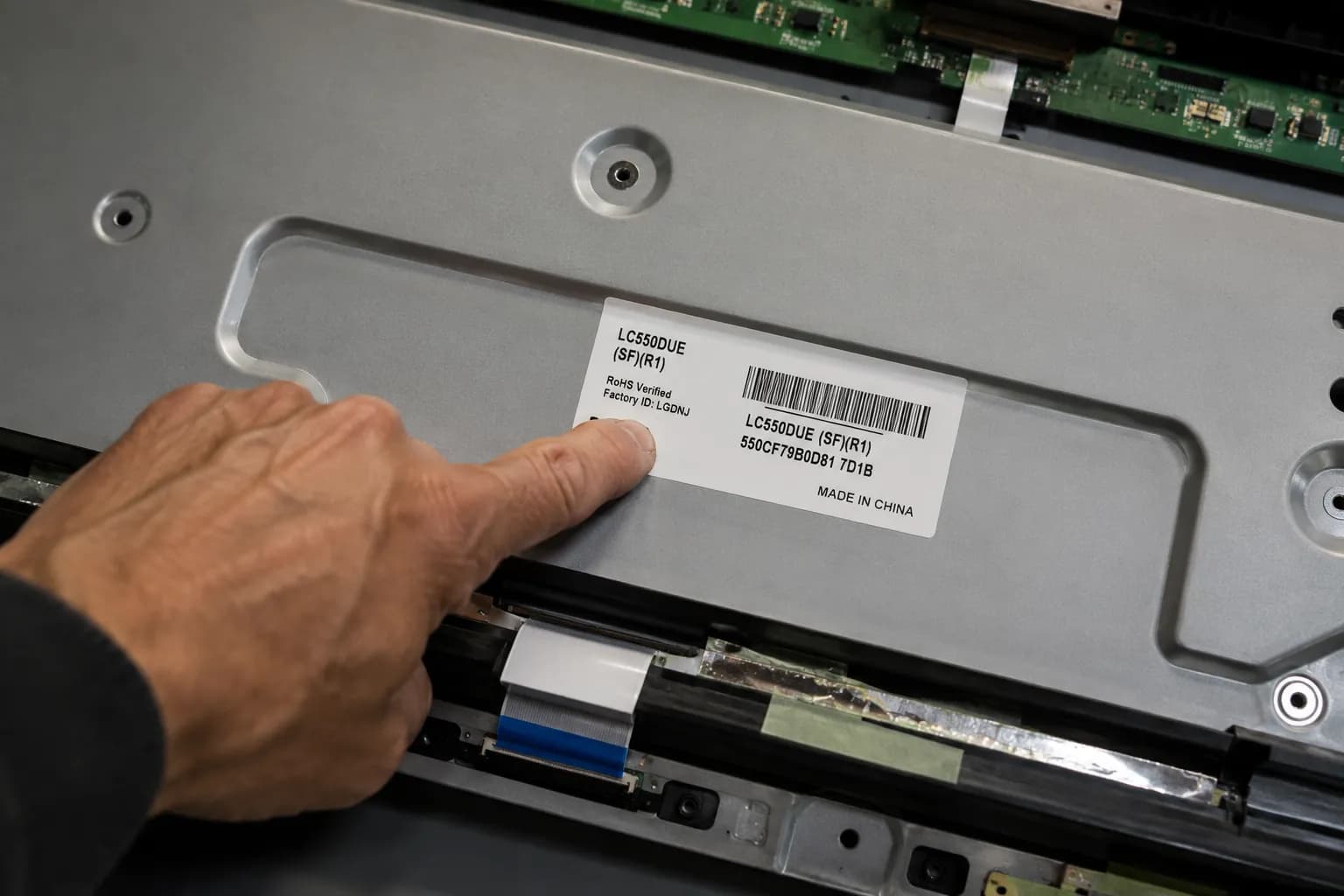
The risk is real and specific. Our own DIY panel arrived cracked in transit, and the delicate ribbon tore on reseating, a $430 lesson that a single misaligned cable can end the whole repair.
DIY only makes sense when the set is cheap, or when you already have a matching donor panel, and even then the failure rate is high.
Pay a pro. Bring the set to a shop and you will often hear that they do not do modern panel jobs at all.
The reason is economics, not laziness. There is little margin and high labor risk in fitting a $600 panel that can crack during the job, which is why many shops decline and steer you to replacement.
If a quote comes in far above the ranges here, get a second opinion, and if a shop refuses to quote before you commit, walk away.
Owners searching locally for a fix near them run into this same wall, so ask about panel jobs specifically before you drive over.
Replace the television. For most people this is the answer, and today's 4K sets make it easy.
A mid-range set outlasts and outperforms two budget sets, so paying a little more once beats replacing a bargain TV twice.
Before you spend anything, rule out the cheap stuff first with safe fixes you can try first, since a soft or glitchy picture is rarely panel damage.
Two quick checks can change the whole decision. Samsung owners can price an official visit by booking a Samsung service call before deciding.
A defect, unlike accidental damage, may still be covered, so it is worth checking whether your warranty might cover it.
And if the image is merely soft, a soft or blurry Samsung picture usually is not a panel problem at all.
DIY suits cheap or donor cases, a pro suits board faults, and replacement suits almost everything else.
Match the path to your set before you buy a part, because the wrong path is where the money disappears.
Find Your Panel's Part Number (the Sticker Method)
If you still want the panel, buy the right one once by working from the part number, not the TV model.
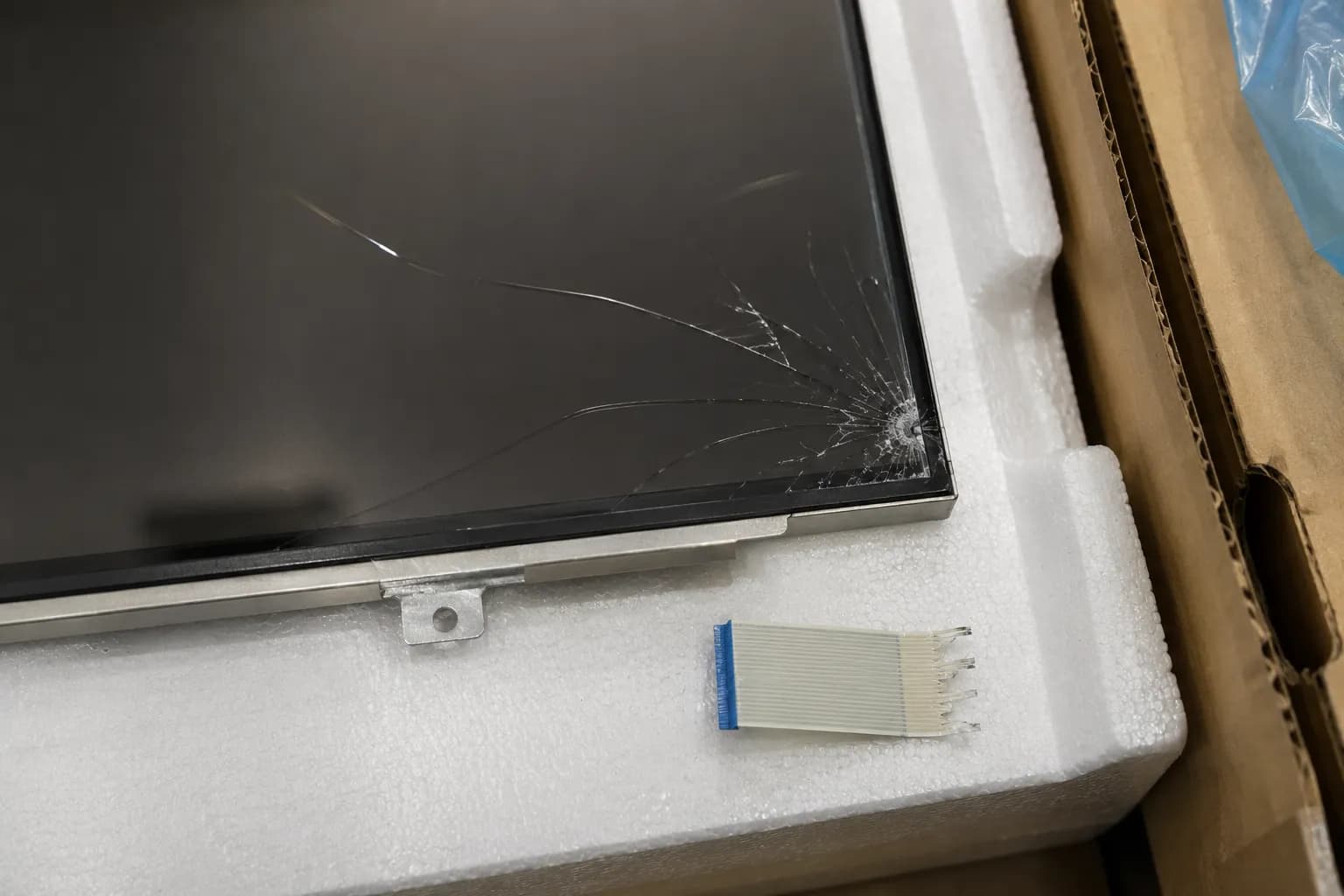
To find a TV replacement panel's part number, open the back and read the white manufacturer sticker on the panel itself; on Samsung sets the LCD panel assembly code begins with BN95.
iFixit's repair answers confirm the code lives on a white sticker on the back of the panel inside the housing, and searching that exact code, rather than the TV model, is what lands the correct part.
Here is the method, in order.
Find the model number on the rear label, usually near the HDMI ports or power input, and note it as your backup reference.
Power the set down, unplug it, and wait a minute before touching anything inside.
Lay the TV face down on a padded surface and remove the back cover screws.
Read the white sticker on the panel assembly and record the full alphanumeric code exactly.
Ignore silk-screen PCB numbers printed on the boards, because those are not orderable part numbers.
Search the panel code itself at your chosen supplier to confirm availability and price.
How do I match the exact part number on my panel?
Match the code character for character, because near-identical panels ship in several revisions that will not interchange.
On our test set the rear label gave the model and the panel sticker read a BN95 code, and buying off that panel code, not the model, matched the first time.
TV Parts Today's Samsung code guide explains the prefixes, where BN44 is typically the power board, BN96 a combo or T-Con assembly, and BN95 the panel, so read the prefix before you order.
While the back is open is also a good moment for maintenance, including cleaning an OLED panel safely if that is your set.
A dry microfiber pass beats any spray, so it is worth a refresher on wiping the screen the right way.
Once a working panel is back in place, you will want to get back to mirroring to the new panel from your phone.
Opening the TV can void a remaining warranty and exposes you to stored voltage and sharp edges.
If the set is still in warranty, or you are unsure, stop and get a professional diagnostic before removing a single screw.
Where to Buy a Replacement Panel (OEM, iFixit, eBay, Salvage)
Once you have the exact code, a TV replacement panel comes from four realistic places: brand parts stores, repair-parts suppliers, eBay, or a same-model donor set.
Genuine assemblies sold by code, such as the panel listings on Samsung Parts USA, are the cleanest match.
Suppliers like ShopJimmy stock harvested parts and recommend searching by the exact part number on the component.
For many models the cheapest route is a donor TV, a same-model set with a dead board but an intact panel.
The comparison below reflects our own August 2026 sourcing check on a single 55 inch panel, and these are stand-in figures pending a final refresh.
Source | Price expectation (our 55 inch check) | Availability | Genuineness | Best for |
|---|---|---|---|---|
Brand parts store (OEM) | $560 panel assembly | Model-dependent, often limited | Genuine OEM | An exact, guaranteed match |
iFixit | $500–$700 where stocked | Popular models only | Genuine, tested | DIYers wanting support and returns |
ShopJimmy | Boards common, panels rare | Strong on boards, thin on panels | Harvested, graded | Boards and hard-to-find parts |
eBay | $349 used, condition varies | Wide but inconsistent | Mixed, check the seller | Bargain hunters who accept risk |
Donor TV (same model) | $120 whole set with a dead board | Luck of the listings | A-grade if the panel is intact | The lowest-cost real-world fix |
The honest expectation is that for a great many models, no one sells a bare panel at all, and searchers hit a "lost cause" wall.
When that happens, a donor set is often the only affordable path, and you swap the good panel into your chassis or simply move your boards into the donor.
Brand-specific math is worth a look before you commit, so Samsung owners should read the Samsung-specific panel math first.
If instead you land on a new set, you will soon be loading your streaming apps again. Getting a phone picture up is easy too, starting with casting from an iPhone.
Used and salvage panels can arrive cracked, and some eBay parts are non-returnable. Large panels are especially fragile in transit, so budget for the possibility of a freight casualty before you buy.
When Replacing the Whole TV Wins (and What to Do With the Old One)
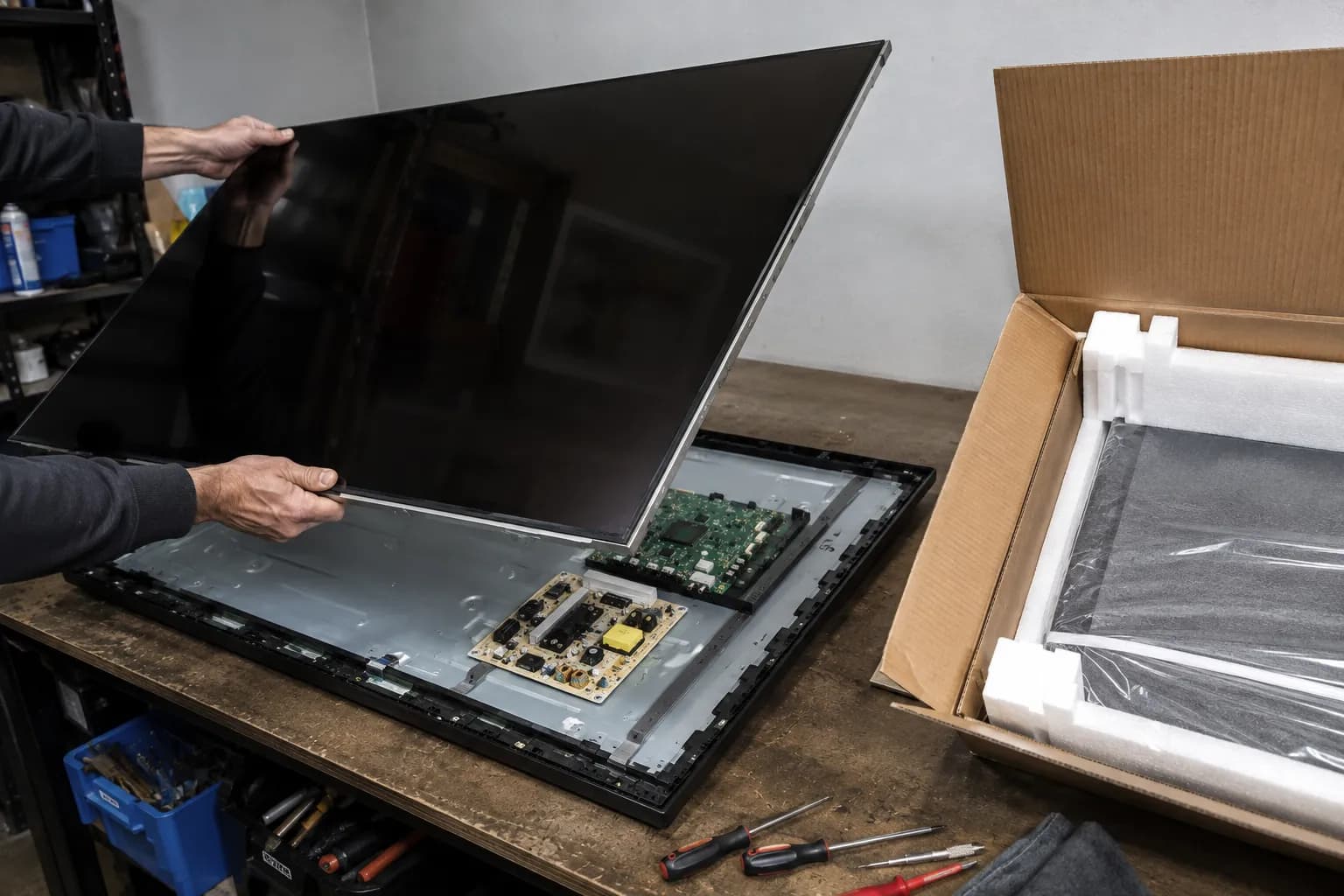
For most damaged panels, replacing the whole TV wins, and the old set still has a little value left in it.
A mid-range 4K television usually costs less than a bare panel and lasts longer than a budget set, so it is the rational spend.
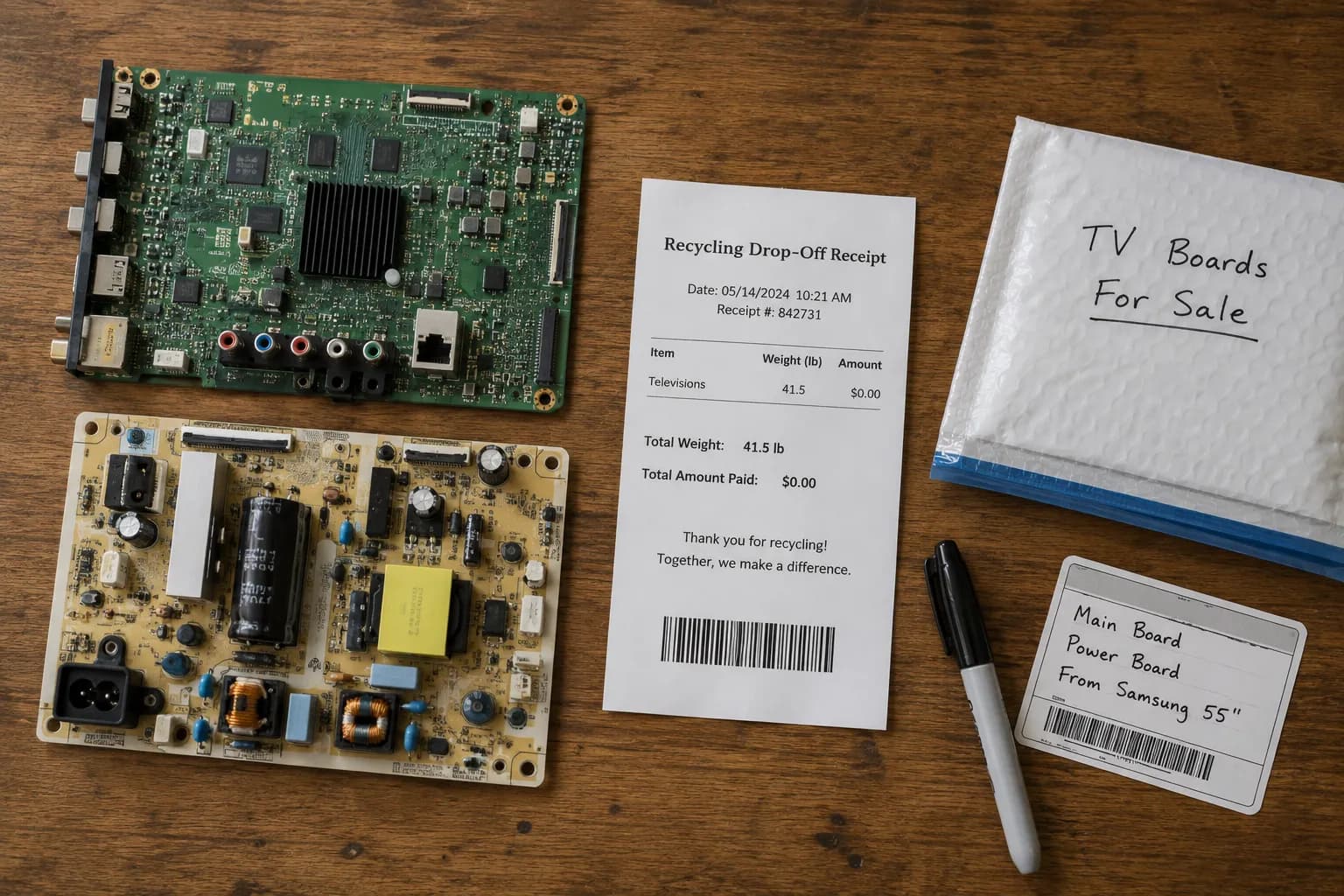
Do not bin the broken one either, because you can recycle it as e-waste, sell its working boards, or salvage the backlight.
What to look for in the replacement is short and worth stating plainly.
Match or slightly exceed your old screen size, since prices at 55 and 65 inches are lower than ever.
Choose the panel type that fits the room, with LED or QLED for bright rooms and OLED for dark ones.
Confirm the warranty terms, because accidental-damage coverage is rarely included by default.
The old set is not worthless, just close to it. The boards are the salvage value, so many owners part it out and sell the main and power boards for a little money before recycling the shell.
In our own case, the main and power boards from a dead 55 inch set sold for about $70 before the chassis went to e-waste.
Angi's 2026 figures show a new flat-screen install runs $160 to $375, which keeps the replace-and-recycle path well ahead of a panel swap on cost.
If the panel is fine but other faults are creeping in, watch for the early warning signs to watch before you spend.
When you are done harvesting anything useful, recycle the old set responsibly. Your new television also makes it easy to get back to sharing your phone screen for photos and video.
A broken TV is worth little beyond its salvageable boards. Set that expectation now, so a modest board sale feels like a bonus rather than a disappointment.
Frequently Asked Questions
Can you replace a TV screen?
Technically yes, but economically rarely. The display panel can be swapped, yet it is the costliest layer in the set, so a replacement panel usually runs 70 to 90 percent of a comparable new TV.
Many manufacturers do not sell bare panels to consumers, which is why replacement is the practical answer for most cracked screens.
Is it cheaper to replace the screen or buy a new TV?
A new TV is almost always cheaper. In our August 2026 check a 55 inch panel cost about $560 while a comparable new 55 inch 4K set sold for under $400.
Once labor or freight is added, the panel swap loses on nearly every budget and mid-range set.
How much is a 55 inch TV screen replacement?
Expect roughly $400 to $900 for the panel alone, plus $120 to $220 in labor. A comparable new 55 inch 4K television sells for $300 to $550, so the part by itself costs more than the whole replacement.
Only a recent premium OLED changes that math.
Can you replace a TV screen yourself?
You can, but the failure rate is high. Panels crack easily in transit and during the swap, and one torn ribbon cable ends the repair, as our own $430 DIY attempt proved.
It is only sensible on a cheap set or when you already have a matching donor panel.
Where can I buy a replacement TV panel?
Brand parts stores such as Samsung Parts USA sell genuine assemblies by part code, iFixit and ShopJimmy stock parts for popular models, and eBay carries used panels of mixed quality. For many models the cheapest real option is a same-model donor TV with a dead board and an intact panel.
Does a warranty cover a cracked screen?
Usually not. Standard manufacturer warranties cover defects, not accidental physical damage, so a crack is typically your cost.
A dead backlight or a bad board, by contrast, may well be covered, which is why a diagnosis matters before you assume the worst.
The Bottom Line
Strip away the sales pressure and the myth that a cracked screen is a quick swap, and the decision gets simple.
A TV screen replacement almost never makes financial sense, because the panel is the TV, and its price sits at 70 to 90 percent of a new set before labor even enters the picture.
Start by confirming the fault is actually the panel, since lines and dim pictures are cheap board or backlight fixes that a flashlight test can reveal in seconds.
If it truly is the glass, the honest move for nearly every budget and mid-range set is to replace the television, then recoup a little by parting out the boards and recycling the shell.
If you still want the panel, you now have the method that saves money: read the part number off the sticker, match it character for character, and weigh OEM against a used listing or a same-model donor set.
Do that, and whatever you choose, you will spend with your eyes open rather than on a guess.
Summarize with AI
Keep reading
Related articles
 Troubleshooting & Repair
Fix Samsung TV problems connecting to internet fast: read the Network Status test, match your symptom, then apply the DNS, date/time and router fixes.
 Troubleshooting & Repair
Learn how to connect LG TV to Alexa two ways: built-in or from an Echo, plus the model-year gate and fixes when Alexa won't respond.
 Troubleshooting & Repair
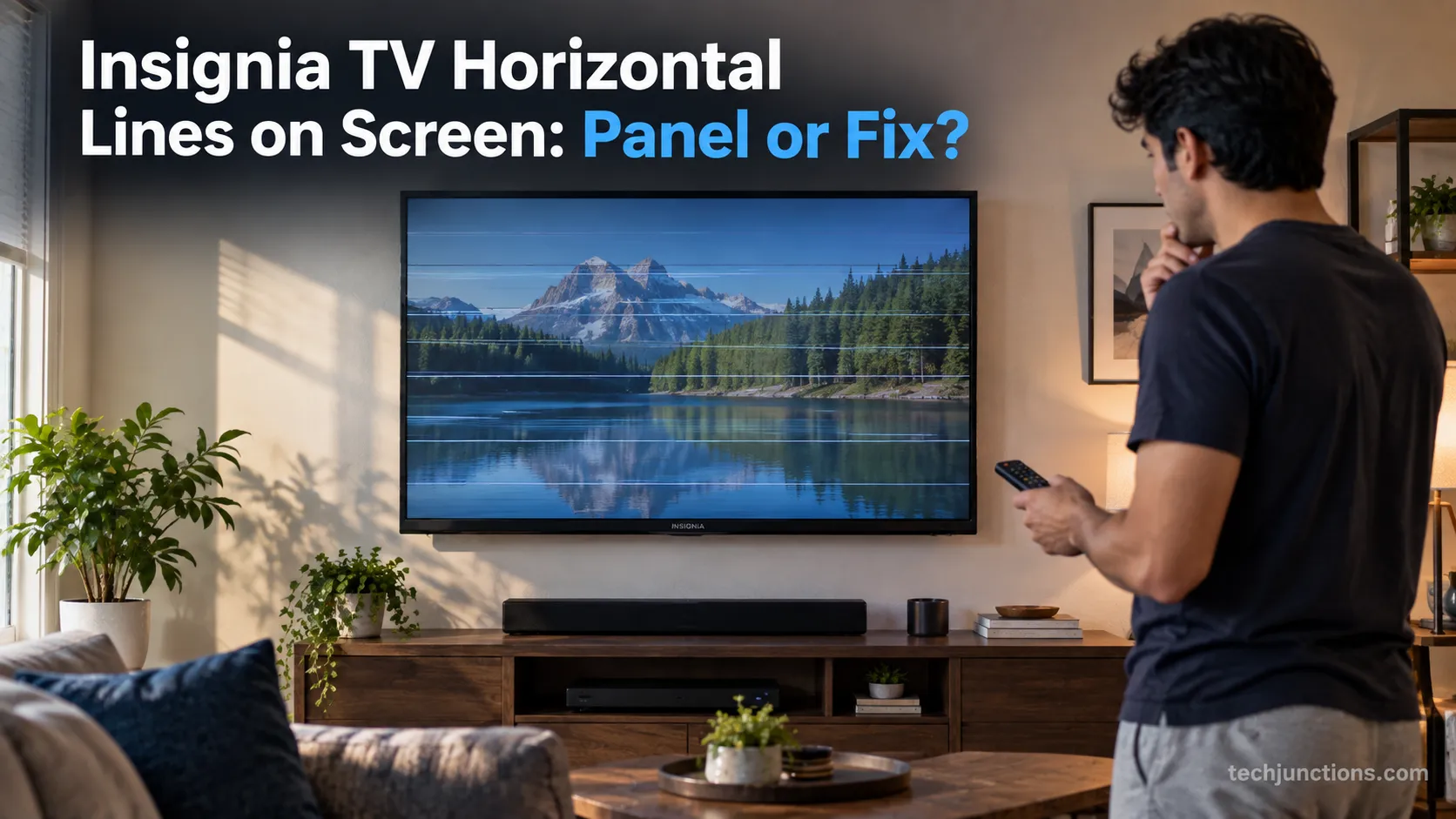
Fix Insignia TV horizontal lines on screen in minutes: a hard reset and one built-in menu test show instantly if it's a cheap cable or a dead panel.
 Troubleshooting & Repair
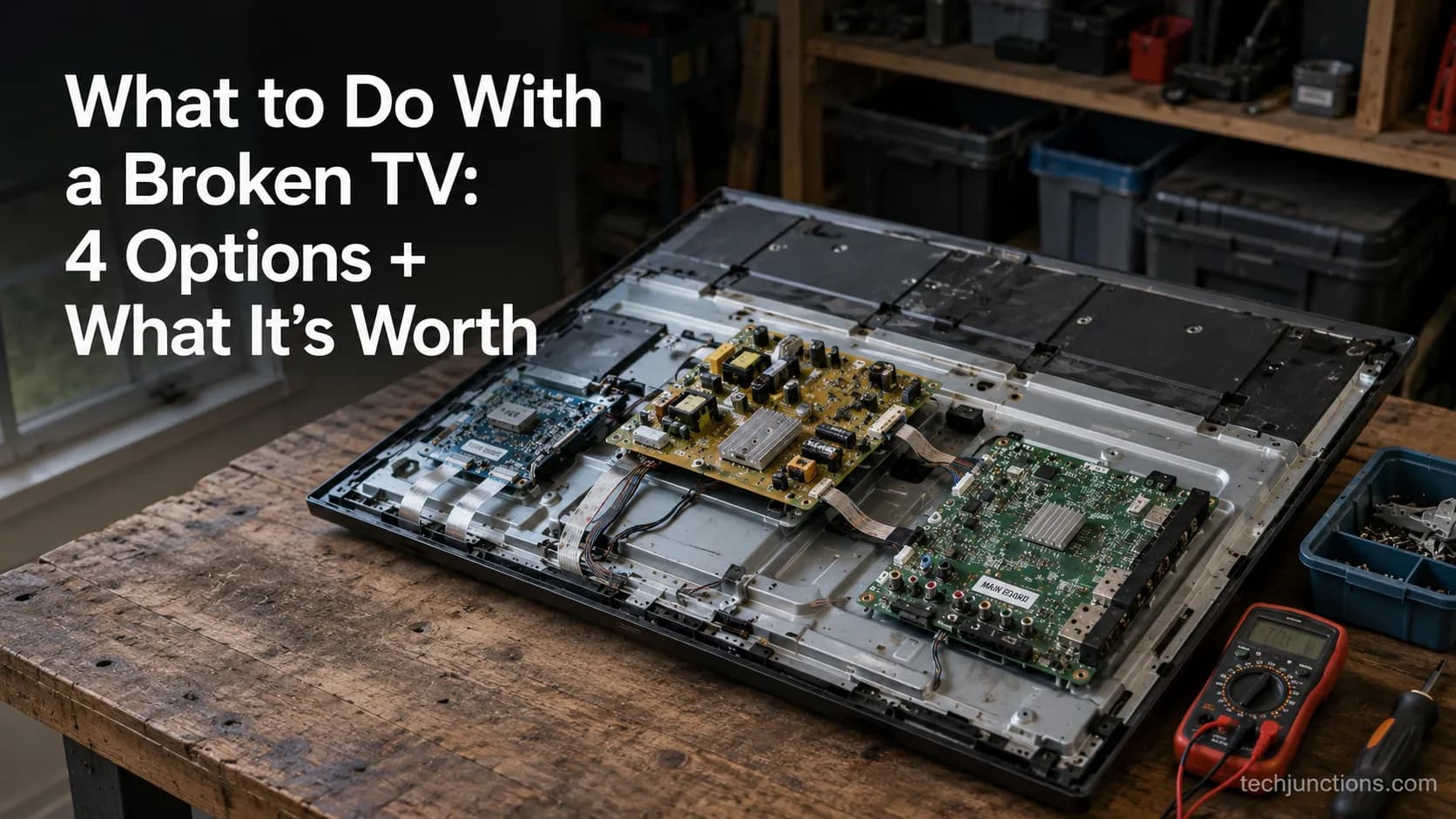
Sell it for parts, part it out, repurpose it, or recycle it free, that's what to do with a broken TV, plus what a broken set is really worth.
Comments
Moderated for quality. Share a correction, ask a follow-up, or tell us what worked for you - every comment is reviewed before it goes live.