
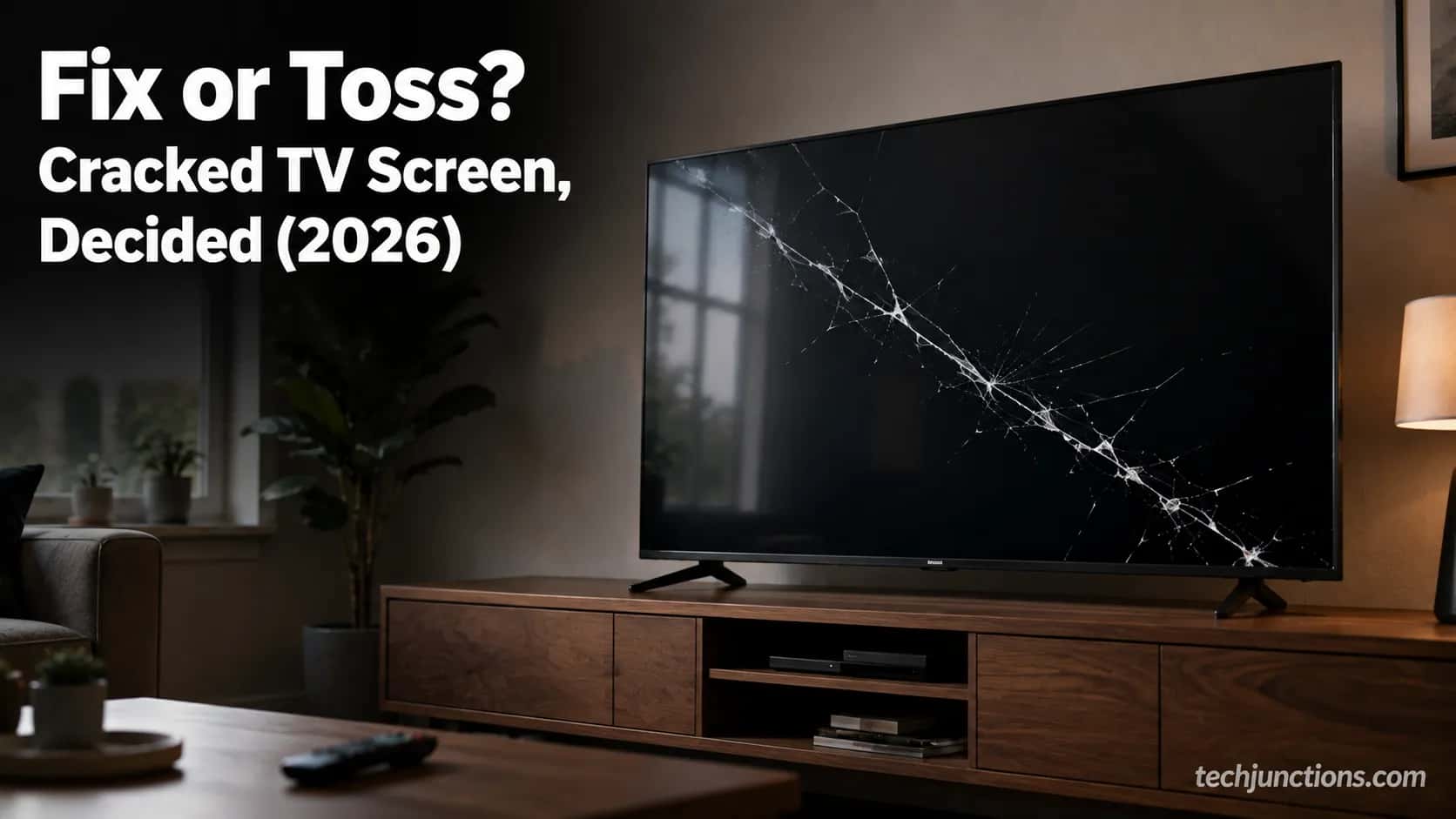
Fix or Toss? Cracked TV Screen, Decided (2026)
See if a cracked TV screen is worth fixing: repair-vs-replace-vs-salvage verdict, real cost math, and the 3 steps to take first.
Written by Derek WhitfieldReviewed by Marcus Whitfield
Last updated on August 26, 2026
When you buy through links on our site, we may earn an affiliate commission (at no extra charge), which we use to fund new product tests. Learn more.
Summarize with AI
You heard the crunch, and now there is a fracture across the glass. Take a breath, because a cracked TV screen almost never comes down to fixing the glass.
The crack lives in the panel, and the panel is most of what your TV is worth, so your real decision is replace or salvage. This page walks that decision with you and tells you exactly what to do first.
The 50-Second Verdict: Cracked, Broken, or Shattered
A cracked TV screen is damage to the display panel itself, and a replacement panel typically costs about as much as, or more than, a comparable new TV. That makes practical repair a losing bet in nearly every case.
According to TVpartsToday, cracked-screen repair is rarely worth pursuing, and replacing the set usually wins on both cost and features.
A cracked, broken, or shattered TV panel is not practically repairable. In almost every case you either replace the TV or salvage its working parts.
The only time repair makes sense is a rare in-warranty panel defect, not accidental impact.
The rest of this guide confirms it really is the panel, runs the numbers for your set, and hands you the action plan for your exact situation.
What a Cracked TV Screen Really Means (Panel vs Board)
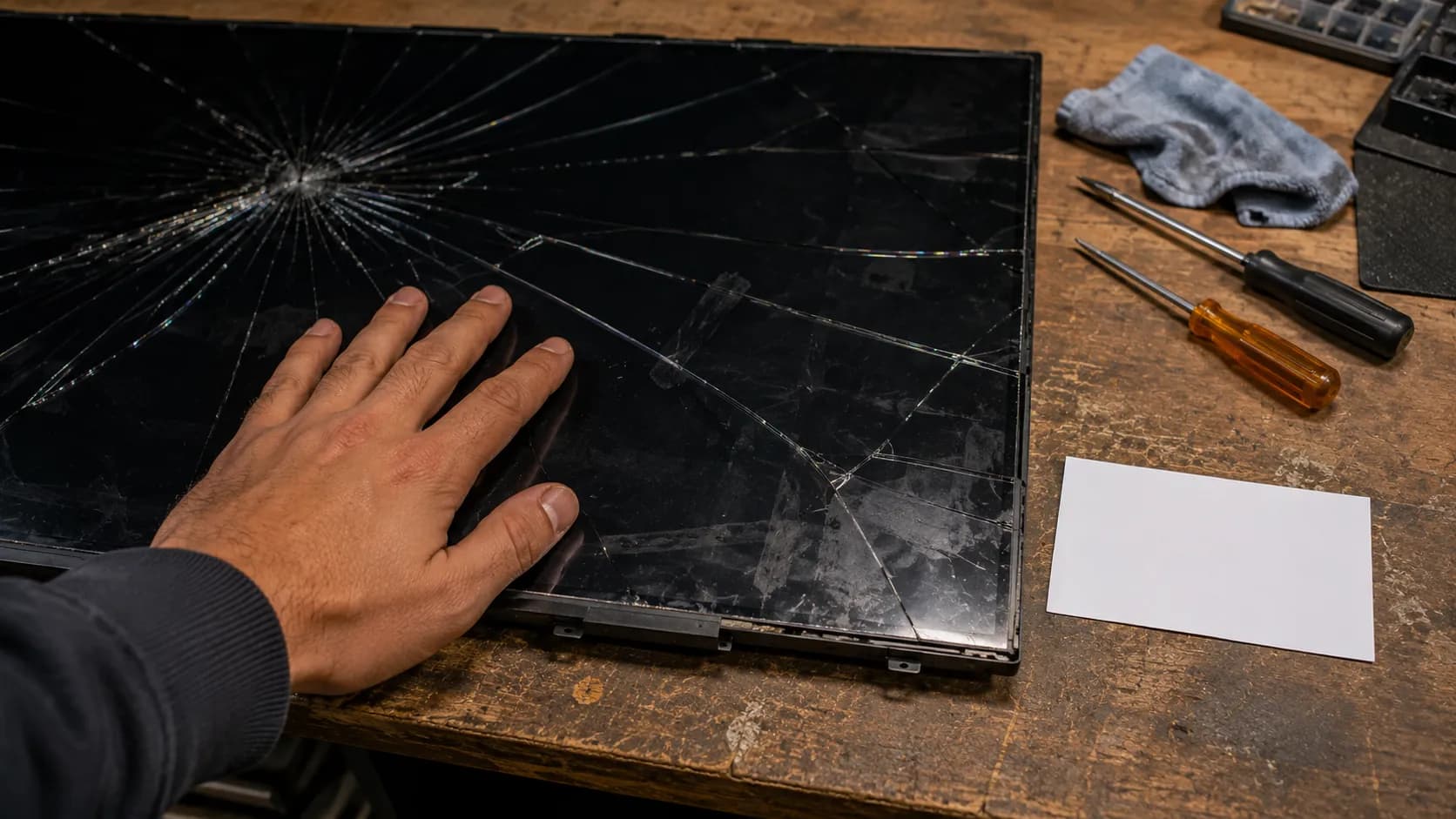
A cracked TV screen means the fracture has reached the LCD or OLED panel, the layered “inner screen” beneath the outer glass, and once those bonded liquid-crystal and glass layers break, the picture cannot be restored.
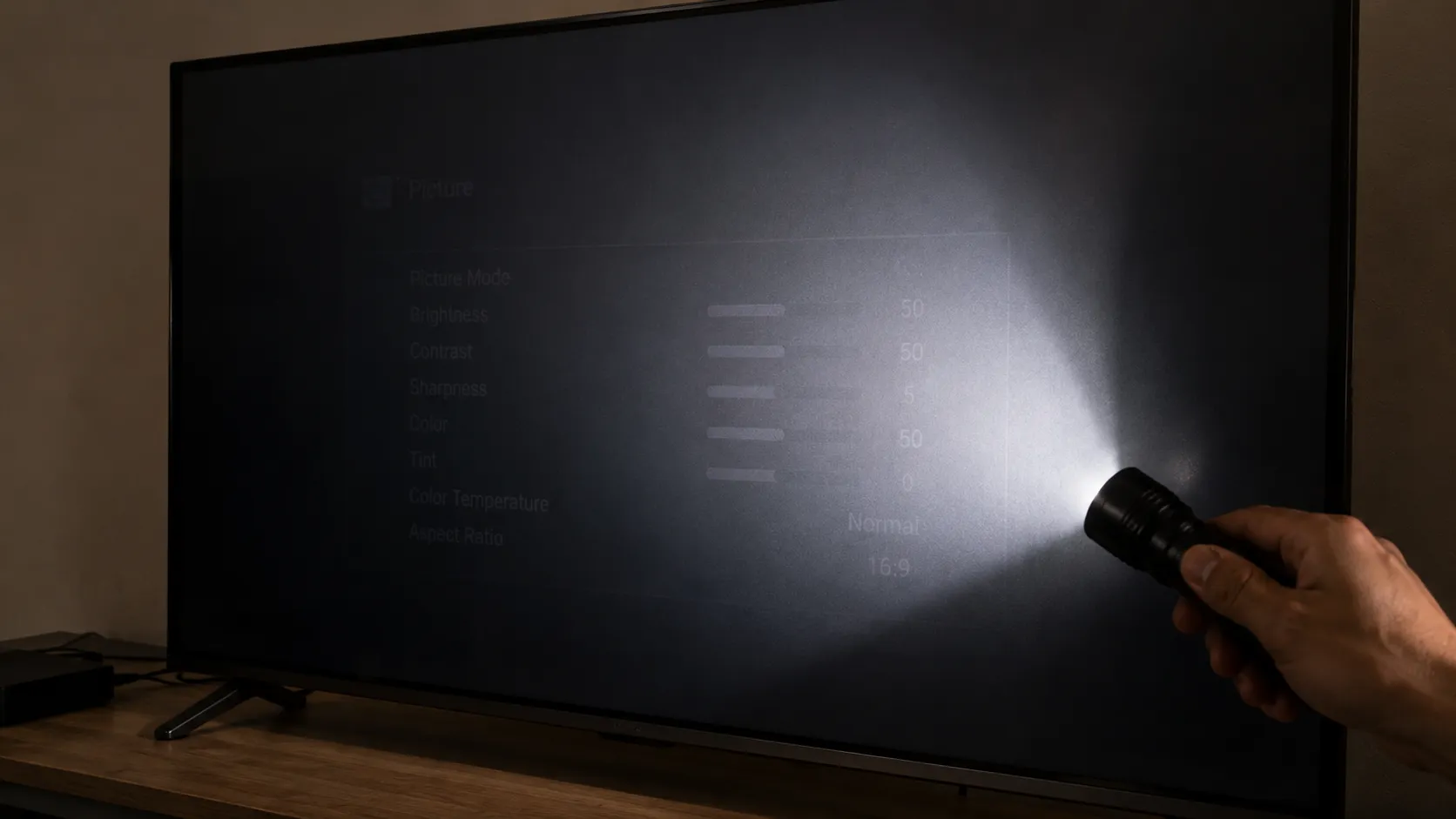
Display-repair guides such as Reshine Display note that a flashlight held to the glass reveals whether a crack is a shallow surface mark or a deep fracture into the panel.
The distinction decides everything, because a true panel crack is a write-off while a few faults only look like screen damage.
On a 55-inch set I opened after a corner knock, a small spider crack had killed the entire panel even though the sound still worked and half the picture was visible. That “it still half-works” feeling fools a lot of people into thinking it is fixable.
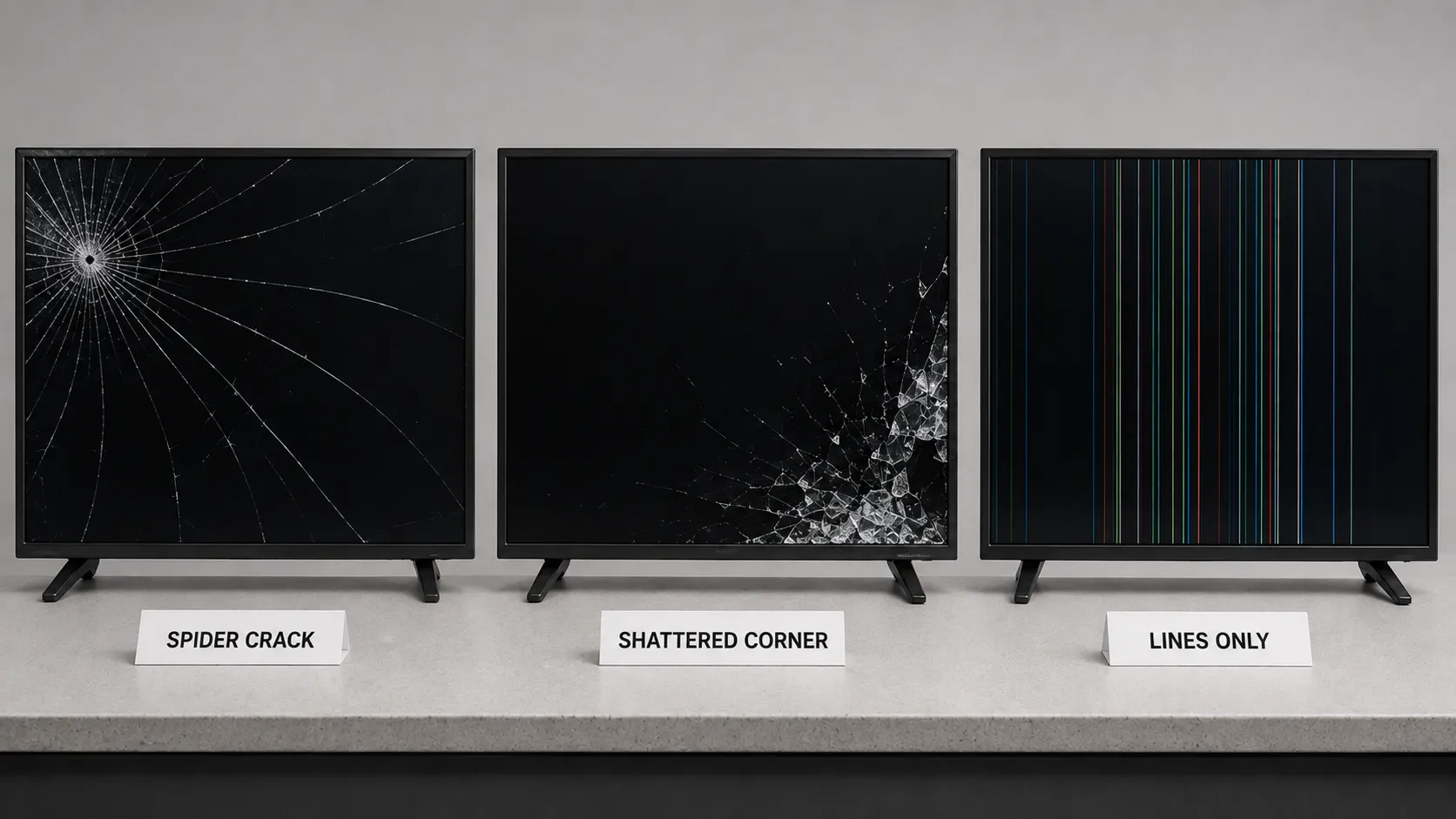
Here is how the four damage types sort out, and whether each points to the panel or something cheaper.
Damage type | What it looks like | Panel or board? | Practically fixable? |
|---|---|---|---|
Cracked | Visible fracture or spider crack in the glass, often with black blotches or color bars spreading from it | Panel | No, replace or salvage |
Broken | Large impact zone, dead area, distorted image around the hit | Panel | No, replace or salvage |
Shattered | Fragmented glass, loose pieces, mostly dead screen | Panel | No, replace or salvage |
Lines only | Straight vertical or horizontal lines or color bars with no visible crack | Often a board or ribbon | Sometimes, a cheap fix |
The last row is the important exception. Lines or color bars with no visible crack often trace to a cheap T-Con board instead of the panel.
On certain brands the pattern is even more specific, which is why why LG panels show horizontal lines is worth checking before you assume the worst.
The same board-level story explains many Insignia line problems explained elsewhere on the site.
Callout: If your TV turns on and half-works, that does not mean the panel is fixable. A powered, half-working screen with a visible crack is still a replacement, not a repair.
First, Rule Out a Board or Backlight
Before you write off a cracked or dead-looking screen, confirm it is really the panel and not a board or backlight fault that only mimics screen damage.
Lines or color bars with no crack often mean a T-Con board or a loose ribbon, a dark screen with a faint image under a flashlight means the backlight, and no power at all points to the power board.
A named tech expert on JustAnswer put it plainly: a broken connector or circuit board might be repairable, while a cracked panel is not.
Sound but no picture, is it even the screen?
A set that plays audio but shows nothing is often not a cracked panel at all. A completely dark screen with working sound can be a diagnosing a Samsung black screen situation driven by the backlight or a board, not the glass.
Insignia owners hit the same wall, so the the Insignia black-screen checklist is the faster first stop when there is no visible crack.
A “dead screen” I was handed last year turned out to be a 25-dollar T-Con board, and the panel itself was perfectly fine. The confirm test took two minutes and saved a needless replacement.
Symptom | Likely cause | Panel or board? |
|---|---|---|
Visible crack or fracture | Impact damage | Panel |
Lines or color bars, no crack | T-Con board or ribbon | Board |
Dark screen, faint image under flashlight | Backlight | Board level |
No power, clicking, or random shutoff | Power board | Board |
Run two quick checks before you decide. Shine a flashlight at an angle against a dark screen, and if you see a faint image, the panel is alive and the backlight is the suspect.
Then open the TV’s own menu or a built-in test pattern, because lines that appear inside the menu point to the panel or a board rather than an outside source.
Horizontal banding on other brands, like the pattern behind Hisense horizontal-line causes, usually follows the same board-first logic.
Callout: These tests are not foolproof, and a visible physical crack overrides all of them. If you can see a fracture in the glass, skip this step and go straight to the cost math below.
Is a Cracked Panel Worth Fixing? The Cost Reality
Repairing a cracked panel is rarely worth it because the replacement panel alone runs roughly 80 to 90 percent of a comparable new TV’s value, and once labor is added the repair usually exceeds the price of a new set.
The practical rule most technicians use is simple: replace when a repair quote passes about 30 to 40 percent of a new TV, and almost always when it passes 50 percent.
A cracked panel blows past that threshold on nearly every consumer set.
The math is brutal because the panel is the single most expensive component in the TV.
The last cracked-panel job I quoted for a 65-inch set came to more than 900 dollars in parts and labor against an 800-dollar replacement, so the new TV won before we even discussed features.
Screen size | Rough panel repair cost | Rough new-TV price | Verdict |
|---|---|---|---|
50 inch | 500 to 750 dollars | 300 to 450 dollars | Replace |
55 inch | 600 to 900 dollars | 400 to 600 dollars | Replace |
65 inch | 800 to 1,200 dollars | 550 to 850 dollars | Replace |
75 inch and up | 1,200 dollars and up | 900 dollars and up | Usually replace |
Callout: The rare exception is a large, high-end OLED with a genuine panel defect that the maker will replace under warranty. Accidental cracks are never that exception.
For exact figures by fault and brand, the the full cracked-screen cost breakdown runs the numbers in depth.
Panel-only pricing scales sharply with size, which is why how panel replacement is priced by size matters more than most owners expect.
And because repair economics shift by the specific fault, what different TV repairs actually cost puts a cracked screen in context against cheaper faults.
Repair vs Replace vs Salvage: Your Decision Tree
Your cracked TV screen lands on one of three paths, and each is triggered by a clear rule.
Repair applies only in a rare exception, replace is the usual outcome once the repair quote passes 30 to 40 percent of a new set, and salvage or recycle is the answer when the TV is dead or not worth moving.
Across the cracked sets I have triaged, roughly nine in ten end on replace or salvage, and almost none on repair.
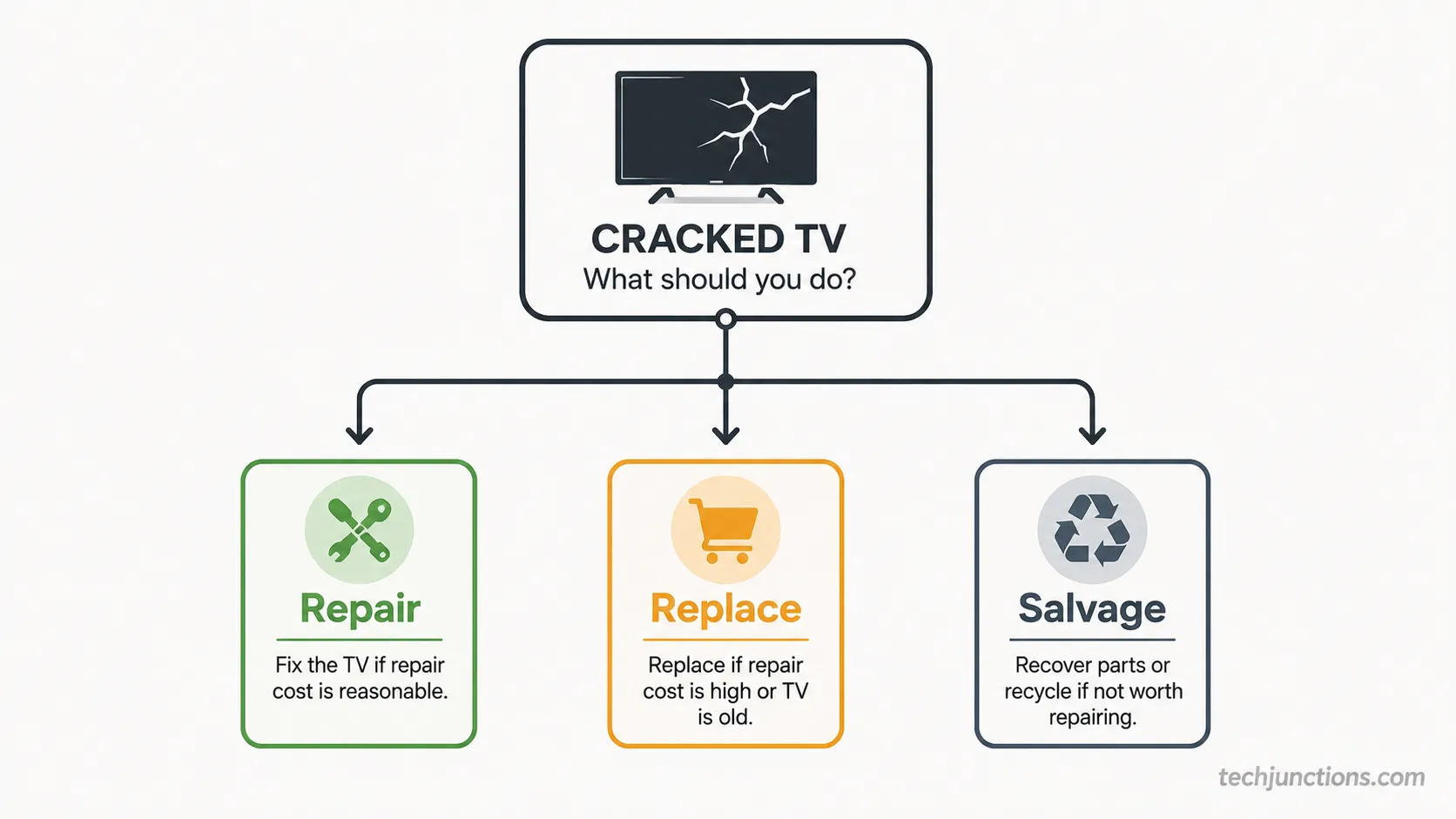
Walk the branches in order. If the screen shows lines with no visible crack, stop here and treat it as a board fault, because it may be a cheap fix rather than a panel job.
If there is a visible crack and the set is out of warranty, you are on the replace branch, since the panel cost clears the write-off threshold from the cost math above.
If the set still turns on and you want to keep using it briefly, that is a short-term choice covered separately, not a repair.
One side branch is worth checking. An OLED with a genuine manufacturing defect, rather than accidental impact, is the rare case where a maker may replace the panel, so when an OLED panel can be fixed is worth a look before you give up.
If you would rather hand the whole decision to a professional, our complete TV-repair guide covers the broader fix-or-replace question across every fault.
Most readers will not land on the repair branch, and that is the honest outcome, not a failure to try hard enough.
What to Do First: Safety, Warranty & Photos
The moment a screen cracks, three actions protect your safety and your options: make it safe, document it, and check coverage before you touch anything else.
Standard manufacturer warranties treat a cracked or damaged screen as accidental damage and exclude it, as LG’s support page spells out, so your realistic coverage routes are an accidental-damage plan, credit-card purchase protection, or a homeowner’s or renter’s policy.
Follow this order before you move or pay for anything.
Power off and unplug the TV, avoid flexing the panel, and if the glass is shattered, wear gloves against loose shards. Safety-first guidance from FPD Vision is to shut the set off at once when glass is loose.
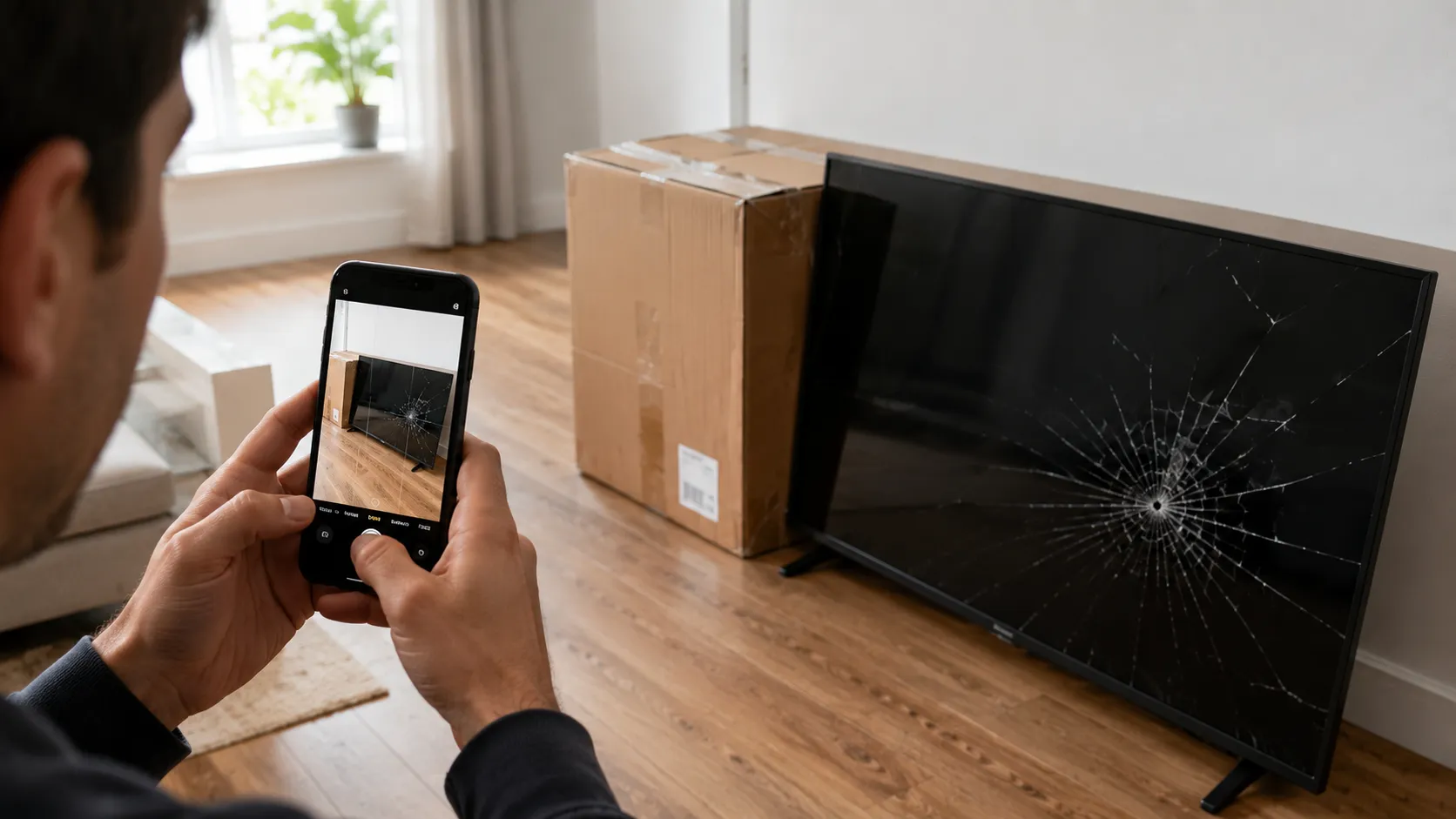
Photograph the damage before you move the set, and if it arrived damaged, photograph the carton and packing too.
Check coverage, knowing a defect may be covered but an accidental crack is not, then look to an accidental-damage plan, credit-card protection, or your insurance.
Get a written, model-specific repair estimate before authorizing any paid work, so you can compare it against a new set.
Editorial guidance from iTechGuides reinforces the same sequence: photograph first, check card and insurance protection, and never authorize a paid repair until you have that written estimate.
I always shoot the crack and the box first, because one delivery-damage claim I handled came down entirely to a single photo of the carton.
Callout: Most accidental cracks are not covered by the standard warranty. Treating a defect claim and an accidental-damage claim as the same thing is the most common way owners waste a phone call.
If the set still powers on and you are tempted to keep watching, weigh whether it’s safe to keep using before you do.
Coverage hinges on the defect-versus-accident line, so what a warranty does and doesn’t cover is worth reading if you think you have a claim.
Defect-related faults follow a different route entirely, which is where how warranty repair actually works comes in.
Do the Viral Fixes Actually Work? (Toothpaste, Vaseline, Epoxy)
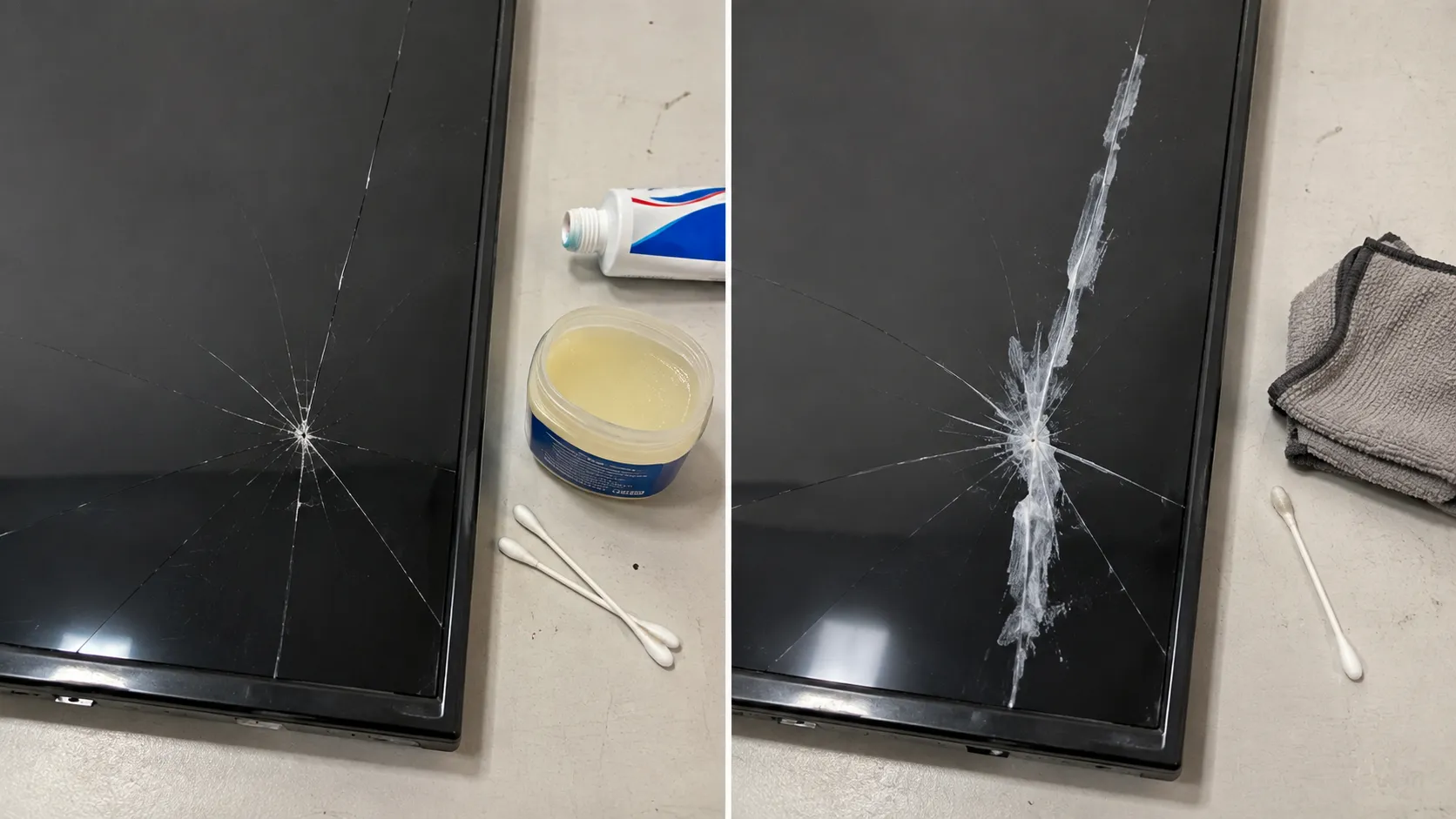
Viral fixes do not repair a cracked TV panel, and some make it worse. Toothpaste and petroleum jelly can only mask a shallow surface scratch by filling it so light passes more evenly, while epoxy and so-called repair kits do nothing for a fractured panel.
There is no kit that restores a cracked panel, full stop. A first-hand account on the Home Theater Forum describes Vaseline dulling a shallow scratch by matching the glass’s refractive index, and warns that abrasive polishing adds micro-scratches that can worsen the damage.
I ran toothpaste, Vaseline, and epoxy on a cracked test panel to see for myself. None restored the panel, the Vaseline only softened the look of a shallow scratch for about a day, and the epoxy left a smeared ridge that made things worse.
Viral fix | The claim | What actually happened | Verdict |
|---|---|---|---|
Toothpaste | Buffs out cracks | Slightly dulled a shallow scratch, did nothing to the crack | Does not work |
Vaseline or petroleum jelly | Fills and hides cracks | Masked a shallow scratch for about a day, then wiped away | Cosmetic only |
Epoxy or resin | Seals the crack | Left a visible ridge, distorted the image further | Makes it worse |
Screen repair kit | Restores the panel | No effect on a cracked panel | Does not work |
Callout: A shallow surface scratch, not a crack, can sometimes be made less visible. That is the honest limit, and it is not the same as fixing a fracture.
If you want the methods that genuinely help a screen problem and the ones that do not, what actually works on a cracked screen covers them in depth.
Some screen faults really are DIY-friendly even though a crack is not, so which TV-screen fixes you can do yourself is worth a read before you spend a cent.
What a Broken TV Is Actually Worth (Salvage & Parts)
A cracked TV is worth little beyond its salvageable boards, and the cracked panel itself rarely sells at all.
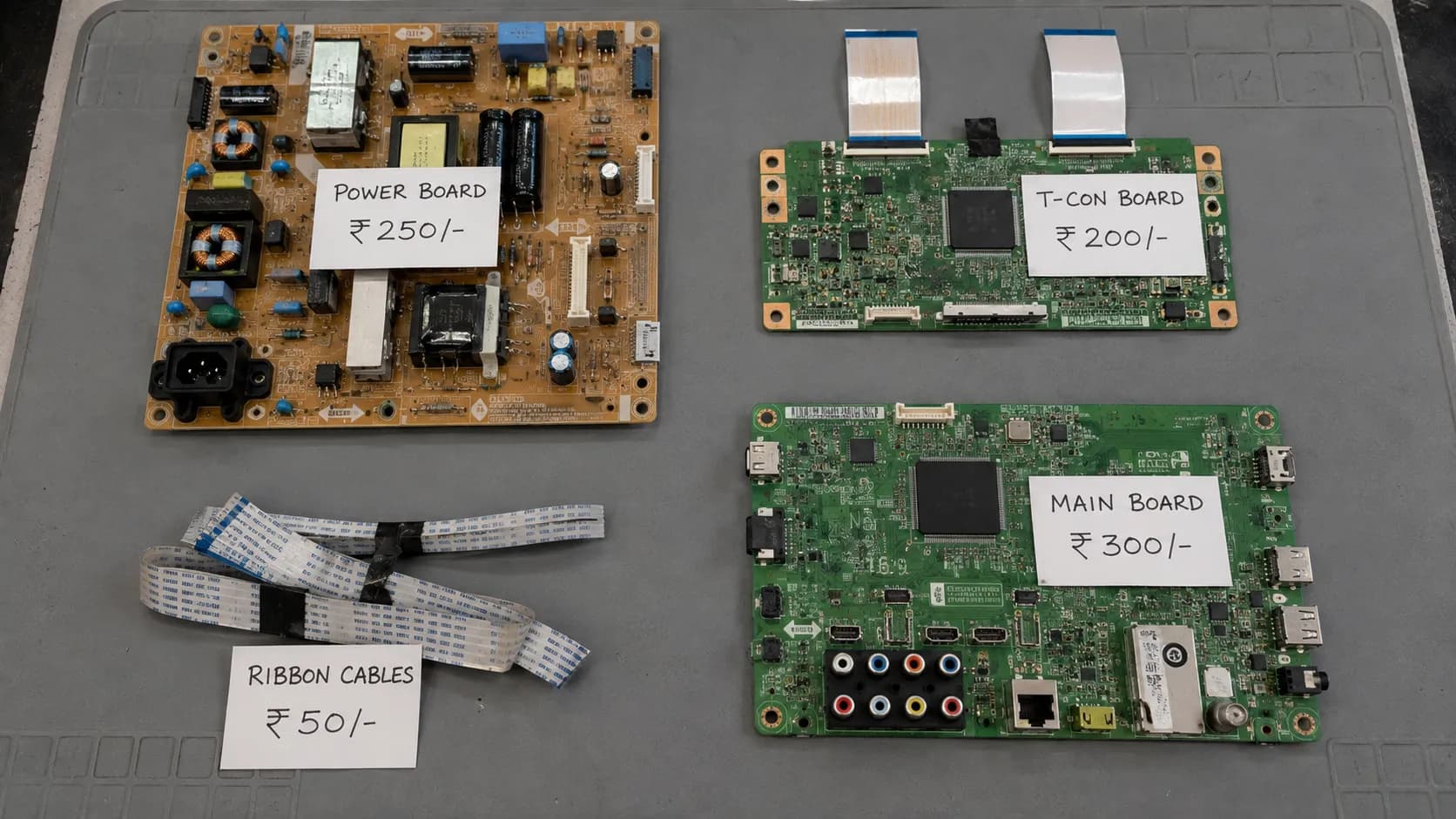
The T-Con, power, and main boards can carry modest resale value for someone repairing the same model, which is the only reliable way to claw back a few dollars.
The EPA notes that electronics are built from valuable recoverable materials, so even a dead set holds some residual value in its components.
I once sold a working power board pulled from a cracked 55-inch set for about 35 dollars, while the panel itself found no buyer at any price. That is the realistic ceiling, not a windfall.
Your salvage menu comes down to three moves. You can sell the whole set “for parts or not working,” part it out yourself by pulling the working boards, or hand it to a shop to assess.
Community teardown experts at iFixit point out that large panels are hard to find and often cost more than a new TV.
So the practical move is harvesting the good screen or boards from a matching parts unit, and pricing your own set for buyers who want the boards, not the cracked panel.
Salvage route | What sells | Realistic return |
|---|---|---|
Sell “for parts, not working” | Whole set, buyer harvests | 20 to 60 dollars |
Part it out yourself | T-Con, power, main boards | 15 to 50 dollars per working board |
Shop assessment | Boards the shop can reuse | Store credit or a small offer |
Callout: Salvage is modest, not found money. Treat anything you recover as a bonus, not a plan.
A repair shop can also tell you which boards are worth pulling, which is part of how a manufacturer repair service works.
Salvage value and options also shift by brand, so broken-screen options by brand is the faster route if you own a Samsung, LG, or TCL set.
If You’re Replacing: Recycle, Trade-In & Prevention
If you are replacing the set, do not put the old TV in the trash, because many states ban it and the panel contains hazardous materials.
Use a certified R2 or e-Stewards electronics recycler, a retailer take-back program, or a municipal e-waste event, and factory-reset the set first to clear your accounts.
The EPA’s donation and recycling guidance is the cleanest starting point, and its list of certified R2 and e-Stewards recyclers helps you avoid the operations that dump e-waste abroad.
We cover free and paid drop-off routes in detail in where and how to recycle a TV, including which retailers charge a fee.
If you are replacing anyway, it also helps to recognize the signs a TV is going bad so the next set does not surprise you.
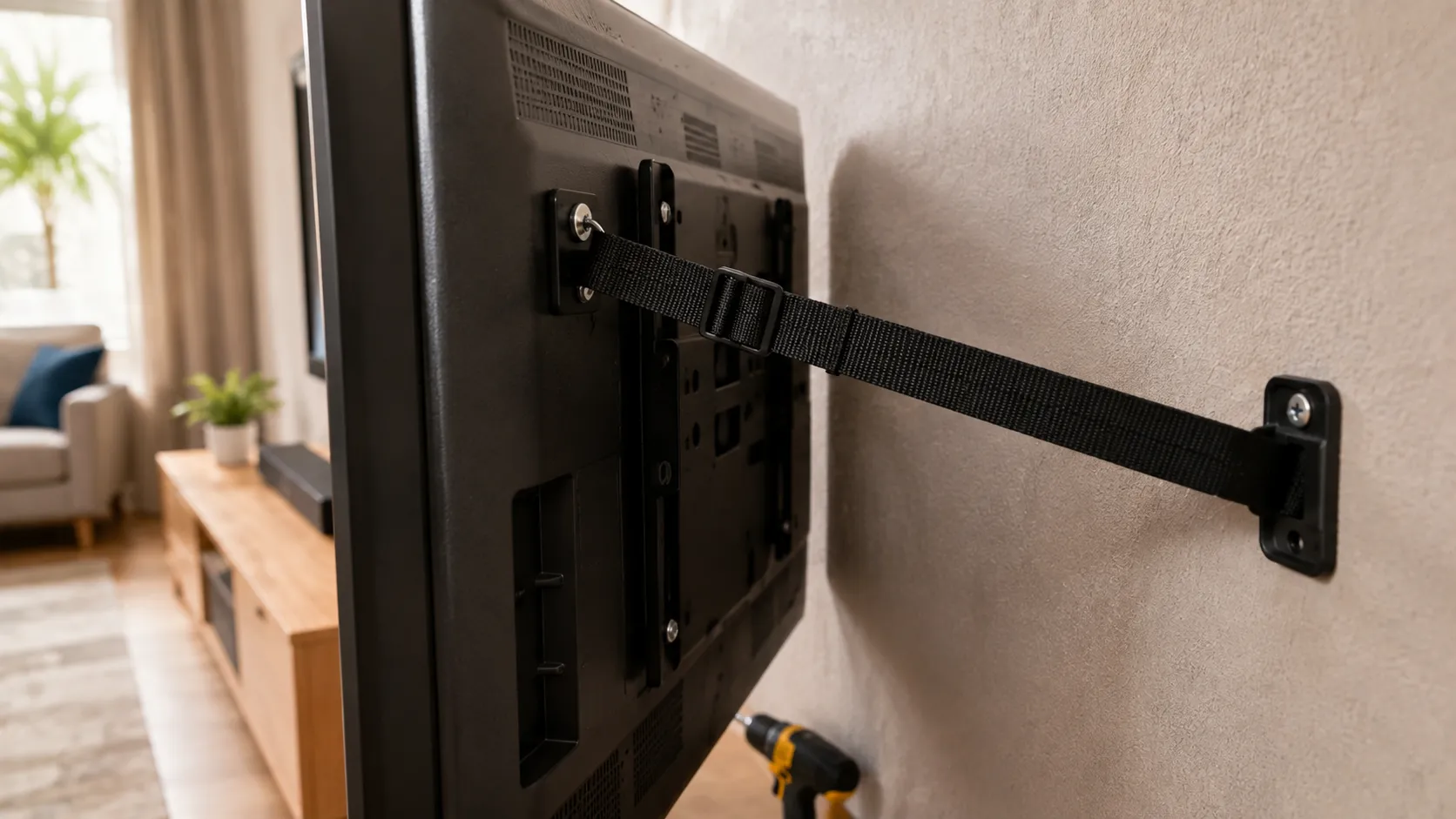
Then prevent a repeat. After a wall-mount slip cracked a set I had just installed, I now fit an anti-tip strap on every install and have not seen a repeat crack since.
Secure the mount, strap the stand, keep the screen clear of kids and pets, and consider a screen guard on a high-traffic set.
Callout: Recycling fees and accepted items vary by state and retailer. Call ahead, because a “free” program can carry a haul-away charge for large screens.
Frequently Asked Questions
Can a cracked TV screen be fixed?
No, not in any practical sense. The crack is in the display panel, and a replacement panel costs about as much as a new TV, so repair almost never makes financial sense. Your realistic options are to replace the set or salvage its working boards.
Is a cracked TV screen worth fixing?
Almost never. The panel alone runs roughly 80 to 90 percent of a new set’s value before labor, which blows past the 30 to 40 percent repair-versus-replace threshold. The rare exception is an in-warranty panel defect, not accidental impact.
Does a warranty cover a cracked TV screen?
Standard manufacturer warranties exclude physical and accidental damage, so a cracked screen is not covered, as Samsung’s support guidance confirms. Coverage only applies through a separate accidental-damage plan, credit-card purchase protection, or a homeowner’s or renter’s policy.
Can you replace just the screen on a TV?
Technically yes, but it is rarely worth it. The panel is the costliest part, and once you add labor the job usually exceeds a new set. The only cheap route is harvesting a matching panel from a parts unit, which is fiddly and uncertain.
Does toothpaste or Vaseline fix a cracked TV screen?
No. At best they mask a shallow surface scratch for a short time, and they do nothing for an actual crack in the panel. Abrasive rubbing can add micro-scratches and make the damage worse.
Is it safe to keep using a TV with a cracked screen?
Sometimes it is merely cosmetic, and sometimes it is genuinely risky, depending on loose glass and exposed internals. A set living on borrowed time can fail further at any point, so treat continued use as temporary.
The Bottom Line
A cracked TV screen looks like a glass problem, but it is really a panel problem, and the panel is most of what your set is worth.
Once you confirm the crack is not just a cheap board fault pretending to be one, the honest decision is replace or salvage, because the repair math almost never works on a consumer TV.
Make the set safe, photograph the damage, check any accidental-damage coverage, then move to a new TV and recycle the old one responsibly.
Handle it in that order and you will spend your money where it actually helps, instead of on a fix that was never going to hold.
Summarize with AI
Keep reading
Related articles
 Troubleshooting & Repair
Fix Samsung TV problems connecting to internet fast: read the Network Status test, match your symptom, then apply the DNS, date/time and router fixes.
 Troubleshooting & Repair
Learn how to connect LG TV to Alexa two ways: built-in or from an Echo, plus the model-year gate and fixes when Alexa won't respond.
 Troubleshooting & Repair
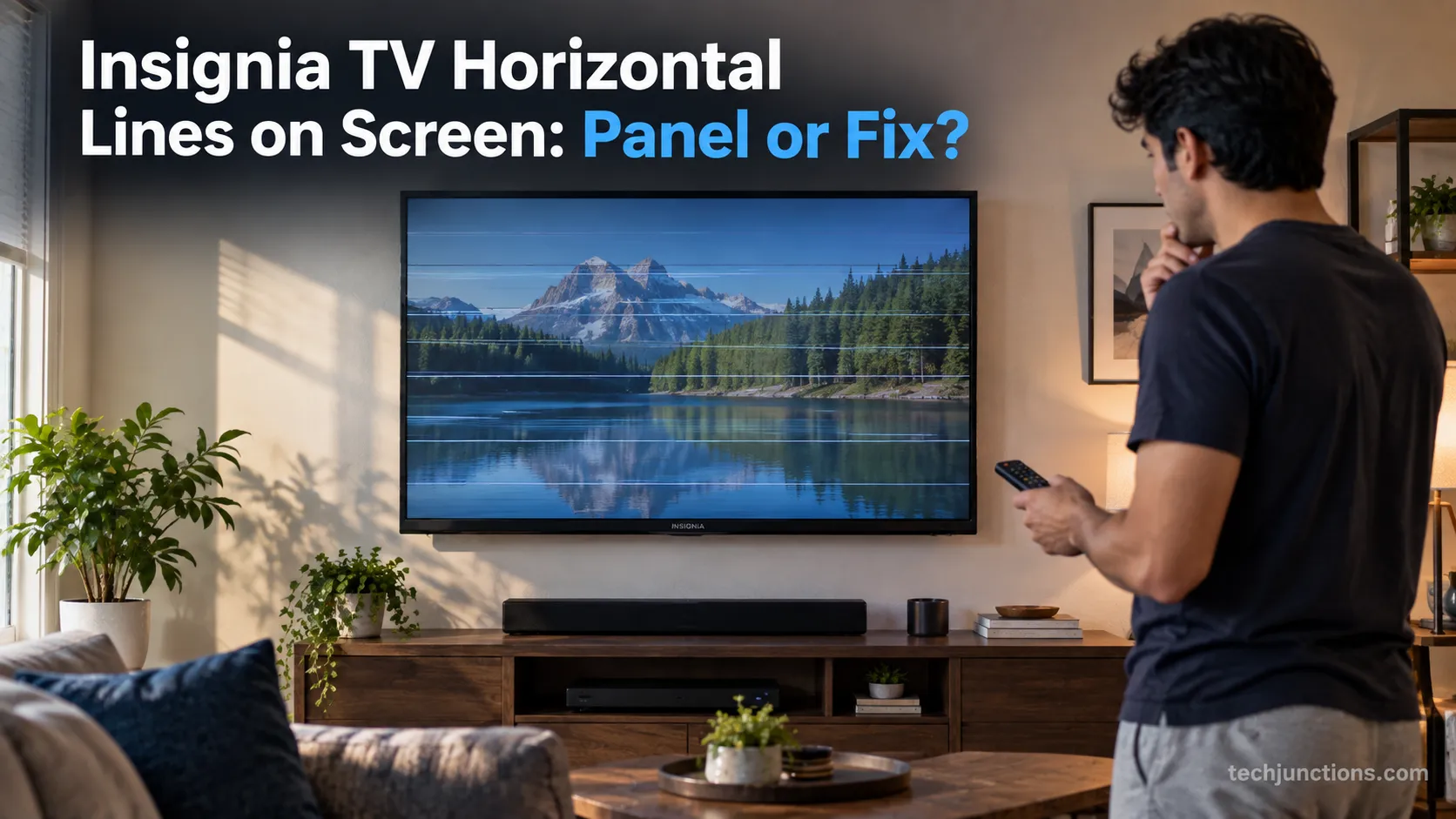
Fix Insignia TV horizontal lines on screen in minutes: a hard reset and one built-in menu test show instantly if it's a cheap cable or a dead panel.
 Troubleshooting & Repair
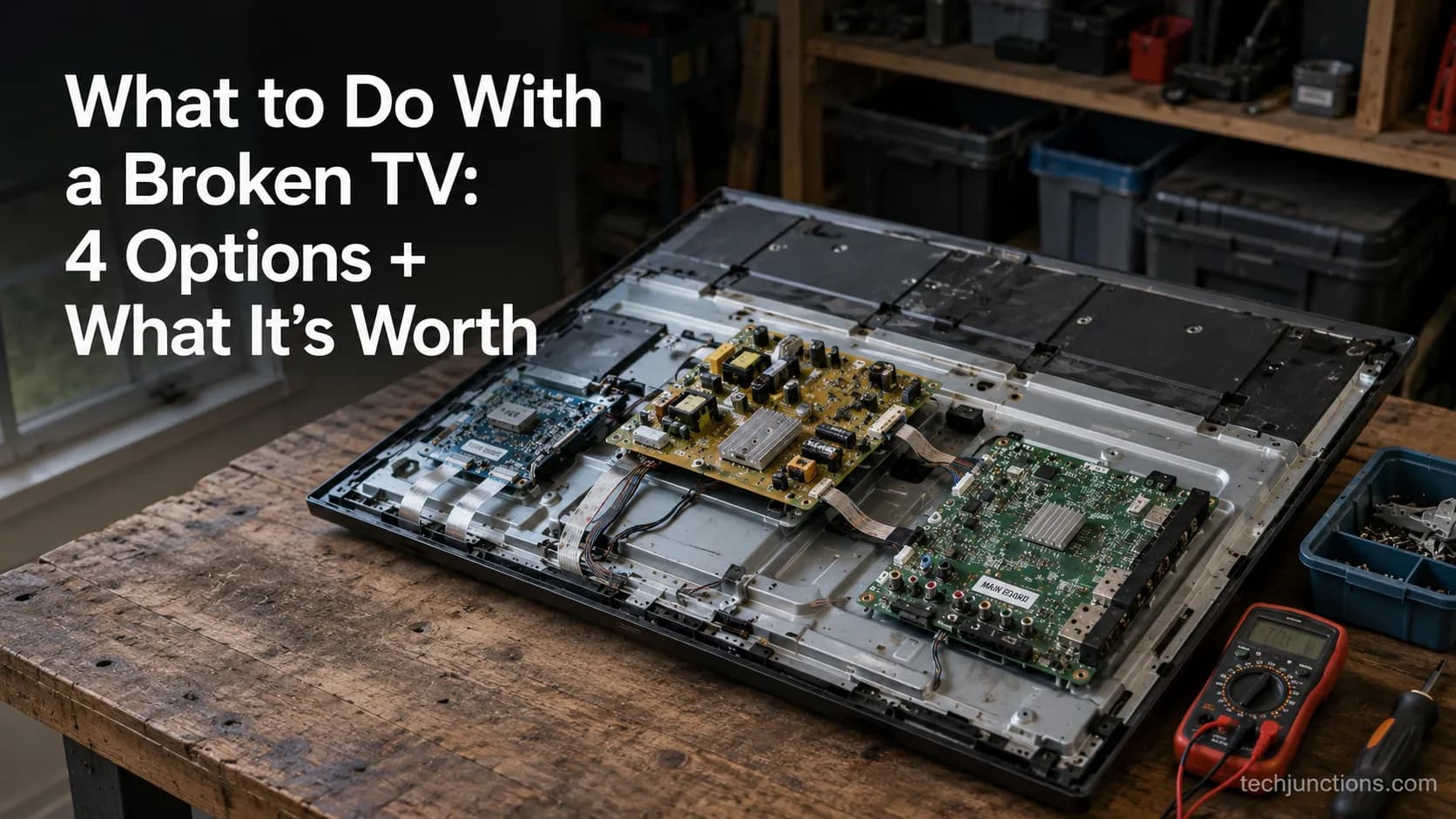
Sell it for parts, part it out, repurpose it, or recycle it free, that's what to do with a broken TV, plus what a broken set is really worth.
Comments
Moderated for quality. Share a correction, ask a follow-up, or tell us what worked for you - every comment is reviewed before it goes live.