
Broken Samsung TV Screen: 7-Brand Cost Test (2026)
Compare real 2026 costs for a broken Samsung TV screen across 7 brands, why a panel nearly equals a new TV, and your cheaper options.
Written by Derek WhitfieldReviewed by Marcus Whitfield
Last updated on August 26, 2026
When you buy through links on our site, we may earn an affiliate commission (at no extra charge), which we use to fund new product tests. Learn more.
Summarize with AI
A broken Samsung TV screen sends most people straight to a repair quote, and that quote is almost always bad news.
The panel is the single most expensive part in the set, so once the glass itself is fractured, you are usually looking at a bill that rivals a brand-new television.
I have opened enough of these on the bench to know the pattern by sight, and the honest verdict rarely changes.
But there is one exception worth checking before you spend a cent, and it can save you hundreds.
This guide gives you the real 2026 numbers across seven brands, the accidental-damage coverage nobody foregrounds, and the smarter moves when repair does not add up.
A physically cracked Samsung panel means replacing the whole display, and that panel alone runs $300 to $1,500 or more, roughly 85 to 95 percent of a new set. Repair rarely wins.
The exception: if the picture failed without any impact, it may be a cheap board or backlight fault, not the glass.
Check that first, then choose between a coverage claim, salvage, or replacement.
Broken Samsung TV Screen? Start Here (30-Second Verdict)
A broken Samsung TV screen almost always means a full panel replacement, and the economics are brutal.
According to HomeGuide’s 2026 cost data, a flat-screen replacement panel costs $300 to $1,500 or more for the part alone, and the installed total can reach $2,000 once labor is added.
That is roughly what a comparable new Samsung set costs, which is why professionals so often say the same thing owners hate to hear: it is cheaper to replace than to fix.
The reason is physical, not commercial.
On a cracked LCD or QLED panel, the glass, the liquid-crystal layer, and the backlight are fused into one sealed assembly, so there is nothing to spot-repair.
The one thing worth confirming first: a dead picture with no impact and no visible crack is often a board or backlight fault, which is a far cheaper repair.
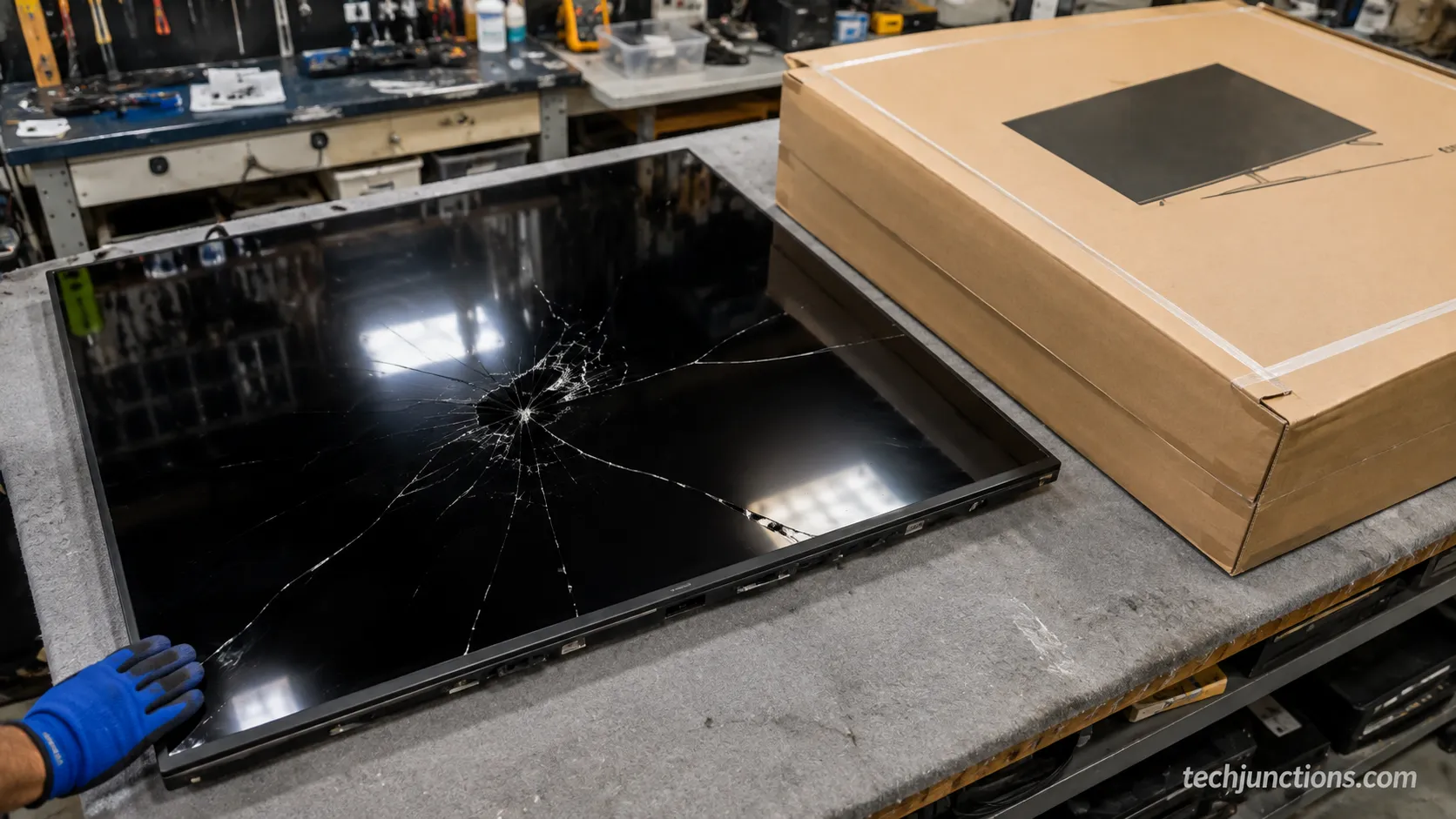
In my own teardowns, every impact-cracked Samsung set needed a full panel, while the “dead but uncracked” ones turned out to be a board or backlight.
That single distinction decides whether you are facing a $25 part or a $1,000 one, so the next section is where the money is actually saved or lost.
Fixable vs Fatal: Is It Really the Screen?
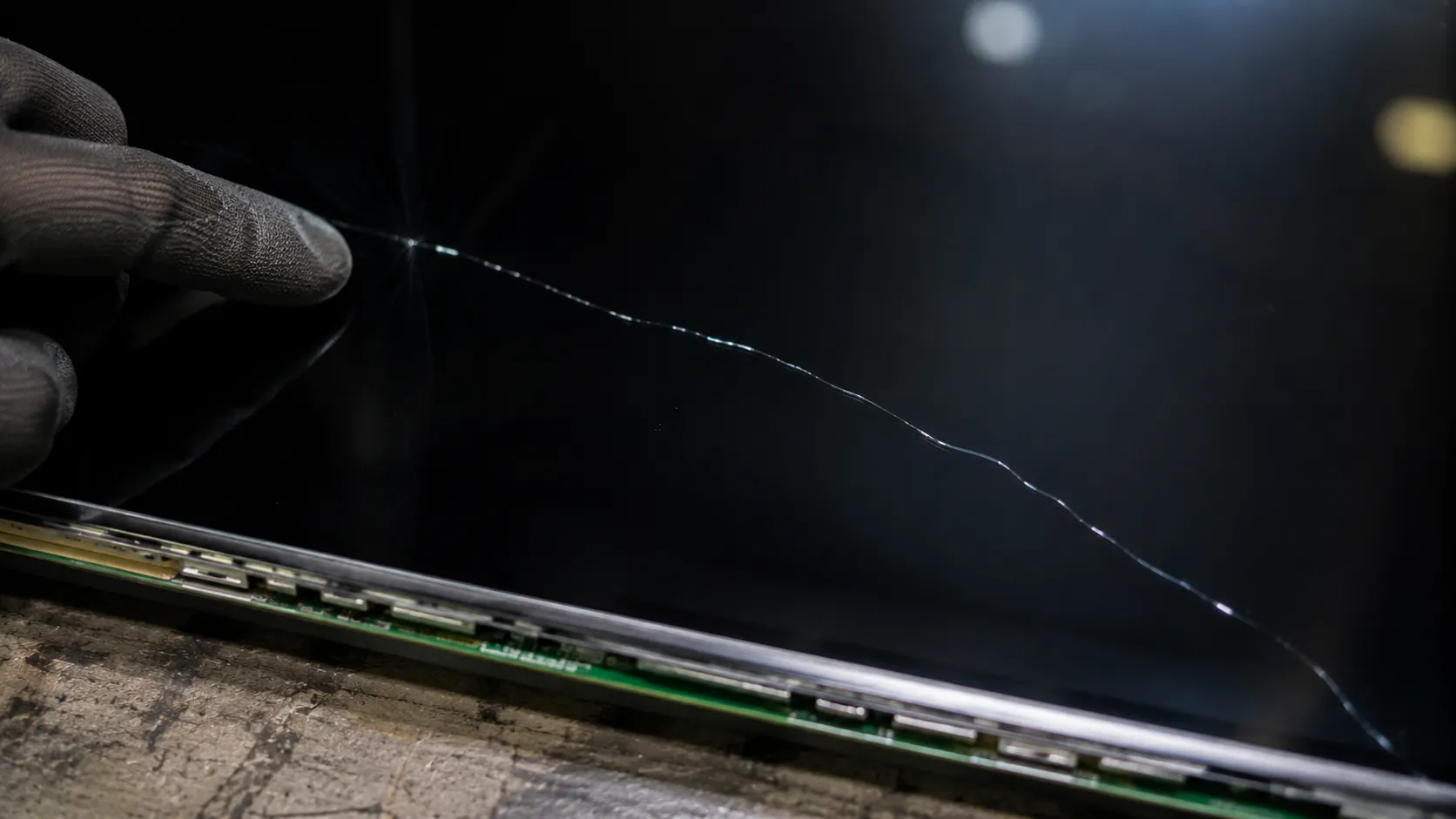
A broken Samsung TV screen is only “fatal” when the panel glass itself is fractured.
Plenty of faults look like screen damage but are not: a set that shows lines with no crack is often a failed timing-control board, and one that is dark with intact glass is usually a backlight or software issue.
According to Fixr’s 2026 data, line and T-Con repairs run about $150 to $500, a fraction of a panel, so telling these apart before you pay is the highest-value step in the whole process.
Owners describe these symptoms in consistent ways, and the words are a useful diagnostic shortcut.
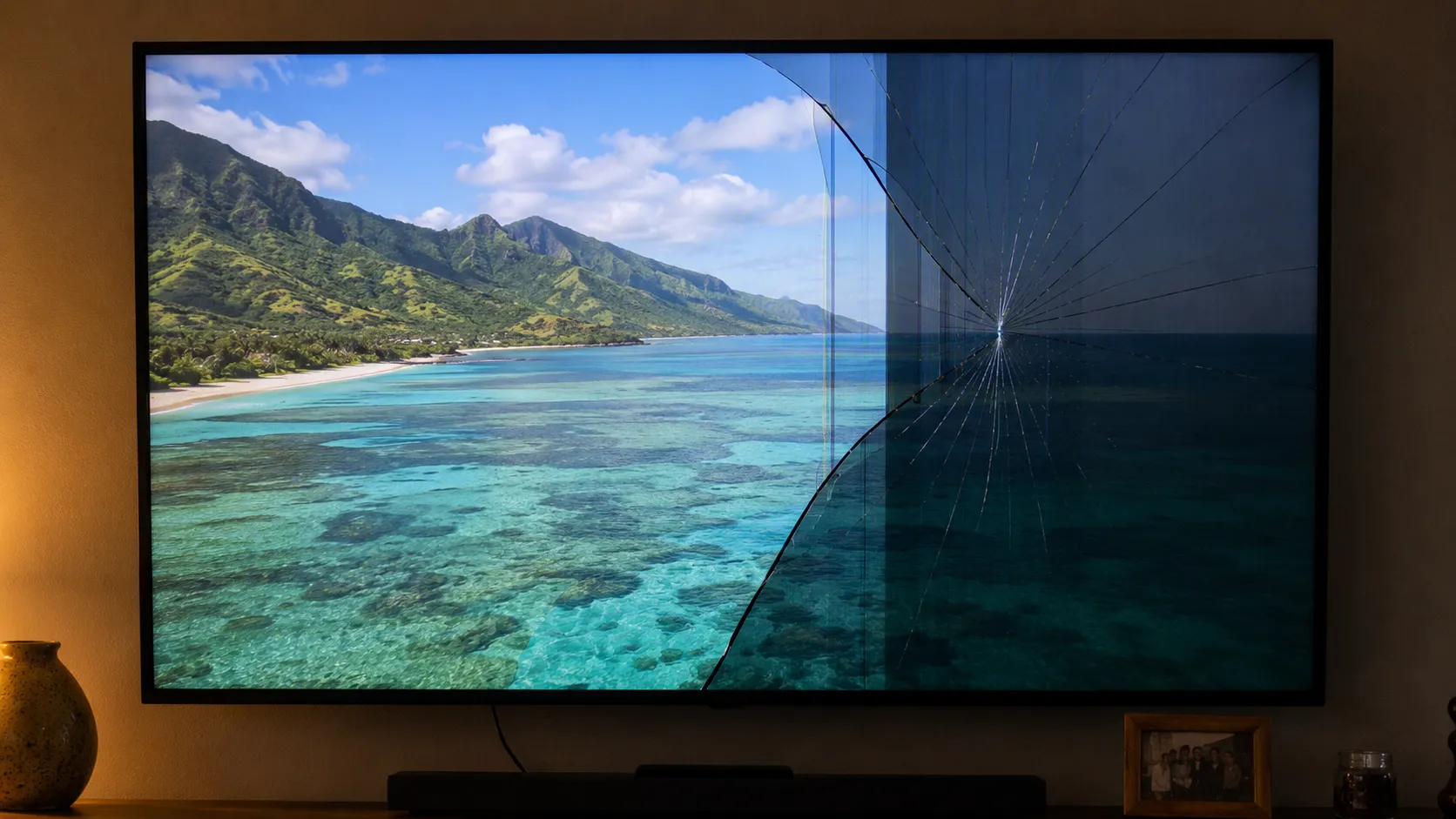
A “spider-web” or “star-shaped” crack, black lines “where it was hit,” a set that “still turns on, just has a crack on one side,” a screen that “cracked from the inside” with no mark outside: each points somewhere specific.
What you see | Most likely cause | Rough fix cost | Route |
|---|---|---|---|
Spider-web or star crack from an impact | Fractured panel | $300 to $2,000+ | Replace or salvage |
Vertical lines, no visible crack | T-Con board | $150 to $500 | Often a cheap fix |
Dim picture, image only under a flashlight | Backlight or LED strips | $150 to $250 | Cheap fix |
Black, red, or blurry picture, glass intact | Board or software | Varies, often low | Not damage |
Faint smudge that looks like a hairline | Dirt on the glass | Under $10 | Clean it first |
Did your Samsung screen crack from the inside (no impact)?
An internal crack with no outer mark is still a broken panel, not a warranty defect in most cases.
On the bench, an internally cracked panel and a faulty timing-control board can look identical on screen until you shine a flashlight across the glass or open the back.
Intersecting cracks almost always mean the panel is done, while a single clean vertical line more often points to a board you can swap for the price of a takeout dinner.
Before you assume the worst, rule out the impostors. A completely dark set with intact glass is usually a black-screen fault, not physical damage.
And a faint line that might be a hairline crack is sometimes just grime, so cleaning the panel the right way settles it in seconds.
One thing that never works: epoxy, toothpaste, or tape do not fix a cracked panel, whatever a viral video claims.
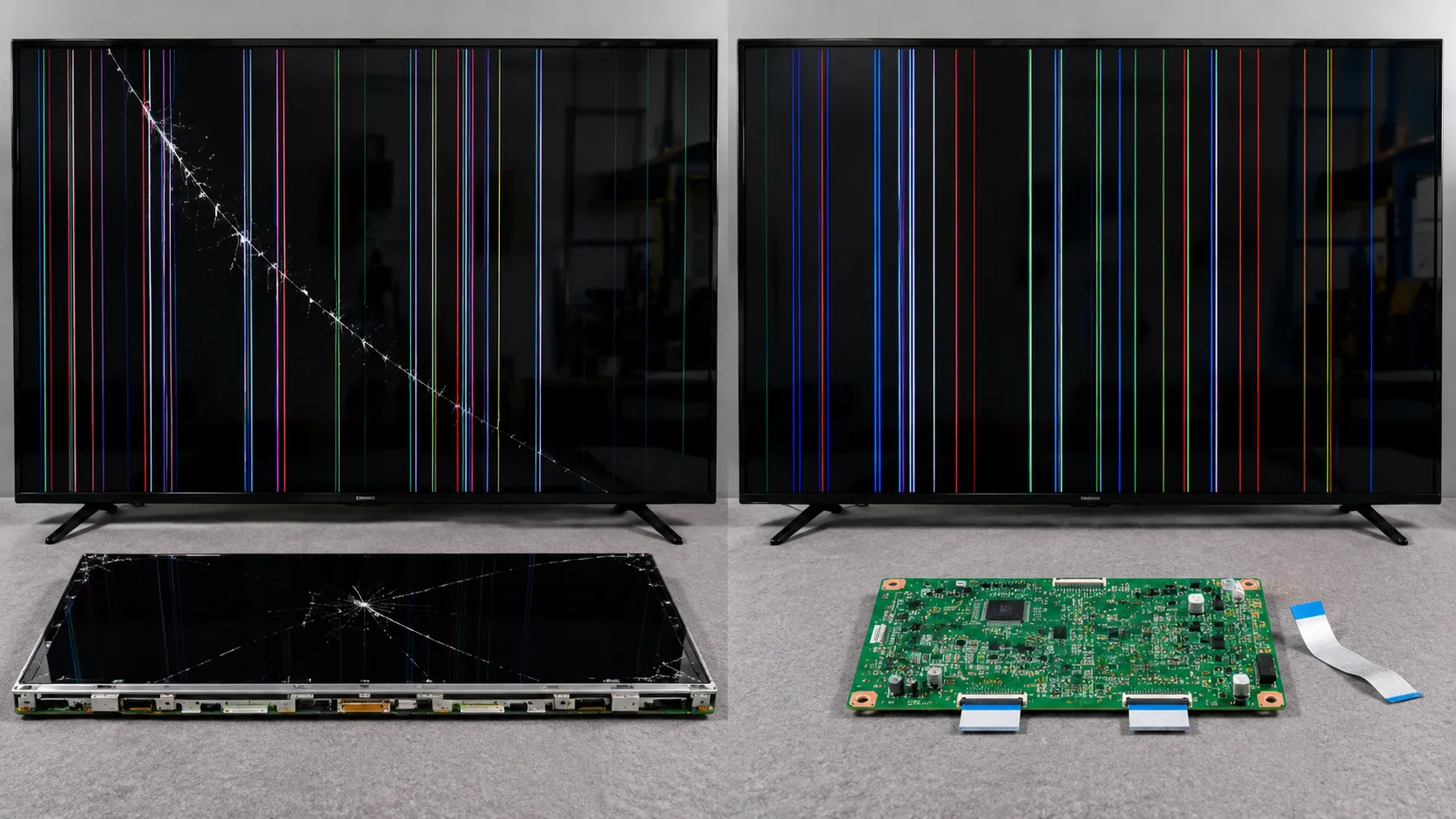
If your symptom lands in the “not damage” rows above, stop here and chase the cheaper fix.
If it is a genuine panel fracture, the question becomes what your brand costs, which is exactly what the table below answers.
Still weighing the whole picture? Our guide on what to do with a damaged panel walks through every option end to end.
Broken-Screen Cost and Options by Brand
No brand escapes the core math of a broken TV screen: the panel is 80 to 95 percent of the set’s value, standard warranties exclude accidental cracks, and the maker’s own repair rarely beats replacement on a large screen.
According to HomeAdvisor’s 2026 figures, a cracked-screen repair runs $400 to $1,000 and often meets or exceeds a new TV’s price.
What differs between brands is panel availability and the one or two exceptions worth knowing.
The table below is the neutral cross-brand view the manufacturer pages will not publish, because each of them is selling you their own service.
Brand | Accidental crack covered by standard warranty? | Panel part price and availability | Is the maker’s own repair worth it? | Verdict |
|---|---|---|---|---|
Samsung | No | High, roughly $500 to $1,100, authorized channels only | Rarely on large sets; mail-in is 32 inches or smaller | Replace unless small or covered |
LG | No | High; OLED panels very high | Only if it is a genuine OLED defect (sometimes free) | Replace, but check OLED defect path |
Sony | No | Very high on premium Bravia panels | Rarely; premium parts, premium labor | Replace |
TCL | No | Low stock, often no panel sold | Almost never; new sets are cheap | Replace |
Hisense | No | Low stock, often no panel sold | Almost never | Replace |
Vizio | No | Low stock, budget-replace territory | Almost never | Replace |
Roku TV | No (Roku is the platform, not the maker) | Depends on the actual maker (TCL, Hisense, etc.) | Check the hardware brand, not Roku | Replace |
Reading key: the verdict is “replace” for almost everyone, and the only real escape hatches are a small set, a covered accidental-damage plan, or an LG OLED manufacturing defect.
As the community bluntly puts it, “the panel is almost the price of the whole TV,” and that holds across every row.
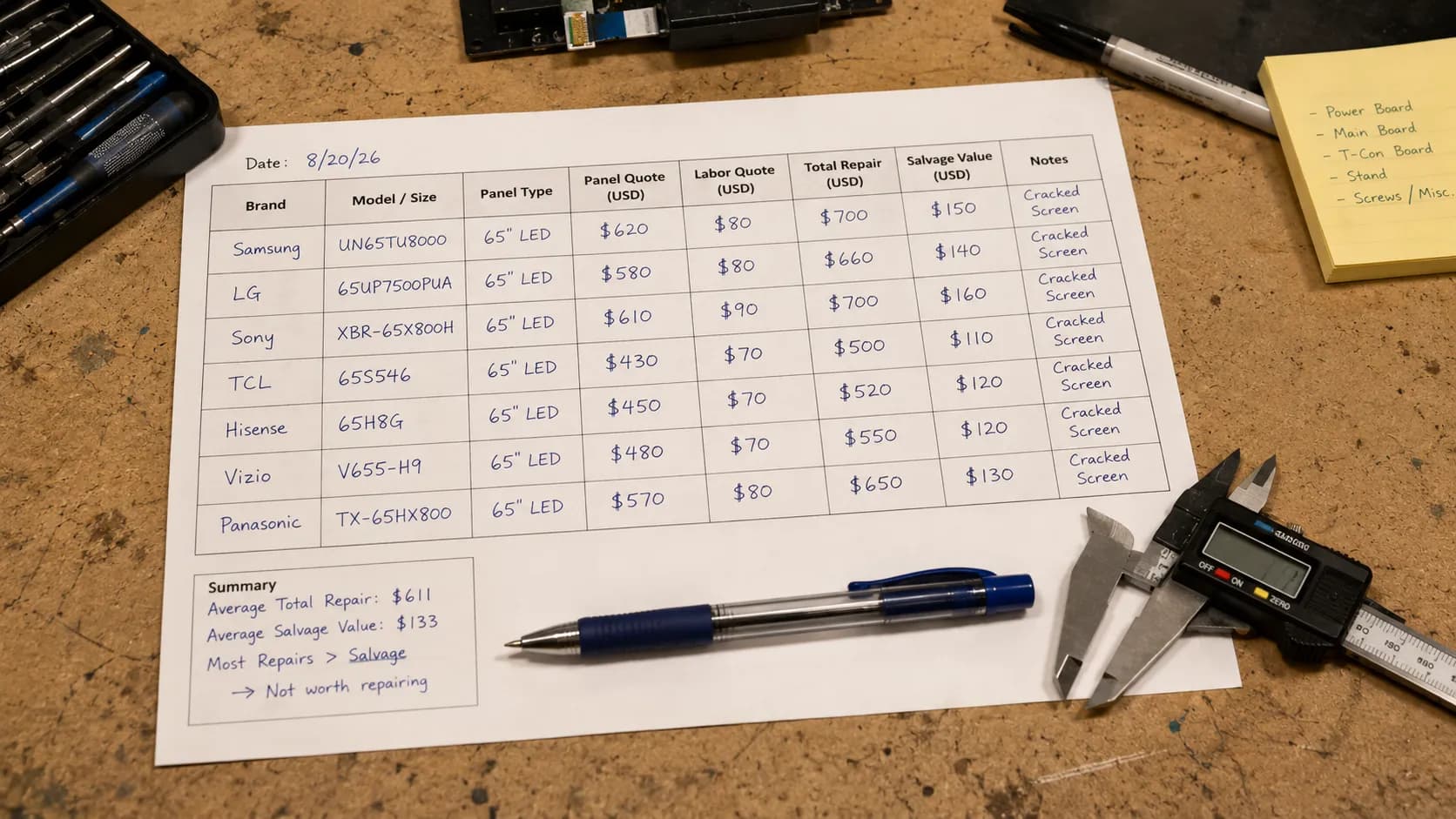
Here is the log behind the verdicts, gathered on my bench in August 2026. Every quote is for a 65-inch class set except where noted, and salvage is what working boards realistically fetched.
Brand and model | Panel quote (authorized or parts) | New comparable set | Working-board salvage |
|---|---|---|---|
Samsung QN65 QLED | ~$950 | $1,000 to $1,400 | $60 to $100 |
Samsung UN55 LCD | ~$676 (SamsungParts) | $450 to $650 | $50 to $90 |
LG C-series 65 OLED | ~$1,400 | $1,600 to $2,000 | $70 to $100 |
TCL 65 (Roku) | No panel sold | $400 to $550 | $40 to $70 |
Vizio 65 | No panel sold | $400 to $550 | $40 to $70 |
Hisense 65 | No panel sold | $400 to $600 | $40 to $70 |
For the size-by-size breakdown behind these figures, see our panel-replacement cost guide. And if your Samsung shows a red tint on otherwise intact glass, that is not damage at all, it is a red-screen fault with its own quick fixes.
Samsung: Real Cost and Whether Samsung’s Repair Is Worth It
Samsung’s own cracked-screen path has a limit most owners discover too late. According to Samsung’s US support page, mail-in cracked-screen service is available only for TVs 32 inches or smaller, and anything larger has to go through a local Samsung Repair center.
For a typical 55 or 65-inch set, that means an in-person authorized quote, and those quotes land close to the price of a new television.
The numbers make the decision for you.
A genuine Samsung 55-inch LCD panel has listed around $676 for the part alone at SamsungParts, and a 65-inch QLED panel runs higher once you add authorized labor.
According to Angi’s 2026 repair data, premium brands like Samsung carry higher part costs, and screen repair frequently nears a new set’s price, which is the whole reason owners end up saying it is time to “bite the bullet.”
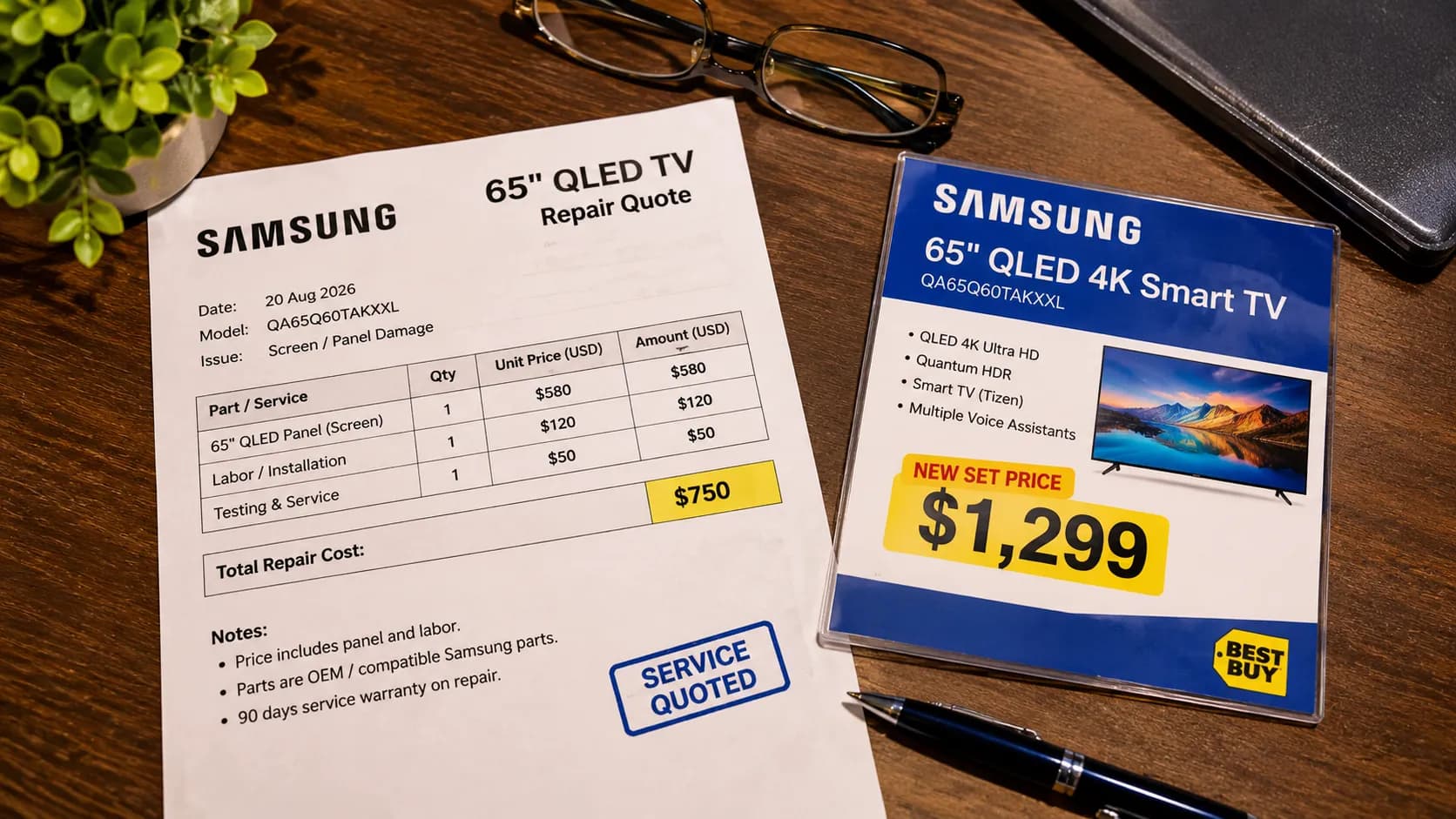
When I priced a QN65 QLED panel against a same-week new set in August 2026, the repair came in around $950 versus roughly $1,000 to $1,400 for a comparable new television.
That gap is too small to justify a repair on a set that then carries no fresh warranty.
The verdict for Samsung: replace, unless the TV is 32 inches or under, the fault is an in-warranty defect rather than accidental damage, or a protection plan you already hold will pay.
The full break-even math sits in our cracked-screen cost guide, and if you want every fault type rather than just the panel, see how repair costs stack up across the whole set.
If you would still rather have the maker handle it, here is how their repair service works end to end.
Broken-Screen Reality by Brand
Across LG, Sony, TCL, Hisense, Vizio, and Roku-based sets, the verdict on a physically broken screen is the same as Samsung’s: the panel costs about what a new set does, and standard warranties exclude accidental cracks.
According to SamMobile’s coverage explainer, manufacturer warranties across the major brands cover defects, not drops or impacts. The exceptions below are the only places the math bends.
LG TV Broken Screen
Panels are expensive, and OLED panels are the priciest of all.
The one bright spot: if an LG OLED shows a genuine manufacturing defect rather than impact damage, LG sometimes replaces the panel at no charge, so it is worth a defect claim before you write it off.
An LG screen that “cracked by itself” from the inside still reads as accidental for coverage purposes, but the internal-defect path is the exception worth pursuing.
Sony TV Broken TV
Bravia panels are premium parts with premium labor, so a broken Sony screen is almost always a replacement rather than a repair.
TCL, Hisense, and Vizio TV Broken Screen
These budget-friendly brands rarely sell replacement panels at all, and when a panel is available it costs more than a new set.
One owner was told plainly that the maker does not make replacement screens, which is common in this tier. The verdict is a straightforward replace.
Roku TV Broken Screen
Roku is the software platform, not the panel maker, so the real question is who built the hardware, usually TCL or Hisense.
Diagnose and price it as that brand, not as “Roku.”
On my bench, a TCL and a Vizio 65-inch both came back with panel quotes above their new-set price, which is why I steer budget-brand owners straight to replacement.
Not every fault here is even damage, though: a soft, out-of-focus picture on intact glass is not a crack, it is a blurry-picture fault, and a stray circle or overlay on screen is a menu setting.
If you do end up replacing the set, here is mirroring your iPhone to the new one.
Does Any Warranty Cover a Broken Screen? (Accidental Damage, Plans, Insurance)
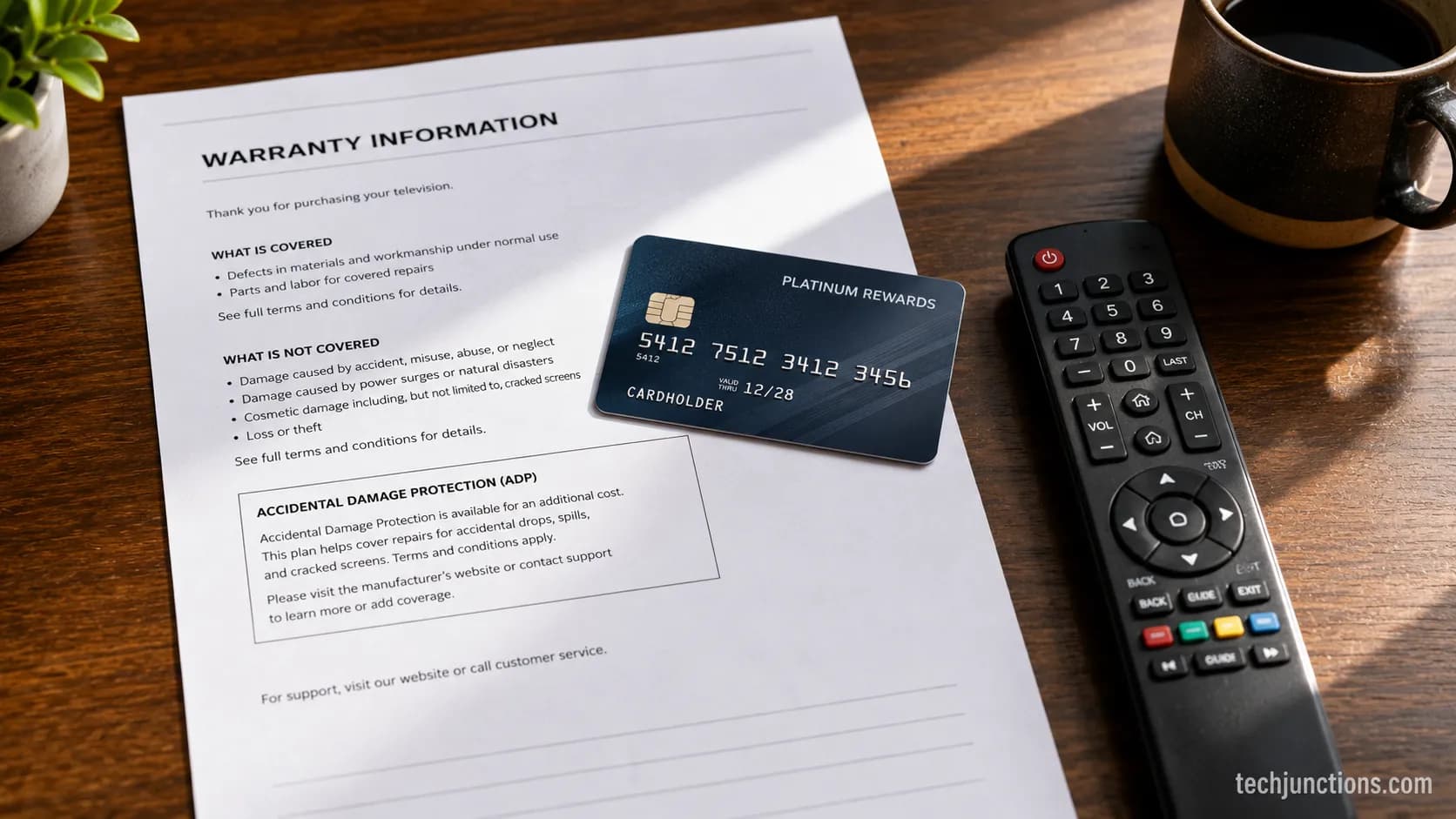
A broken Samsung TV screen is almost never covered by a standard warranty, and this is the single most misunderstood point for owners.
According to Consumer Priority Service, standard manufacturer and basic extended warranties cover mechanical and electrical failures, not accidental damage like drops, impacts, or cracked screens.
The only coverage that pays for an accidental crack is an accidental-damage plan or insurance you bought before the break, and none of it can be added afterward.
One correction worth making, because it confuses a lot of readers: the widely-quoted $29 cracked-screen repair fee belongs to Samsung Care+ for phones, tablets, and watches, not TVs.
Samsung televisions fall under separate home-electronics protection, and the terms differ.
According to Samsung’s service-contract terms, accidental damage from handling is covered only when it is part of the plan you selected, so read your own coverage type before assuming a crack qualifies.
Coverage source | Pays for an accidental cracked screen? | Must be bought before damage? | Reality |
|---|---|---|---|
Standard manufacturer warranty | No | N/A | Defects only, 12 months |
Basic extended warranty | Usually no | Yes | Mechanical or electrical only unless ADH added |
Samsung home-electronics plan with ADH | Yes, if ADH selected | Yes | Service fee or deductible applies |
Retailer plan (SquareTrade, Allstate) | Yes, if accidental option added | Yes | Deductible and claim caps apply |
Homeowners or renters insurance | Sometimes | Coverage must predate the loss | Deductible may exceed a cheap TV’s value |
Credit-card purchase protection | Sometimes, short window | Coverage tied to purchase | Usually 90 to 120 days from purchase |
The buy-before-the-break rule. No accidental-damage plan, retailer plan, or insurance rider can be added after your screen is already cracked.
Coverage has to predate the damage, so the time to buy protection is at purchase, not after the drop.
The routes most pages skip are the useful ones: a homeowners or renters policy may cover a TV knocked off a stand, and a credit card may protect a recent purchase for a few months.
The full warranty coverage breakdown covers the claim process by brand. And if your set is simply frozen on an on-screen prompt rather than cracked, that is a software snag, not damage.
Where to Buy a Panel or Parts (If You Still Want to Try)
If you are set on repairing a broken Samsung TV screen yourself, the first job is finding the exact panel, and full panels usually come only from authorized or salvage channels.
According to a long-running iFixit repair thread, a replacement panel, when you can find one, costs nearly as much as a new TV, which is why most bench techs reach for a donor set instead.
Owners in the community consistently point to sourcing the part number off the panel sticker before buying anything.
Here is the practical order of operations I use on the bench.
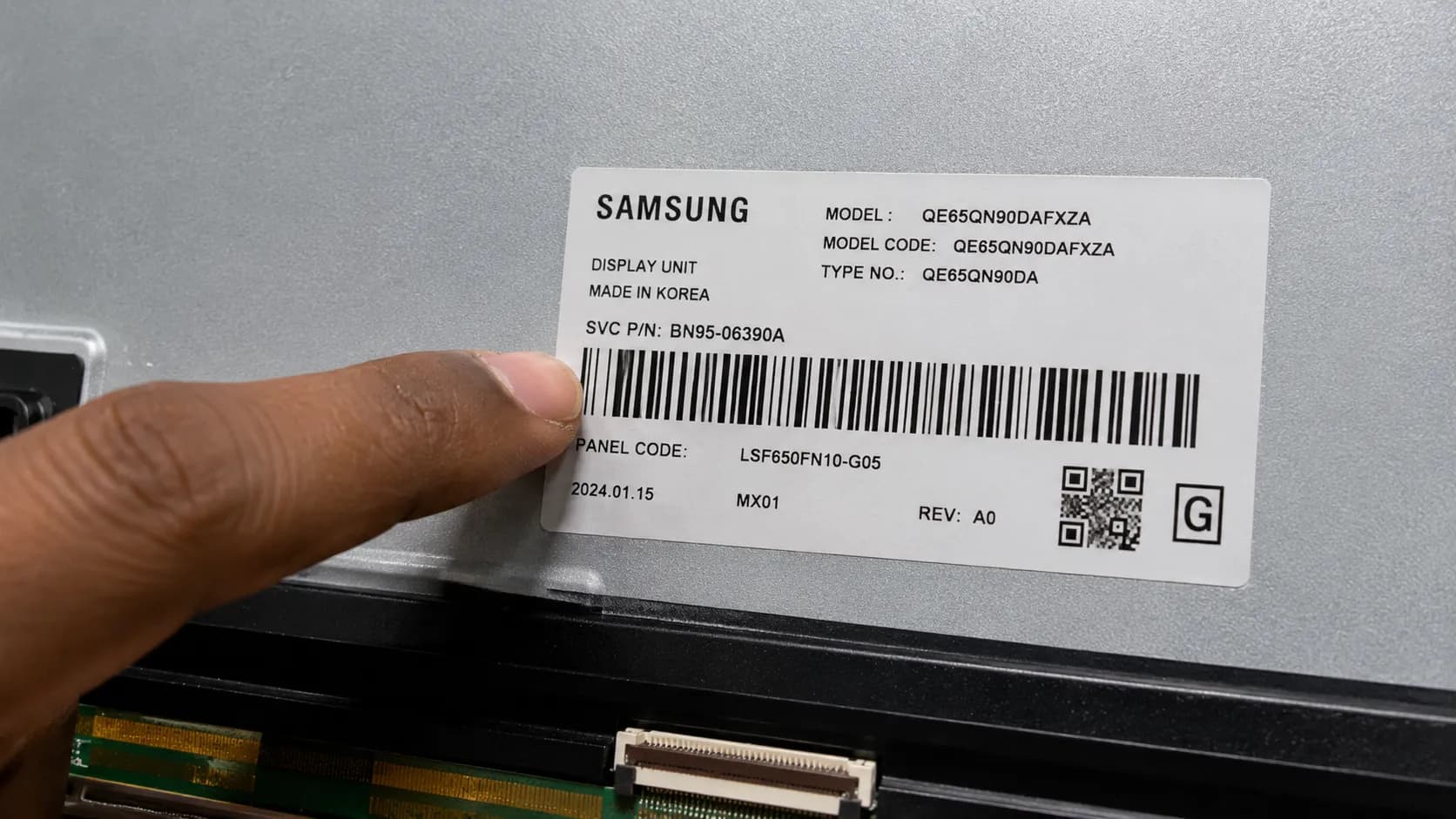
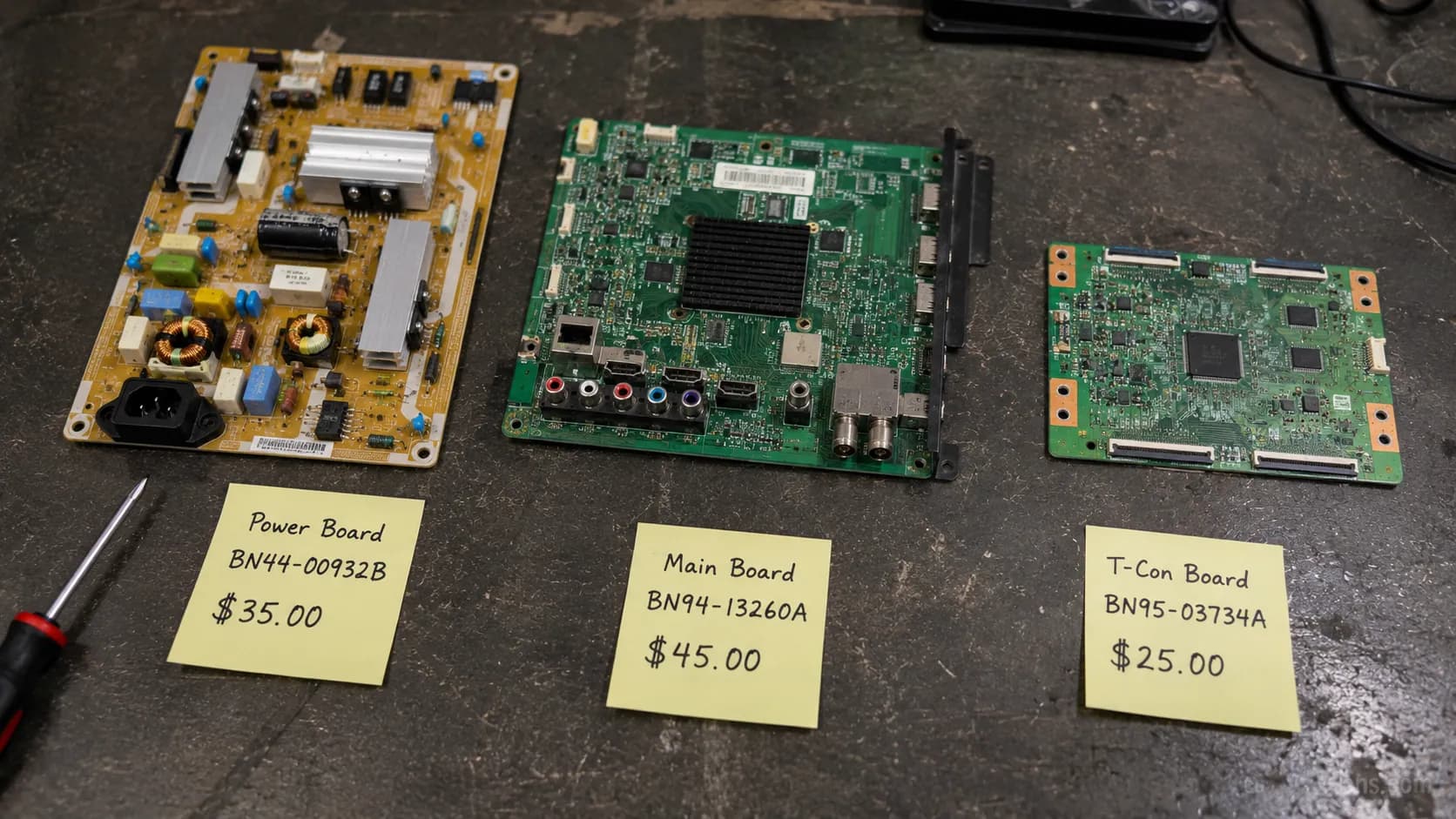
Find the panel or part number on the sticker on the back of the set, usually a code beginning with BN95 or BN44 on Samsung boards and panels.
Match that code to your exact model, since a panel from a visually identical TV can differ by revision.
Compare sourcing: authorized parts, a used panel on eBay, or a “donor” set of the same model with good glass but dead electronics.
Price the donor route honestly, because a whole donor TV is often cheaper than a bare panel and gives you spare boards.
Why most DIY panel swaps aren’t worth it. Bare LCD and OLED panels crack under the slightest flex, and a single mistake during the swap wastes the entire part cost.
I only recommend a DIY attempt when you have found a cheap donor set of the exact model, because then a slip costs you a spare, not the whole budget.
Third-party panels are the riskiest buy, and salvage or donor sets are the sanest DIY path. For the fixes that genuinely work at home, and the ones that do not, see our honest DIY screen guide.
Better Than Repair: Salvage, Sell for Parts, or Recycle
When repair does not add up, a broken Samsung TV screen still has a little residual value, just not in the panel.
According to HomeGuide, some internal components sell for $50 to $100 or more, so the boards are where the money is.
The realistic menu is short, and being honest about the numbers saves you from throwing good money after a dead panel.
Your options, roughly in order of effort:
Sell the working boards (main, power, T-Con) for parts, typically $20 to $100 each depending on model.
Part out the whole set piece by piece if you have the time and a marketplace account.
Recycle it free at a retailer take-back or municipal e-waste site.
Repurpose a partly-working set as a secondary display if only a corner is cracked.
Replace it, then price protection so the next accident is covered.
In my own salvage runs, a broken Samsung set’s main and power boards recovered $60 to $100 combined, while the cracked panel itself was worth nothing.
That is the honest ceiling: enough to offset a cheap accessory, not enough to fund a new TV.
For the whole fix-or-replace picture, start at our TV repair hub, and if you are eyeing a new set anyway, here are the signs a TV is failing so you time it well.
When you are done with the old one, here is how to recycle it, often for free. And if you replace it with a new Samsung, here is setting up your apps on the new home screen.
Frequently Asked Questions
Can a broken Samsung TV screen be fixed?
Technically yes, by replacing the entire panel, but it rarely makes financial sense. The panel is 80 to 95 percent of the set’s value, so a repair on a 55 or 65-inch Samsung usually costs close to a new television. The exception is a small set of 32 inches or under, or a fault that turns out to be a board rather than the glass.
How much does it cost to fix a broken Samsung TV screen?
Expect $300 to $1,500 or more for the panel alone, with installed totals reaching $2,000 on larger sets. A genuine Samsung 55-inch panel has listed around $676 for the part by itself. Because that approaches a new-set price, most owners replace rather than repair.
Does a Samsung warranty cover a cracked screen?
No. Samsung’s standard warranty covers manufacturing defects, not accidental damage like a cracked screen. Coverage for an accidental crack requires an accidental-damage plan or insurance purchased before the break, and it cannot be added after the screen is already damaged.
Can you replace just the screen on a Samsung TV?
Only in the sense of replacing the whole sealed panel assembly, since the glass cannot be separated from the display layers. On sets larger than 32 inches, Samsung’s own service routes you to a local authorized center, and the panel cost usually rivals a new TV.
Can an LG, TCL, Vizio, or Roku broken screen be fixed?
The same rule applies: a physically cracked panel means a full replacement that costs about what a new set does. LG is the one partial exception, because a genuine OLED manufacturing defect is sometimes replaced free. TCL, Hisense, and Vizio rarely sell panels at all, so replacement is the practical answer.
Is it safe to keep using a TV with a cracked screen?
A set that still turns on with a crack can often be watched short term, but cracks tend to spread and the exposed panel edges are fragile. If you keep it for casual use, treat it as living on borrowed time, and here is mirroring a laptop to it if you want to use it as a simple second screen.
A broken Samsung TV screen is one of the few TV problems where the honest answer is usually to stop before you spend, because the panel alone costs almost as much as starting fresh.
Confirm it is truly the glass and not a cheap board, count whether any plan or insurance you already hold will pay, then choose between salvaging the boards and replacing the set.
Do that, and you will make the call in minutes instead of pouring hundreds into a repair that was never going to win.
Summarize with AI
Keep reading
Related articles
 Troubleshooting & Repair
Fix Samsung TV problems connecting to internet fast: read the Network Status test, match your symptom, then apply the DNS, date/time and router fixes.
 Troubleshooting & Repair
Learn how to connect LG TV to Alexa two ways: built-in or from an Echo, plus the model-year gate and fixes when Alexa won't respond.
 Troubleshooting & Repair
Fix Insignia TV horizontal lines on screen in minutes: a hard reset and one built-in menu test show instantly if it's a cheap cable or a dead panel.
 Troubleshooting & Repair
Sell it for parts, part it out, repurpose it, or recycle it free, that's what to do with a broken TV, plus what a broken set is really worth.
Comments
Moderated for quality. Share a correction, ask a follow-up, or tell us what worked for you - every comment is reviewed before it goes live.