
Sony TV Repair Cost by Problem (2026): Worth It or Replace?
Sony TV repair cost runs $60–$400 for backlight, power, and board faults; a cracked Bravia panel costs more than a new set. See the 2026 by-problem prices.
Written by Derek WhitfieldReviewed by Marcus Whitfield
Last updated on September 2, 2026
When you buy through links on our site, we may earn an affiliate commission (at no extra charge), which we use to fund new product tests. Learn more.
Summarize with AI
Sony TV repair cost runs about $60 to $400 for the common Bravia faults: a power-supply board or capacitor fix, a backlight LED strip swap, or a T-Con or main board.
Those are usually worth doing.
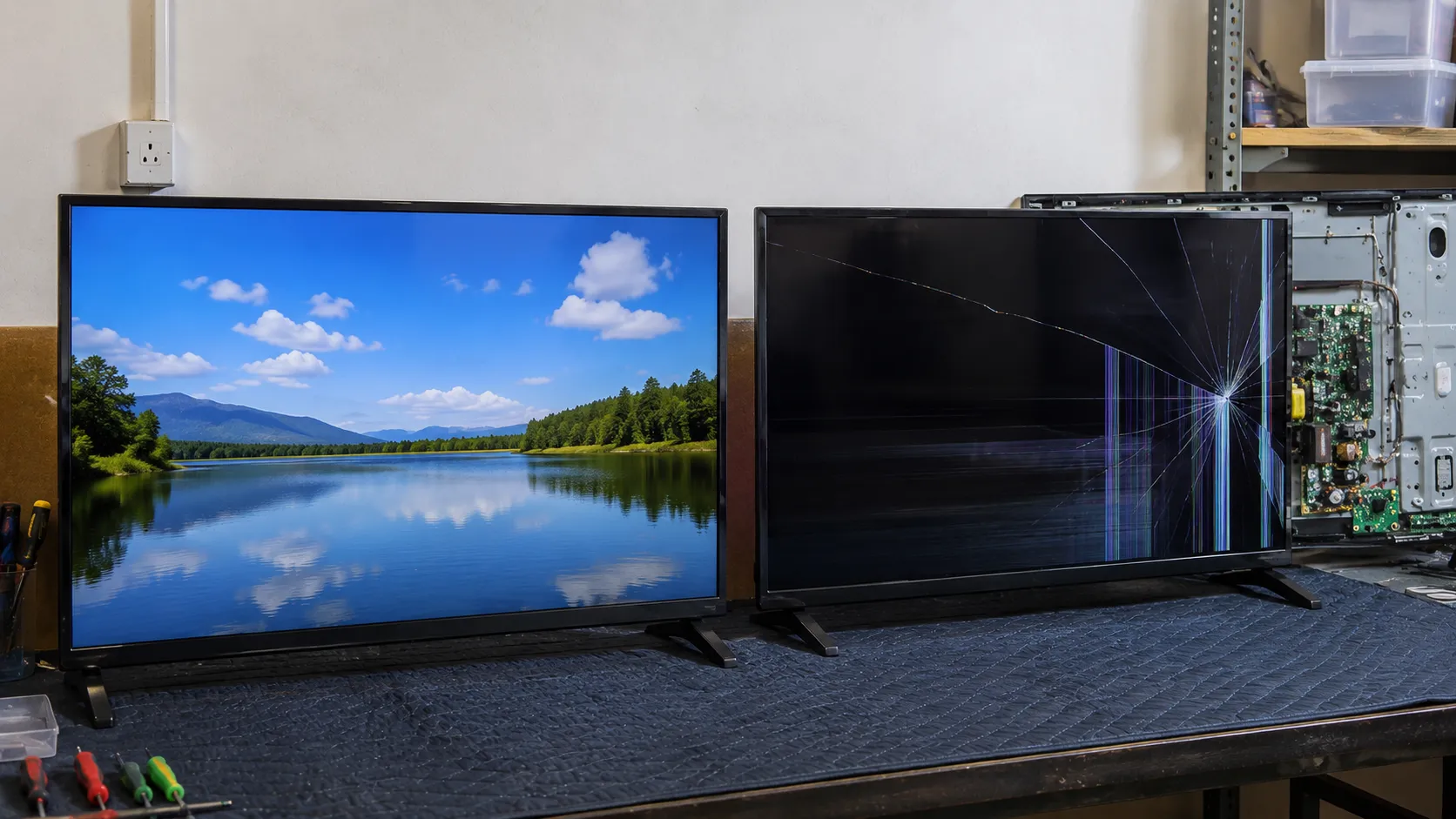
The exception is the panel. A cracked or dead LCD or OLED Bravia panel costs more in parts alone than a new set, so replacement wins.
Price your fault in the table below, then use the age-and-fault verdict to decide.
Most Sony sets that "crap out" are not write-offs. Across the Bravias I have opened, the fault was a cheap board or a backlight far more often than the panel, and those are the fixes worth your money.
This guide prices each Sony fault in US dollars, shows you how to tell which part failed before you pay anyone, and gives you a clear repair-or-replace verdict by age and fault.
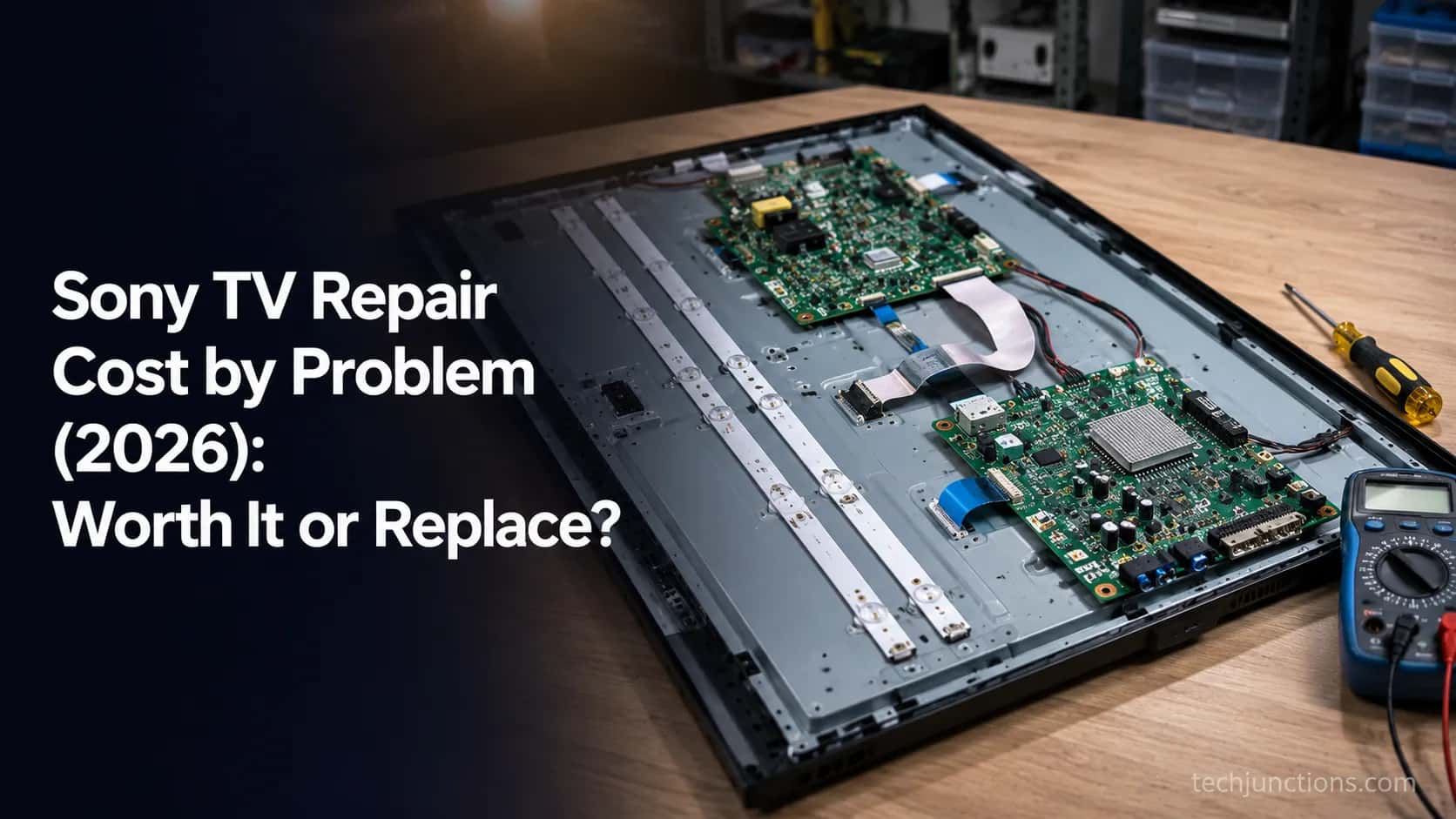
Sony TV Repair Cost by Problem (2026 Price Table)
Sony TV repair cost by problem in 2026 sorts into four buckets.
A power-supply board or capacitor repair runs roughly $60 to $150 as a DIY part or $200 to $475 at a shop, according to Fixr's 2026 tally.
Backlight LED strips run about $100 to $300 fitted. A T-Con or main board runs $100 to $300, though a full Sony board job can reach around $600.
An OLED or LCD panel runs $300 to $1,500 or more, usually above the price of a new Bravia.
Here is the fault-by-fault breakdown, with the DIY part price separated from the fitted shop price so you can see where doing it yourself actually saves money.
Sony fault | Typical symptom | DIY part cost | Fitted / shop cost | Verdict |
|---|---|---|---|---|
Power board / capacitors | No standby light, clicking, random shut-off | $30–$100 | $200–$475 | Worth it |
Backlight LED strips | Dark screen, faint image under a flashlight | $20–$60 | $100–$300 | Worth it |
T-Con / main board | Half-screen lines, sound but no picture | $30–$120 | $100–$300 (Sony up to ~$600) | Usually worth it |
OLED / LCD panel | Cracked glass, dead half, spreading blotch | $300–$1,500+ | Often exceeds a new set | Replace |
The reason the panel breaks the pattern is simple. It is the single most expensive component in the set, so once it fails you are buying most of a new television anyway.
HomeGuide's repair data puts cracked-panel work at $300 to $1,500 and up, frequently more than a comparable new TV.
For a Bravia specifically, an independent tech quoting parts, diagnostics, and labor lands near $300 all-in for a board or backlight job, and a screen tops $1,000, which matches what one Sony XBR panel estimate called effectively un-repairable in the field.
My own Bravia backlight strip came in near the low end reported by HomeAdvisor's strip pricing of $150 to $250 fitted.
Two quick cross-references before you commit to a number. For the all-brand picture, see how TV repair prices break down generally.
If your fault is actually the glass, what a replacement panel runs by size is the page to read next.
Lines across half the screen are their own diagnosis, so it is worth knowing how the T-Con board fails before you assume the panel is dead.
White spots or a blue tint are a different repair line again, covered in fixing screen-defect faults.

How to Tell Which Sony Part Failed First
Telling which Sony part failed before you pay is the step that stops a $40 strip from being sold to you as a panel.
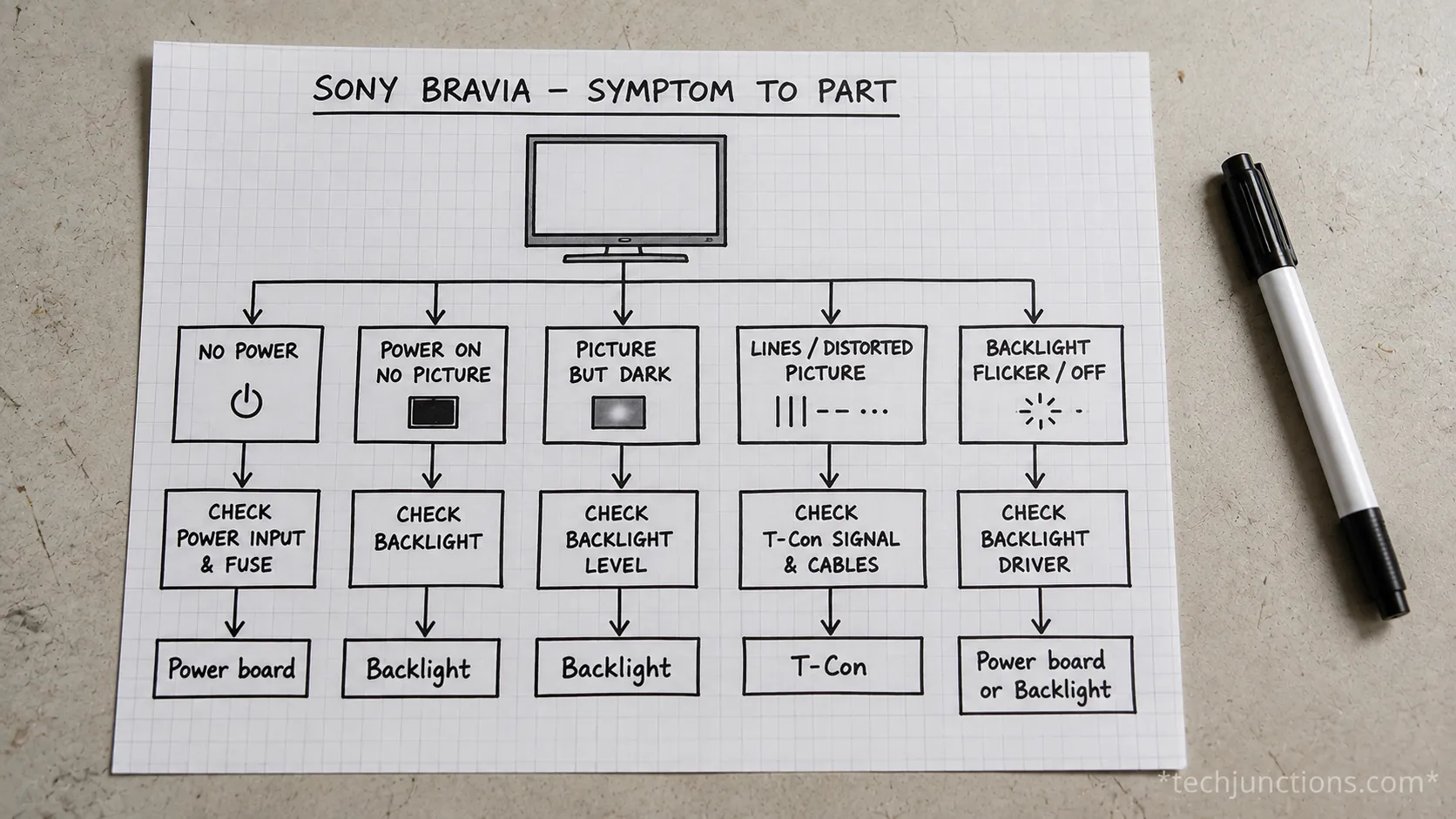
A dark screen with a faint image under an angled flashlight, or six red blinks on the standby light, points to the backlight. Half a screen of lines or sound with no picture points to the T-Con or main board.
No standby light, a faint clicking, or random shut-offs points to the power board. A green tint on an older rear-projection Bravia means the optical block. Match your symptom below.
Here is the symptom-to-part routing I run on the bench, with the rough cost and the next step for each.
Symptom | Likely part | Rough cost | Next step |
|---|---|---|---|
Dark screen, faint image under flashlight, 6 red blinks | Backlight strips | $100–$300 fitted | Confirm with flashlight test |
Half-screen lines, sound but no picture | T-Con / main board | $100–$300 | Reseat ribbon, then price the board |
No standby light, clicking, random off | Power board | $200–$475 | Look for bulged capacitors |
Green tint, older projection Bravia | Optical block | Often not worth it | Get a quote before spending |
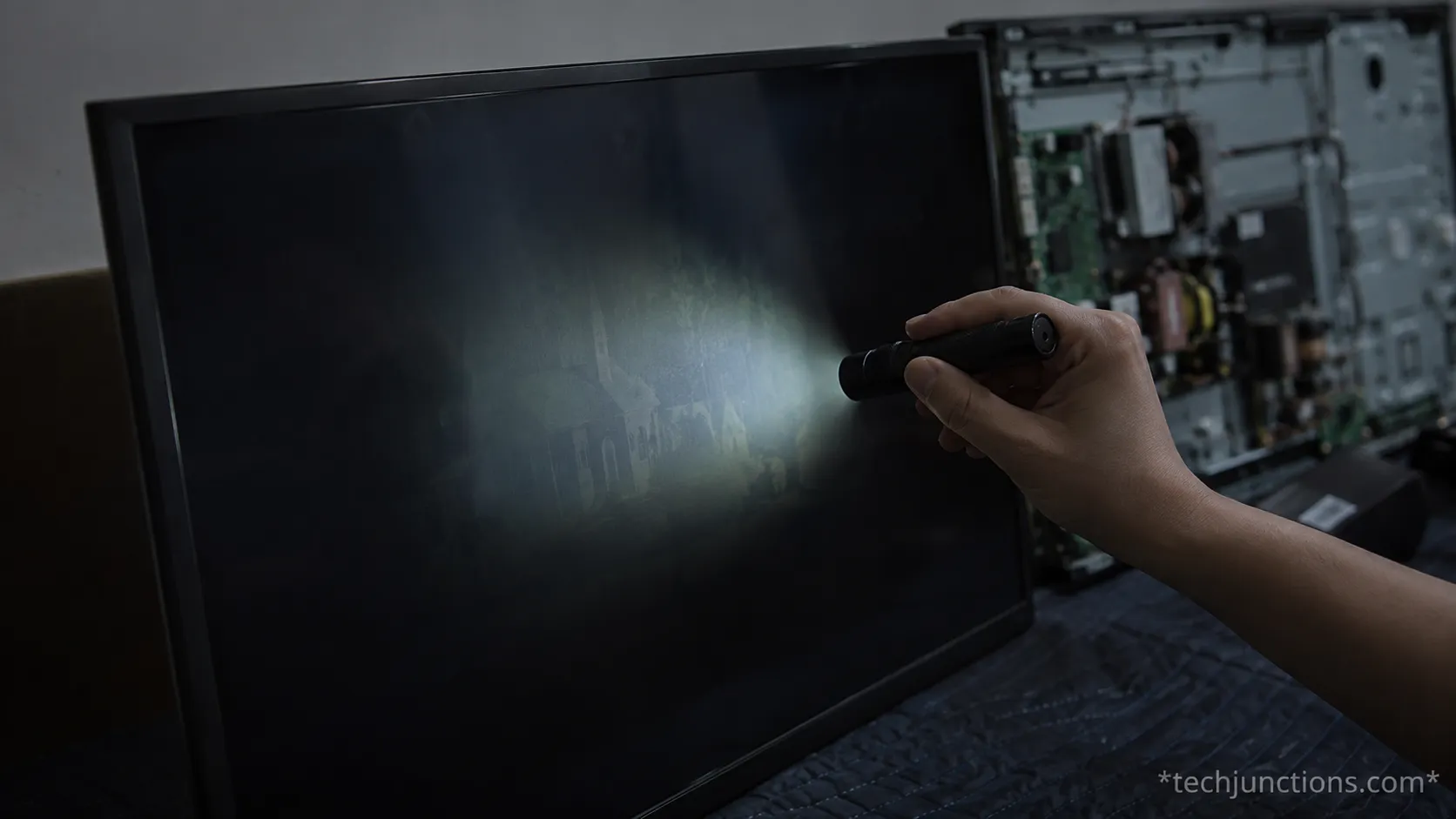
The flashlight test is the one every owner should do first. When the screen goes black but the sound and power light still work, shine a flashlight at an angle onto the panel.
If you can see a faint image, the panel is alive and the backlight is the fault, which is the cheap outcome.
When I ran this on a KDL-series Bravia, the faint image was clearly there, and the standby light was throwing the six-blink backlight code that iFixit's Bravia thread documents.
Before you pay for anything, try the free fix. Unplug the set for at least an hour, then reseat the ribbon cables and power connectors, because a "dead" board is sometimes just a loose contact.
If you want the safe DIY route laid out in order, safe DIY checks to try first walks through it without the risky myths.
What do 6 red blinks on a Sony Bravia mean?
Six red blinks on the standby light is Sony's backlight error code. It means the set detected a fault in the backlight circuit and shut down to protect itself.
In practice that is usually a failed LED strip or the board that drives it, which is a $100 to $300 repair, not a panel. Confirm with the flashlight test before you spend.
Lines are not a Sony-only problem. It helps to understand why screen lines appear on any set.
A set that powers itself on and off usually points at the power board, the same pattern behind a TV cycling on and off. The identical fault even turns up as the same issue on another brand.
Authorized Sony Service vs an Independent Shop vs DIY
Sony TV repair has three channels, and the channel changes the price as much as the fault does. Authorized Sony service is priciest and uses model-exact parts.
An independent shop typically lands near $300 all-in for a Bravia diagnostic, parts, and labor. DIY is cheapest for board and backlight swaps if you are comfortable with electronics.
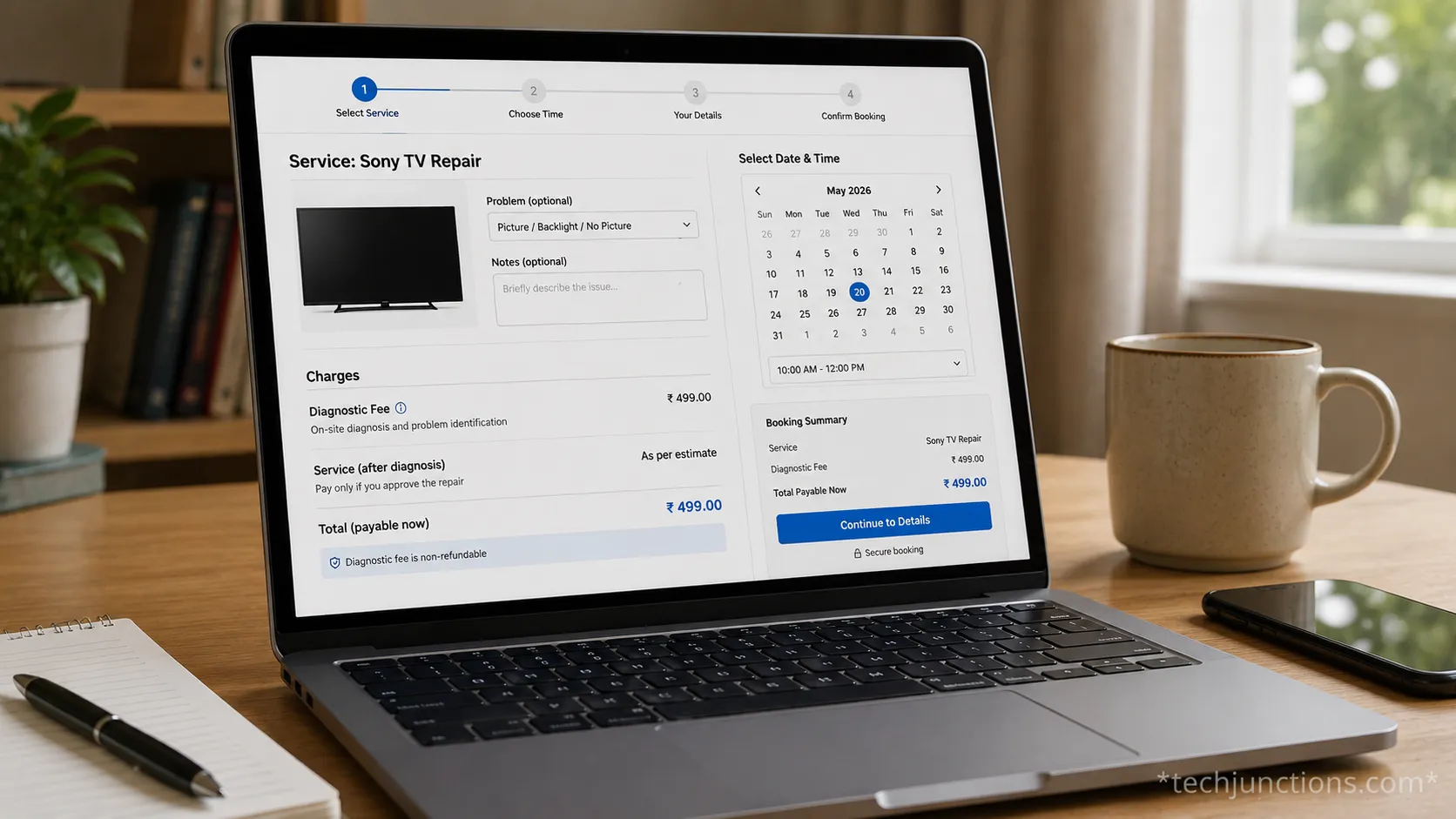
Best Buy repairs Sony even out of warranty, and its in-home diagnostic is $49.99 for members or $99.99 for non-members plus parts and labor, per Best Buy's TV repair page.
The number in the cost table is never the whole bill, because labor and a diagnostic fee sit on top. Shop labor runs $60 to $125 an hour, so a one-hour board swap adds real money to a $40 part.
Channel | Best for | Diagnostic reality | Cost profile |
|---|---|---|---|
Authorized Sony service | In-warranty, panel or board matching | Sony-managed intake | Highest, model-exact parts |
Independent / local shop | Out-of-warranty board and backlight | Often ~$300 all-in on a Bravia | Mid, negotiable |
Best Buy / Geek Squad | Out-of-warranty, in-home for 42"+ | $49.99 member / $99.99 non-member | Mid, fee credited to repair |
DIY | Backlight strips, capacitors | Your own flashlight and multimeter | Lowest, part cost only |
When I priced my own Bravia board fault, the independent shop rolled its diagnostic into the final repair, so the real cost was the quote, not the quote plus a separate fee.
That credit is worth asking about, because HomeGuide's Geek Squad figures show the diagnostic can otherwise be a standalone charge.
One safety line on DIY. Board and backlight swaps are reasonable if you respect the high-voltage sections and discharge the power supply, but a panel is not a home job.
The same repair-or-replace logic runs through the broader repair playbook for every set. Brand service works much like how a maker's repair service runs for other brands, so the booking flow will feel familiar.
Is It Worth Repairing a Sony TV? By Age and Fault
Whether it is worth repairing a Sony TV comes down to one rule: fix it when the repair is under about half the cost of a comparable new set.
That covers most power, backlight, and board faults on a Bravia under five years old.
It is not worth it when the fault is the panel, because the panel alone usually costs more than a new Bravia, a point HomeAdvisor's flat-screen data puts at $350 to $2,000 for panel work.
Use the grid below.
The fifty-percent line is the fast filter, but age and fault together give the real answer.
Fault | Set under 5 years | Set 5 to 8 years | Set over 8 years |
|---|---|---|---|
Backlight strips | Repair | Repair | Judgment call |
Power board / capacitors | Repair | Repair | Judgment call |
T-Con / main board | Repair | Judgment call | Lean replace |
OLED / LCD panel | Replace | Replace | Replace |
I have lived both ends of this grid. I fixed a four-year-old Bravia's backlight for the price of a $38 strip and it is still running, and I retired an eight-year-old set the day the only quote left was a $1,450 panel, the textbook "bite the bullet" moment.
The fifty-percent repair-or-replace rule held in both cases.
There is one honest limit to the rule. A rare or sentimental set can justify a repair the math says no to, and that is a fair call to make with your eyes open.
If several warning signs are stacking up at once, the set may be near the end regardless, which is why it helps to know the signs a TV is failing.
A cracked screen is its own decision entirely, handled in what to do with a cracked screen.
Where to Get a Sony TV Repaired
To get a Sony TV repaired, you have three routes: Sony's authorized service locator for in-warranty or model-exact work, Best Buy's Geek Squad for out-of-warranty in-home repair, or a local independent shop for the cheapest board and backlight fixes.
Best Buy repairs most brands including Sony regardless of where you bought the set, per its nationwide service page.
Before you commit, ask three questions and get a second quote on anything panel-related.
The three questions save the most money, because they expose the difference between a fair shop and an expensive one.
Is the diagnostic a flat fee, and does it credit toward the repair if I go ahead?
What is the total, parts and labor, before any work starts?
Is the repair itself warrantied, and for how long?
When I collected two quotes on the same backlight fault, they came in at $180 and $260 for identical work.
The spread was entirely down to labor and markup, which is exactly why the questions above matter.
If the fault might be a covered defect rather than accidental damage, check when a fault is warranty-covered first, since that can make the repair free.
If you decide to replace instead, do not just bin the old set, because how to recycle an old TV covers the free and low-cost options.

Frequently Asked Questions
Is it worth repairing a Sony TV?
Repairing a Sony TV is worth it when the fix costs less than about half a comparable new set, which is true for most power, backlight, and board faults. A cracked or defective panel is the exception, because the panel alone usually costs more than a new Bravia, so replacement is the better spend.
How much does a Sony backlight repair cost?
A Sony backlight repair runs about $100 to $300 fitted, or $20 to $60 if you source the LED strip and fit it yourself. The backlight strip I bought for my own Bravia sat at the low end of that DIY range, and the job is a common fix rather than a write-off.
Does Best Buy repair Sony TVs?
Yes. Best Buy's Geek Squad repairs most major brands including Sony, even out of warranty and regardless of where you bought the set. Its in-home diagnostic is $49.99 for members or $99.99 for non-members, plus parts and labor, and larger sets qualify for in-home service.
Can a cracked Sony Bravia screen be fixed?
Technically yes, but it almost never makes financial sense. A replacement Bravia panel usually costs more than a new set, and many models cannot be sourced as a part at all, so a cracked screen is effectively a replace decision. If the settings rather than the hardware are the issue, a Sony picture-mode explainer may help instead.
Why does my Sony show no picture but the sound works?
Sound with no picture usually points at the backlight or the T-Con board, not the panel. Run the flashlight test first: a faint image means the backlight, which is cheap. If the real problem is a missing source, a no-signal input problem is a different and free fix. The same thing on a budget set is covered in a budget-brand input fix.
The Bottom Line: Fix the Board, Replace the Panel
Sony TV repair cost is only frightening if you assume every fault is the panel.
In reality the board, backlight, and power faults that account for most dead Bravias are $60 to $400 jobs, and on a set under five years old they are worth every dollar.
Run the flashlight test, match your symptom to the part, and price it against a comparable new set.
Fix the cheap faults, walk away from the panel, and ask any shop the three questions before you hand over the set.
That is the whole decision, and it keeps a good Bravia out of the landfill for the price of a strip.
Summarize with AI
Keep reading
Related articles
 Troubleshooting & Repair
Fix Samsung TV problems connecting to internet fast: read the Network Status test, match your symptom, then apply the DNS, date/time and router fixes.
 Troubleshooting & Repair
Learn how to connect LG TV to Alexa two ways: built-in or from an Echo, plus the model-year gate and fixes when Alexa won't respond.
 Troubleshooting & Repair
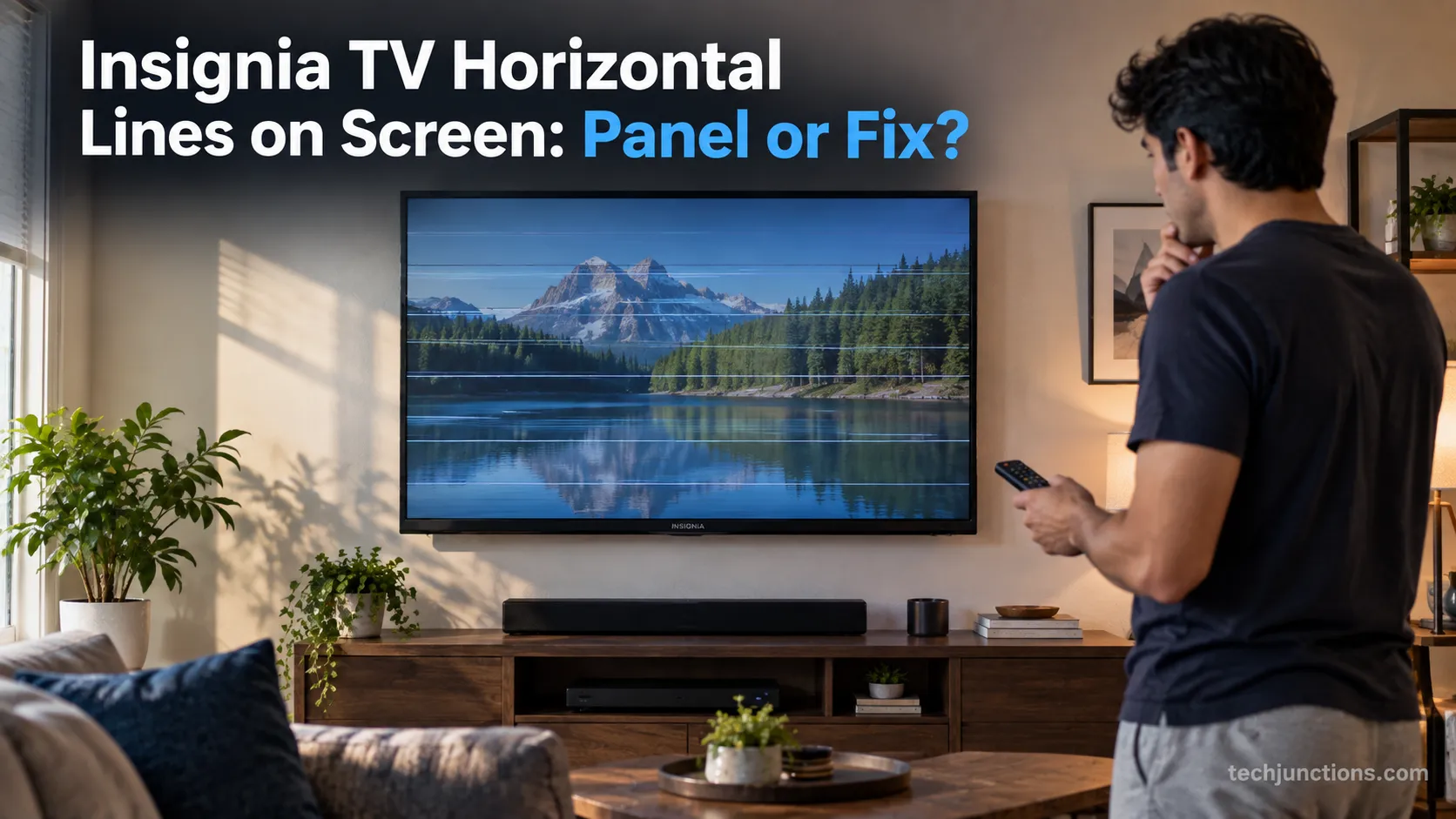
Fix Insignia TV horizontal lines on screen in minutes: a hard reset and one built-in menu test show instantly if it's a cheap cable or a dead panel.
 Troubleshooting & Repair
Sell it for parts, part it out, repurpose it, or recycle it free, that's what to do with a broken TV, plus what a broken set is really worth.
Comments
Moderated for quality. Share a correction, ask a follow-up, or tell us what worked for you - every comment is reviewed before it goes live.